-
Auteur :
 Antoine C.
- Jan 01, 2026
Complete TCF Canada Ultimate Guide 2026
- Blog
- /
- Article
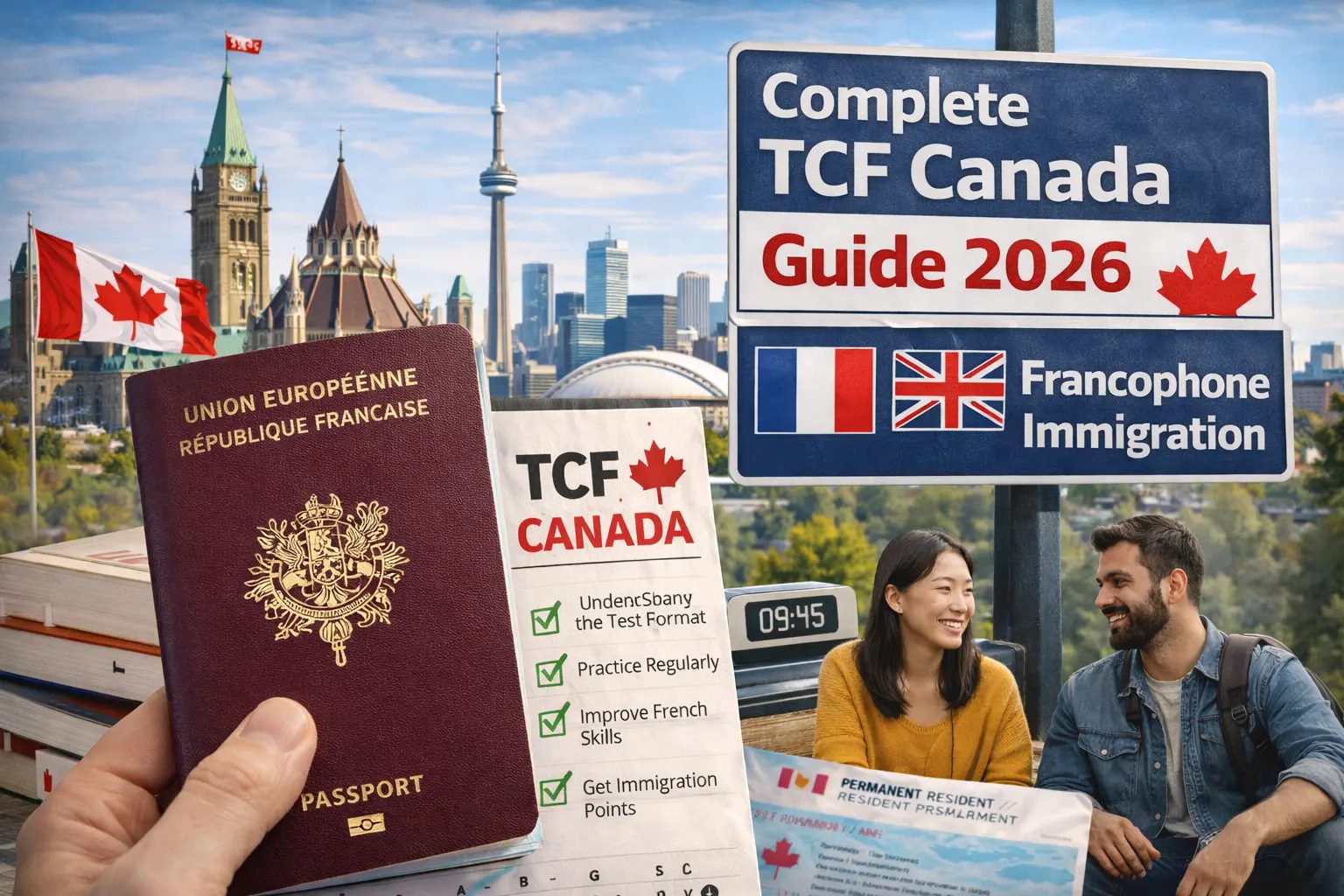
Your Comprehensive Gateway to Canadian Immigration Success
128 Points 4 Competencies 500K Immigrants 90-160 Point Advantage
Complete Table of Contents
- PART I: Understanding TCF Canada Architecture & Format
- PART II: The NCLC System & Express Entry Points
- PART III: Personalized Preparation Strategies by Profile
- PART IV: Test Centers & Logistical Considerations
- PART V: Financial Investment & Budget Planning
- PART VI: Critical Mistakes to Avoid
- PART VII: Canadian Linguistic & Cultural Particularities
- PART VIII: Success Stories & Testimonials
- PART IX: Complete Action Plan & Timeline
- PART X: Essential Resources & Tools
Welcome to Your Complete TCF Canada Journey
The Test de Connaissance du Français pour le Canada (TCF Canada), officially administered by France Éducation international (FEI) and formally recognized by Immigration, Refugees and Citizenship Canada (IRCC), represents profoundly far more than simply another standardized language examination to complete as bureaucratic immigration requirement—it fundamentally constitutes the absolute cornerstone, the essential foundation, the critical gateway of your entire Francophone immigration project to Canada, directly determining your competitive positioning in Express Entry pool and ultimately your probability of receiving Invitation to Apply (ITA) for Canadian permanent residence.
As we navigate the evolving landscape of 2025-2026, with Canada maintaining ambitious immigration targets welcoming 500,000+ new permanent residents annually (485,000 target for 2024, 500,000 for 2025, projected 500,000+ continuing through 2026 based on current government commitments) while simultaneously intensifying strategic prioritization of French-speaking candidates through dedicated category-based Express Entry selection rounds offering substantially lower CRS cutoff scores typically 85-160 points below general all-program draws, the strategic importance and direct measurable impact of achieving excellent TCF Canada scores has never been more critical, more consequential, or more directly determinative of your immigration timeline, competitive advantage, and ultimate success probability in accessing Canadian permanent residence and eventual citizenship pathways.
This comprehensive guide provides everything you need: Deep understanding of TCF Canada format and evaluation criteria • Complete NCLC scoring system and Express Entry point optimization • Personalized preparation strategies adapted to your unique profile • Strategic test center selection and logistical planning • Realistic budget planning and resource allocation • Critical mistake avoidance learned from hundreds of candidates • Essential Canadian French vocabulary and cultural knowledge • Inspiring success stories with concrete timelines and results • Complete actionable 5-step preparation plan • Curated resources and preparation tools
Critical 2025-2026 Updates: What's Changed and Why It Matters Tremendously
Major Strategic Developments Fundamentally Transforming TCF Canada's Immigration Impact:
1. Enhanced French-Language Category-Based Selection Dramatic Expansion
Following successful pilot implementation in May 2023, Immigration, Refugees and Citizenship Canada (IRCC) significantly and permanently expanded French-priority Express Entry category-based selection throughout 2024-2025 fiscal year with substantial program enhancements creating unprecedented opportunities for French-speaking candidates:
- Frequency Increase: French-language category draws now occurring bi-weekly (every 2 weeks) rather than previous monthly frequency (2023-early 2024), providing 24-26 dedicated French draws annually vs. previous 12 draws—doubling French-speaking candidate invitation opportunities and reducing wait times dramatically
- Allocation Expansion: Number of Invitations to Apply (ITAs) issued per French-category draw increased from initial 500-800 range to current 1,000-1,500+ invitations per draw, with IRCC Minister publicly committed to meeting Francophone immigration targets of 4.4% of economic immigrants being French-speaking outside Quebec (approximately 13,000-15,000 French-speaking permanent residents annually)
- CRS Cutoff Dramatic Reduction: Most consequential change—French-category draw CRS cutoffs consistently, dramatically lower than general all-program draws creating massive competitive advantage:
- Recent French-category draws (Jan-Mar 2025): CRS cutoffs ranging 365-395 points
- Concurrent general all-program draws: CRS cutoffs ranging 485-525 points
- Competitive Advantage: Staggering 90-160 point differential!
- Real Impact: Candidate with 420 CRS points (moderately competitive) would NOT receive ITA in general draw (requiring 485+) but would EASILY receive ITA in French draw (requiring only 365-395), potentially saving 12-24 months wait time
- Minimum Qualification: To qualify for French-category draws, candidates must demonstrate NCLC 7+ in all four French competencies (listening, reading, speaking, writing) through valid TCF Canada results plus meet standard Express Entry program eligibility (skilled work experience, education credentials, etc.)
Strategic Implication: For candidates with moderate overall CRS scores (380-480 range) who might wait 18-36 months for general draw ITA or never receive invitation, achieving NCLC 7-9 French proficiency through TCF Canada can transform immigration timeline from multi-year wait to 2-6 month ITA receipt in French-category draw. This represents arguably the single most impactful strategic immigration action available to skilled workers in 2025-2026 landscape.
2. Accelerated Digital Test Administration Technology Comprehensive Rollout
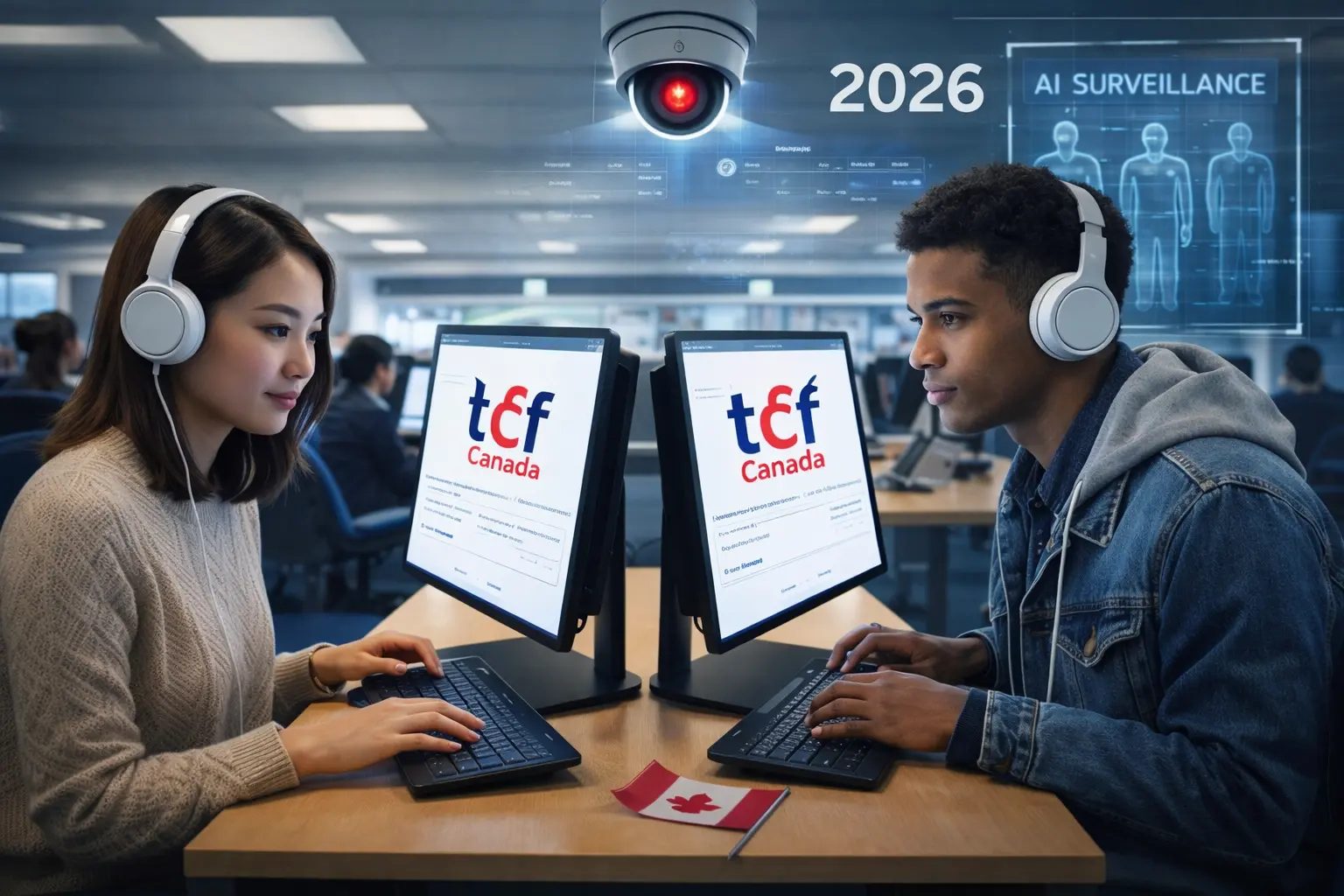
TCF Canada examination infrastructure underwent substantial technological modernization throughout 2024-2025 with computer-based digital testing now representing standard delivery method at majority of global centers:
- Availability Expansion: Computer-based digital TCF Canada now offered at approximately 85-90% of authorized test centers globally (substantial increase from 55-60% availability in 2023-2024, and mere 30-40% in 2022-2023), with paper-based testing increasingly rare and limited to remote/smaller centers lacking digital infrastructure
- Immediate Preliminary Scoring: Digital format provides unofficial preliminary scores for listening and reading comprehension sections immediately upon test completion (within 5-10 minutes of finishing examination), allowing candidates instant feedback on objective multiple-choice performance before leaving center (note: speaking and writing scores still require 2-4 weeks human evaluator assessment; preliminary scores are unofficial and may vary slightly from final official results)
- Enhanced Audio Quality: Digital testing centers equipped with professional-grade noise-canceling headphones providing superior audio clarity for listening comprehension section, eliminating ambient room noise distractions, offering individual volume control for optimal personalization, and ensuring consistent high-quality audio reproduction eliminating variability of traditional speaker-based systems where candidates seated different distances from speakers experienced unequal audio quality
- Ergonomic Digital Reading Interface: Reading comprehension section delivered through optimized digital interface featuring: adjustable text size for visual comfort and accessibility, customizable contrast settings reducing eye strain during 60-minute section, smooth vertical scrolling eliminating page-turning delays, text highlighting function allowing temporary marking of key passages, question flagging capability for efficient time management enabling candidates mark uncertain questions for later review, and intuitive navigation between questions and passages
- Streamlined Workflow Efficiency: Digital administration reduces total time commitment at test center from previous 4.5-5 hours to approximately 3-3.5 hours (including check-in procedures, identification verification, tutorial, examination, and preliminary results) through eliminated paper distribution time, automated transitions between sections, instant submission processing, and immediate preliminary scoring—reducing candidate fatigue and improving overall test day experience
3. Provincial Francophone Immigration Stream Dramatic Growth and Enhancement
Canadian provincial governments, recognizing critical importance of Francophone immigration for linguistic and cultural vitality outside Quebec, substantially expanded Francophone-specific Provincial Nominee Program (PNP) pathways throughout 2024-2025:
- Ontario Francophone Stream Expansion: Ontario Immigrant Nominee Program (OINP) increased annual French-speaking nominee allocations from 1,200 (2023) to 2,500+ nominations (2025-2026), introduced new Francophone entrepreneur stream, reduced language requirements certain occupations from NCLC 8 to NCLC 7 minimum, and accelerated processing timelines averaging 4-6 months (vs. previous 8-10 months)
- Manitoba Francophone Stream Enhancement: Manitoba Provincial Nominee Program (MPNP) created dedicated Francophone Express Entry pathway, reduced settlement funds requirements for French speakers, expanded eligible occupations list, and established guaranteed provincial nomination for qualified French-speaking candidates in designated shortage occupations (healthcare, skilled trades, technology)
- New Brunswick Community Endorsement: Only officially bilingual Canadian province (English-French) enhanced Atlantic Immigration Program Francophone component with community endorsement process enabling faster permanent residence for French speakers settling in designated Francophone communities (Moncton, Edmundston, Bathurst regions), reduced work experience requirements, and 3-month processing guarantee
- Saskatchewan Francophone Category: Saskatchewan Immigrant Nominee Program (SINP) introduced new Francophone expression of interest system with dedicated points grid favoring French proficiency, reduced CRS requirements for French speakers, and quarterly guaranteed draws exclusively for Francophone candidates
- Enhanced Settlement Support: All provinces expanding Francophone immigration increased funding for French-language settlement services, employment integration programs specifically targeting French speakers, credential recognition facilitation, and cultural orientation programs ensuring successful Francophone immigrant integration
Multiple Pathway Strategy: Strong TCF Canada performance (NCLC 8-9) doesn't merely improve federal Express Entry competitiveness—it simultaneously unlocks provincial nomination pathways offering alternative routes to permanent residence with potentially faster timelines, lower overall score requirements, and targeted support. Candidates should research multiple provincial programs exploring all available pathways maximizing immigration probability.
4. AI-Enhanced Preparation Tool Ecosystem Revolutionary Transformation
Official TCF preparation ecosystem underwent dramatic technological transformation in late 2024-2025 with France Éducation international partnering with edtech companies launching sophisticated next-generation preparation tools:
- AI-Powered Adaptive Learning Platforms: New official TCF Canada preparation portal features machine learning algorithms continuously analyzing individual performance patterns across practice exercises, automatically adjusting difficulty progression and content focus based on demonstrated strengths/weaknesses, providing personalized study recommendations optimizing preparation efficiency, and predicting likely examination performance with 85-90% accuracy based on practice test results enabling realistic goal-setting
- Automated Speaking Evaluation Systems: Revolutionary AI speech recognition technology providing instant detailed feedback on speaking practice responses including: pronunciation accuracy scoring with phoneme-level analysis, fluency metrics measuring hesitation frequency and speech rate, grammatical correctness automated detection, vocabulary sophistication assessment, and comprehensive performance scoring aligned with official TCF speaking evaluation rubric—enabling unlimited speaking practice with immediate feedback without requiring human evaluator availability or cost
- Personalized Study Path Algorithms: Upon completing comprehensive diagnostic assessment, AI algorithms generate customized preparation pathways specifying: optimal study duration based on baseline level and target objectives, daily/weekly study schedules adapted to time availability, prioritized competency focus recommendations, strategic resource allocation across four competencies, and milestone-based progression tracking with continuous adaptive refinement
- Integrated Progress Analytics Dashboards: Comprehensive performance visualization providing: competency-specific score progression graphs, error pattern identification with categorized weakness analysis, time management metrics for reading/writing sections, comparative performance vs. other candidates at similar level, predicted NCLC levels based on current performance, and CRS point projections for immigration planning
5. Refined NCLC Scoring Methodology Minor but Strategic Adjustments (January 2025)
France Éducation international and IRCC jointly published minor refinements to official TCF Canada score to NCLC level conversion tables effective January 1, 2025 (most recent update cycle):
- Listening/Reading Threshold Adjustments: NCLC 8 threshold reduced from 505 to 503 points (2-point reduction making NCLC 8 slightly more accessible); NCLC 9 threshold reduced from 553 to 549 points (4-point reduction particularly benefiting intermediate-advanced candidates at B2+/C1 transition); Other thresholds remain unchanged
- Speaking/Writing Evaluation Rubric Updates: Enhanced clarity on sociolinguistic appropriateness criteria with specific examples of appropriate vs. inappropriate register usage for each task type; Updated pragmatic competence descriptors better defining task completion adequacy expectations; Revised pronunciation scoring guidelines accounting for acceptable accent variation vs. intelligibility-impairing pronunciation errors
- Sample Response Exemplar Expansion: FEI published 40+ new annotated sample responses (10 per competency) illustrating performance characteristics at each NCLC level from 5 through 10, with detailed evaluator commentary explaining scoring rationale, common strengths/weaknesses at each level, and specific improvement recommendations
* * *
PART I: Deep Understanding of TCF Canada Architecture, Format, and Evaluation Criteria
Why TCF Canada Fundamentally Differs from Traditional Academic French Language Tests
Understanding this critical distinction represents essential foundation for strategic preparation planning and realistic expectation-setting. Unlike traditional academic French language proficiency evaluations such as DELF (Diplôme d'Études en Langue Française) or DALF (Diplôme Approfondi de Langue Française) which primarily assess general French language competency in academic, cultural, or general communication contexts without specific geographic focus, national variant consideration, or practical application emphasis, TCF Canada was deliberately, purposefully designed from inception with laser-focused specificity to evaluate practical, functional ability to successfully linguistically integrate into authentic Canadian society, navigate real Canadian professional and social situations encountered daily, comprehend diverse Canadian French linguistic varieties including distinctive Quebec pronunciation and vocabulary, understand Canadian cultural references and institutional frameworks, and communicate effectively in contexts directly relevant to immigration settlement, employment integration, healthcare access, housing acquisition, community participation, and daily life throughout Canada's diverse Francophone regions.
Complete Analysis: Six Critical Dimensions of TCF Canada's Unique Canadian Specificity
Dimension 1: Thematic Topic Selection and Immigration-Relevant Content Focus
Examination content systematically prioritizes themes directly relevant to Canadian immigration experience and settlement reality rather than abstract academic or cultural topics:
| Content Category | Specific Topics Frequently Appearing | Why This Matters for Preparation |
|---|---|---|
| Immigration Procedures | Express Entry system, Provincial Nominee Programs, work permits, study permits, permanent residence applications, citizenship requirements, documentation needs, processing timelines, appeal procedures | Must learn specialized immigration terminology unfamiliar to most native French speakers; Understanding Canadian immigration system structure essential for comprehension questions |
| Canadian Workplace | Job search strategies, résumé/CV Canadian format, job interviews, workplace communication, professional networking, labor laws, employment standards, workplace rights, collective bargaining, career development | Canadian workplace culture differs from European; Professional register and workplace-specific vocabulary frequently tested in speaking/writing tasks |
| Housing & Real Estate | Apartment/house rental, lease agreements, landlord-tenant rights, housing search, real estate market, moving/relocation, utilities setup, neighborhood selection, housing affordability | Canadian rental procedures and terminology differ significantly from European systems; Common scenario in speaking Task 2 (problem-solving) |
| Healthcare System | Universal healthcare coverage, provincial health insurance, finding family doctor, walk-in clinics, emergency services, prescription medications, health card application, medical appointments | Understanding Canadian healthcare system structure critical; Medical appointment scenarios common in listening comprehension; Healthcare vocabulary essential |
| Education System | Elementary/secondary schooling, CEGEP (Quebec), university system, credential recognition, international student programs, language training, continuing education, parent-teacher communication | Canadian education system structure unique (especially Quebec CEGEP); Parent-school communication scenarios frequent; Education vocabulary important for candidates with children |
| Banking & Finance | Opening bank account, credit cards, mortgages, personal loans, credit score, tax system, RRSP/TFSA, financial planning, consumer protection, currency exchange | Canadian banking terminology and systems differ from European/other countries; Financial vocabulary appears in reading comprehension texts and formal letter writing |
| Government Services | Service Canada, CRA (tax agency), driver's license, health card, SIN (Social Insurance Number), government programs, social assistance, EI (Employment Insurance), CPP (pension) | Understanding Canadian government structure (federal/provincial division) essential; Administrative terminology frequently appears; Government document formats common in reading |
| Community & Social Life | Volunteering, community centers, cultural events, sports/recreation, libraries, religious communities, newcomer services, social networking, neighborhood integration | Canadian community participation expectations and opportunities; Social scenarios common in listening dialogues and speaking personal questions |
Preparation Implication: Candidates must go beyond general French study to acquire specialized vocabulary and contextual knowledge in these Canadian-specific domains. Reading Canadian news articles, government websites, settlement guides, and community resources provides essential thematic familiarization impossible to obtain through European French materials alone.
Dimension 2: Essential Canadian French Vocabulary - Complete Comparison Table
| English Meaning | Canadian French | European French | Usage Context | Importance Level |
|---|---|---|---|---|
| Convenience store | dépanneur | épicerie de nuit | Daily shopping, directions | Critical |
| Shopping (activity) | magasinage | faire du shopping | Retail, consumer behavior | Critical |
| Weekend | fin de semaine | week-end | Time reference, scheduling | Critical |
| courriel | mail, mél, e-mail | Technology, communication | Critical | |
| Chat (online) | clavardage | chat, tchat | Technology, communication | Important |
| Parking | stationnement | parking | Transportation, directions | Critical |
| Beverage | breuvage | boisson | Food & drink, restaurants | Important |
| Soft drink/Soda | liqueur | boisson gazeuse, soda | Food & drink (NOT alcohol!) | Critical confusion risk |
| Breakfast | déjeuner | petit-déjeuner | MEALS - CRITICAL SHIFT! | CRITICAL |
| Lunch | dîner | déjeuner | MEALS - CRITICAL SHIFT! | CRITICAL |
| Dinner/Supper | souper | dîner | MEALS - CRITICAL SHIFT! | CRITICAL |
| Car (informal) | char | voiture, bagnole | Transportation slang | Important |
| Apartment (2.5 rooms) | 3½ (trois et demi) | F2, T2 | Housing - unique numbering system | Critical |
| Credit union | caisse populaire | banque coopérative | Banking, finance | Important |
| ATM | guichet automatique | distributeur automatique | Banking, daily life | Important |
| Driver's license | permis de conduire | permis de conduire | Same but application process differs | Important |
CRITICAL VOCABULARY WARNING: Meal Names Confusion
The single most confusing vocabulary difference for European French speakers is the complete shift in meal terminology:
- Canadian "déjeuner" = Breakfast (European "petit-déjeuner")
- Canadian "dîner" = Lunch (European "déjeuner")
- Canadian "souper" = Dinner/Supper (European "dîner")
Test Impact: Listening comprehension questions about restaurant reservations, meal times, or daily schedules will use Canadian terminology. Candidate hearing "Je prends mon dîner à midi" thinking "dinner at noon" = WRONG (it's lunch at noon). This single vocabulary confusion causes multiple errors per test for unprepared European speakers.
Solution: Deliberate retraining - practice using Canadian terminology exclusively for 2-4 weeks before test until automatic.
* * *
PART II: Complete 4-Competency Structure Table
| Competency | Duration | Format & Structure | Scoring | Critical Success Keys |
|---|---|---|---|---|
| Listening | ~35 min | 29 MCQ (A/B/C/D) 6-7 audio segments Once only - NO repeat | 0-699 pts → NCLC 4-12 503=NCLC 8 549=NCLC 9 | ✓ Quebec accent 40-50% ✓ Note-taking essential ✓ Pre-read questions ✓ Main idea + details + inference ✓ Practice with authentic Quebec media daily |
| Reading | 60 min | 29 MCQ (A/B/C/D) 6-8 texts (ads→essays) Self-paced navigation | 0-699 pts → NCLC 4-12 503=NCLC 8 549=NCLC 9 | ✓ Speed 250+ wpm critical ✓ Skim first, scan for details ✓ Time allocation: short 1-2 min, medium 3-4 min, long 5-7 min ✓ Reserve 5 min review ✓ Question-driven reading |
| Speaking | ~12 min (2 min prep +10 min rec) | 3 tasks progressive: T1 Personal (2min) T2 Problem (4.5min) T3 Opinion (4.5min) Computer recording | 0-20 pts → NCLC 4-12 12=NCLC 8 14=NCLC 9 | ✓ Frameworks: SALP / SCORE / PEEL ✓ NO interlocutor - solo monologue ✓ Stress management (breathing 4-4-6) ✓ Natural expression, not robotic ✓ Daily practice 15-20 min essential |
| Writing | 60 min total | 3 tasks progressive: T1 Informal (60-80w, ~15min) T2 Formal (100-125w, ~20min) T3 Essay (200+w, ~25min) Handwritten OR typed | 0-20 pts → NCLC 4-12 12=NCLC 8 14=NCLC 9 | ✓ Templates memorized (openings/closings) ✓ Grammar accuracy priority ✓ Spelling with accents critical ✓ Connectors for coherence ✓ Reserve 5 min proofreading |
* * *
PART III: Preparation Strategies by Profile
Pathway A: Beginner (A2-B1) → NCLC 7-8 (10-12 Months)
| Phase | Duration | Focus | Daily Activities (2-3h) | Milestone |
|---|---|---|---|---|
| Phase 1: Foundation | Months 1-3 | Grammar + Core Vocab | 60min grammar | 45min vocab (Anki) | 30min listening | 15min writing | B1 achieved, 1000+ words |
| Phase 2: TCF Format | Months 4-6 | Format + Canadian Context | 45min TCF practice | 60min Quebec media | 45min reading | 30min writing | Format familiar, Quebec accent 60%+ |
| Phase 3: Speaking | Months 7-9 | Oral Production | 60min speaking (self+partner) | 60min writing practice | 60min listening/reading | Speaking fluent, frameworks mastered |
| Phase 4: Practice | Months 10-12 | Test Simulation | 2-3 full practice tests weekly | Error analysis | Weak area focus | Consistent NCLC 7-8 practice scores |
Pathway B: Intermediate (B2) → NCLC 8-9 (4-6 Months)
Month 1-2: Error pattern identification, advanced vocabulary 200+ words, Canadian immersion 2h daily
Month 3-4: Speaking fluency with partner, writing under time pressure, bi-weekly practice tests
Month 5-6: Perfection strategies, weak area intensive remediation, stress management, test simulation weekly
* * *
PART VI: Critical Mistakes to Avoid
Top 10 Most Common Candidate Errors
- Time Underestimation: Even B2 candidates need 3-6 months minimum. One month rarely sufficient.
- Oral Practice Neglect: Speaking anxiety paralyzes on test day despite strong written skills.
- Canadian Context Ignorance: Quebec vocabulary, accents, culture essential—not optional.
- Format Unfamiliarity: TCF-specific strategies required beyond general French.
- Lopsided Preparation: Must balance all 4 competencies—no compensation allowed.
- Generic French Materials: European DELF/DALF prep ineffective for Canadian TCF.
- Insufficient Practice Tests: Minimum 6-8 full simulations required for format mastery.
- Stress Management Neglect: Psychological preparation as important as linguistic.
- Isolated Solo Study: Partners, tutors, communities dramatically improve outcomes.
- Unrealistic Goal-Setting: A2→NCLC 9 requires 18+ months, not 3 months.
* * *
PART IX: Complete 5-Step Action Plan
Your Complete TCF Canada Preparation Roadmap
STEP 1: Precise Baseline Diagnosis (Week 1)
- Complete full diagnostic practice test (all 4 competencies)
- Identify NCLC level per competency
- Calculate current total CRS points
- Analyze error patterns and weaknesses
STEP 2: SMART Goal Setting (Week 1)
- Define target NCLC per competency (realistic based on baseline and timeline)
- Calculate required CRS points for ITA (research recent draw cutoffs)
- Set realistic preparation timeline (consult profiles above)
- Identify immigration program pathway (Federal EE vs Provincial)
STEP 3: Resource Assembly (Week 2)
- Purchase official TCF Canada manual (€45-60) - HIGHEST PRIORITY
- Acquire 3-4 official practice tests (€15-25 each = €60-100)
- Select vocabulary app (Anki - free; or Frantastique - €30/mo)
- Find conversation partner (HelloTalk, Tandem, iTalki)
- Subscribe to Quebec media (Radio-Canada podcasts, Tou.tv)
- Optional: Book tutor sessions (iTalki, Preply - 10h = €200-400)
STEP 4: Daily Routine Implementation (Ongoing)
- Establish 15-25 hours weekly structured study (profile-dependent)
- Daily practice all 4 competencies (prevent lopsided development)
- Weekly full practice test (track progress, maintain format familiarity)
- Progress tracking spreadsheet (scores, time investment, error patterns)
- Adjust strategy based on results (data-driven optimization)
STEP 5: Test Registration & Final Preparation (Final Month)
- Research test centers (visit if possible, read reviews)
- Register for specific date (book 4-8 weeks advance)
- Finalize intensive practice (3 full tests final 3 weeks)
- Mental preparation (stress management, confidence building)
- Logistics planning (transportation, accommodation if needed)
* * *
Budget Planning 2025-2026
| Category | Minimal Budget | Optimal Budget | Notes |
|---|---|---|---|
| Exam fees | $250 CAD | $350 CAD | Varies by country/center |
| Official materials | $100 CAD | $300 CAD | Manual + 3-4 practice tests essential |
| Tutoring | $0 | $800 CAD | 10-20 hours recommended for intermediate+ |
| Apps & subscriptions | $0 | $200 CAD | Anki (free) vs. Frantastique (€30/mo × 6) |
| Travel to center | $20 CAD | $250 CAD | Transport + accommodation if distant center |
| TOTAL | $370 CAD | $1,900 CAD | Investment in Canadian future |
* * *
Your Path to Canadian Success Starts Now
TCF Canada represents far more than administrative obstacle—it's your gateway to:
✓ Permanent residence in Canada with citizenship pathway
✓ Professional opportunities in bilingual Canadian market
✓ World-class healthcare and education systems
✓ Safe stable environment for your family
✓ Multicultural society celebrating diversity
✓ Quality of life ranked among world's highest
Your Canadian dream begins with TCF Canada preparation starting TODAY! 🇨🇦
Complete TCF Canada Ultimate Guide 2025-2026
This comprehensive independent guide synthesizes official documentation, successful candidate experiences, current immigration policies, and proven preparation strategies. Individual results vary based on baseline proficiency, study time, and numerous other factors. Always verify current requirements through official sources: france-education-international.fr and canada.ca. For personalized immigration advice, consult Regulated Canadian Immigration Consultant (RCIC). Success depends primarily on French proficiency development and systematic preparation—no guarantees of specific scores or immigration outcomes.
Laissez un commentaire
Votreadresse email ne sera pas publie. Les champs obligatoires sont marque avec *

0 Commentaires
aucun commentaire
Soyez le premier a partager votre avis !