-
Auteur :
 Antoine C.
- Dec 31, 2025
Canadian Immigration System and TCF Canada: Understanding Express Entry and Language Points
- Blog
- /
- Article
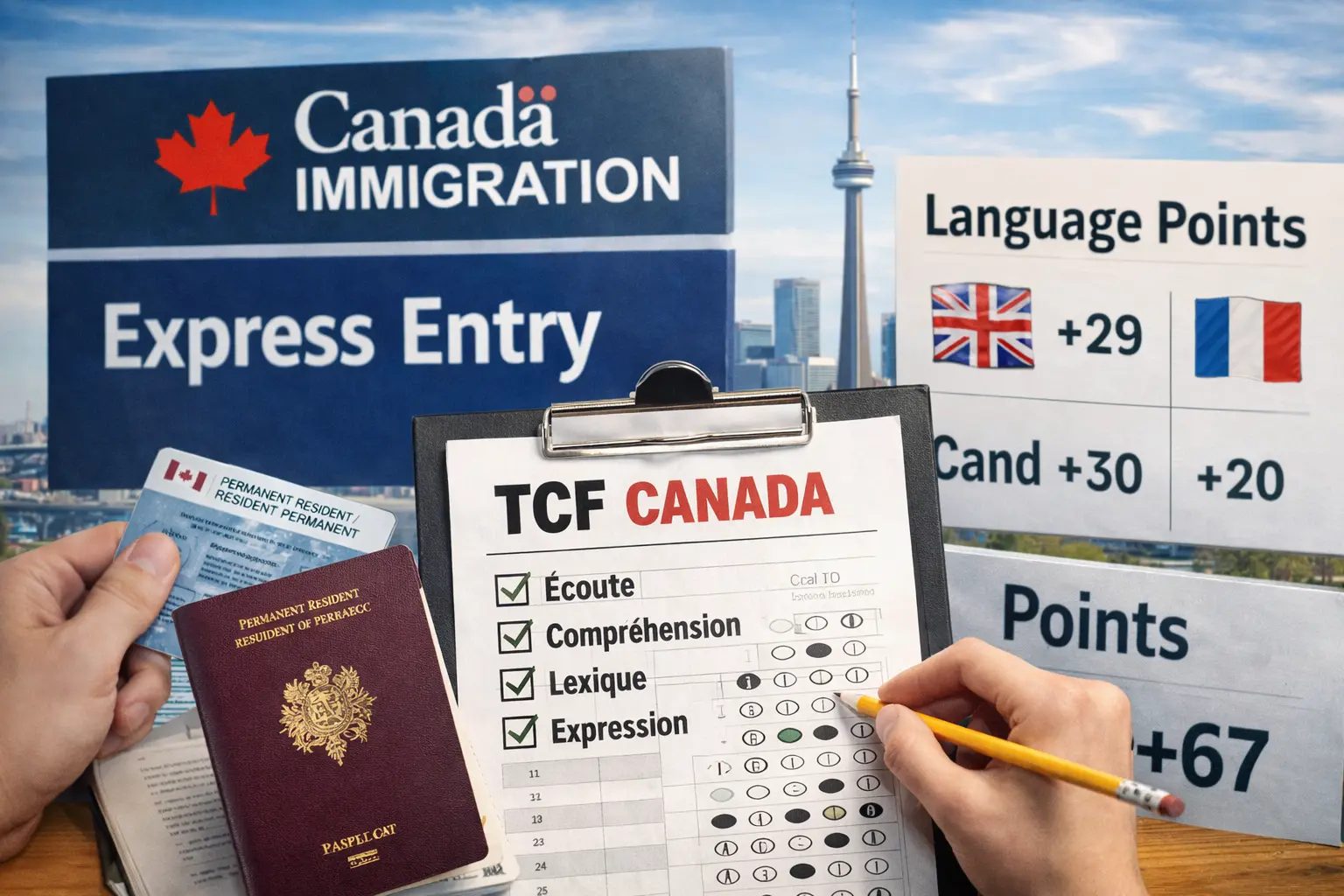
When François, a highly qualified telecommunications engineer from Lyon with a prestigious master's degree, a decade of specialized professional experience, and even a concrete job offer waiting for him in Montreal, first discovered the Canadian immigration system and began exploring his immigration options, he naively assumed that his impressive technical qualifications, advanced education, and secured employment would automatically suffice to guarantee rapid immigration approval. "I possessed a master's degree in telecommunications from a top French engineering school, over 10 years of progressively responsible professional experience in cutting-edge technologies, strong professional references, and a legitimate arranged employment offer from a respected Montreal telecommunications company—I genuinely believed I was an absolute priority candidate who would sail through the immigration process effortlessly," he recounts with a mixture of irony and hard-won wisdom about his initial misconceptions. Yet when he completed his first Express Entry Comprehensive Ranking System (CRS) points calculation with careful attention to all factors, the sobering result gave him a disappointing score of merely 380 points—a figure dramatically, frustratingly insufficient to receive an Invitation to Apply (ITA) for permanent residence in the intensely competitive Express Entry pool where minimum scores typically exceeded 470-490 points. "I experienced genuine shock and disbelief when I realized that my French language proficiency skills, which I had been completely neglecting and dismissing as a mere formality or bureaucratic checkbox, actually represented a massive potential of up to 136 direct CRS points out of the maximum 1,200 total points available in the system—more than 11% of my entire score determined by a single factor I had ignored. TCF Canada wasn't simply a bureaucratic language formality to be minimally satisfied, but rather the absolute cornerstone, foundation, and primary determinant of my entire immigration file success." After 8 intensive, focused months of strategic preparation investing approximately 400 hours of dedicated study, François successfully obtained impressive NCLC 9 scores in all four competencies, dramatically transforming his CRS points from the inadequate 380 to a highly competitive 465 points and receiving his coveted Invitation to Apply just three weeks after updating his Express Entry profile with his new language scores. Now successfully settled in Montreal working in his telecommunications field with permanent residence secured, he insists with conviction born of experience: "Deeply understanding the Canadian points system architecture, strategic logic, and optimization opportunities fundamentally transforms your entire approach to TCF Canada preparation. It evolves from being perceived as an obstacle or burden into being recognized as a strategic high-ROI investment in your Canadian future with measurable, concrete returns."
Why Language Points Represent Your Most Powerful Immigration Lever
The Canadian Express Entry immigration system relies on sophisticated selection logic based on human capital theory where each candidate attribute, skill, and qualification translates into precise, quantified Comprehensive Ranking System (CRS) points determining your competitive position in the applicant pool. TCF Canada doesn't constitute merely a simple linguistic prerequisite to be minimally satisfied or a bureaucratic checkbox to complete, but rather functions as a genuine strategic optimization lever with extraordinary power to radically transform your candidate profile, dramatically improve your competitive ranking, and potentially reduce your immigration timeline from years to months through targeted improvement in a single controllable factor. Mastering Express Entry architectural mechanisms, understanding the precise mathematical impact of each NCLC language level on your total CRS score, and strategically optimizing your language preparation investment to maximize point gains can literally make the determinative difference between rapid immigration success within 6-12 months and frustrating multi-year waiting periods or even permanent ineligibility.
Critical Immigration Reality: In the Express Entry system's intensely competitive environment, the difference between immigration success and failure often comes down to just 10-20 CRS points. Language improvement from NCLC 7 to NCLC 9 across all four competencies delivers 48 additional points—potentially the entire margin between years of waiting and immediate invitation. Language skills represent the ONLY major CRS factor fully within your control and improvable through dedicated effort, unlike age (decreasing), education (expensive/lengthy to improve), or Canadian experience (requires already being in Canada). This makes language optimization the highest-ROI investment for most immigration candidates.
Express Entry System Architecture: Understanding to Strategically Optimize
The Three Federal Programs: Different Paths, Strategic Opportunities
Express Entry manages three fundamentally distinct federal economic immigration programs, each featuring its own specific eligibility criteria, competitive dynamics, selection priorities, and strategic opportunities for candidates. Sophie, a specialized immigration consultant with over 500 successful client cases, explains the strategic importance of multi-program understanding: "Many candidates myopically focus exclusively on a single program that they initially identified as their obvious path, but comprehensively understanding all three programs' requirements, advantages, and nuances gives you substantially more flexibility, reveals alternative strategic paths, opens additional opportunities, and significantly optimizes your overall selection probability through portfolio diversification rather than single-path dependency."
Complete Federal Program Comparison and Strategic Analysis:
| Federal Program | Primary Eligibility Criteria | Language Requirements | Language Strategic Advantages | Maximum Possible French Points | Typical Candidate Profile |
|---|---|---|---|---|---|
| Federal Skilled Worker Program (FSW) | Minimum 1 year continuous full-time skilled work experience (NOC 0, A, B); Education credential assessment; Proof of funds; Admissibility | Minimum NCLC 7 in all four competencies for NOC 0/A; NCLC 5 for NOC B | French-English bilingualism extraordinarily valued (+22 bonus points for second official language); Higher language scores trigger transferability bonuses with education/experience | 136 points (first official language) + 22 points (second official language) + up to 50 transferability points = 208 total possible language-related points | Internationally educated and experienced professionals without Canadian experience; Typically applying from outside Canada |
| Canadian Experience Class (CEC) | Minimum 1 year Canadian skilled work experience within last 3 years; No education requirement; No proof of funds needed | NCLC 7 for NOC 0/A jobs; NCLC 5 for NOC B jobs | French proficiency = significant competitive advantage in increasingly competitive CEC draws; Opens French-priority provincial nomination opportunities | 136 points first language + 22 points second language + provincial nomination bonus (600 points if French stream) = Massive advantage | International students who graduated Canadian institutions; Temporary foreign workers already in Canada; Typically younger candidates building Canadian experience |
| Federal Skilled Trades Program (FST) | Minimum 2 years full-time skilled trade experience in last 5 years; Specific eligible skilled trade (construction, cooking, industrial, etc.); Valid job offer OR provincial trade certification | NCLC 5 in speaking and listening; NCLC 4 in reading and writing (lower threshold than FSW/CEC) | French proficiency opens Quebec skilled trades opportunities; Facilitates provincial certification processes in French regions; Reduces competition vs. English-only tradespeople | 136 points first language + 22 points second language + skilled trade transferability bonuses + provincial pathways | Electricians, plumbers, welders, chefs, mechanics with recognized trade certifications; Often older candidates with extensive practical experience; May have lower formal education |
Strategic Program Selection Based on Your Profile:
Optimal Program by Candidate Characteristics:
- If you have: International education + work experience + NO Canadian experience → FSW is your primary path
- Focus: Maximize language scores (targeting NCLC 9+) to compensate for lack of Canadian experience
- Strategy: Bilingualism (French + English) provides maximum competitive advantage
- Timeline: Can apply immediately from outside Canada with strong language scores
- If you have: Canadian work experience (1+ years skilled employment in Canada) → CEC is your optimal path
- Advantage: No proof of funds required; No education assessment needed; Generally lower CRS cutoff scores
- French Benefit: Increasingly important as CEC draws become more competitive; French speakers have edge
- Timeline: Can apply as soon as you complete 1 year Canadian experience
- If you have: Recognized skilled trade + trade certification → FST offers specialized pathway
- Lower Language Requirement: NCLC 5 speaking/listening vs. NCLC 7 for other programs
- French Advantage: Qualifies for Quebec skilled trades immigration; Less competitive than English
- Requirement: Must secure valid job offer OR provincial certification to be eligible
Comprehensive Ranking System (CRS) Architecture: The 1,200-Point Framework
The Express Entry Comprehensive Ranking System assigns candidates a total score out of maximum 1,200 points based on weighted combination of human capital factors, transferability factors, and additional factors. Marc, a successful immigrant who navigated the system and now works as immigration consultant, analyzes this strategic weighting with mathematical precision: "Out of the maximum 1,200 total CRS points available, approximately 290 points depend directly or indirectly on your language competency skills through various mechanisms—representing nearly 25% of your entire score determined by language alone. Language proficiency is simultaneously the highest-impact factor for most candidates AND the most controllable and improvable factor through dedicated preparation effort, unlike factors like age (inevitably declining), Canadian experience (requires being in Canada), or arranged employment (difficult to secure). This makes language optimization the single highest return-on-investment (ROI) preparation activity for almost all Express Entry candidates."
Complete 1,200-Point CRS Breakdown with Language Impact Analysis:
| CRS Factor Category | Maximum Points Available | Sub-factors | Language Impact | Controllability |
|---|---|---|---|---|
| A. Core Human Capital Factors (Alone) | 500 points maximum (with spouse) OR 600 points (without spouse) | Age (100-110 pts); Education level (140-150 pts); Official language proficiency (150-160 pts); Canadian work experience (70-80 pts) | DIRECT: 136-160 points from first official language; Language determines whether you qualify for program at all | Age: None (declining); Education: Low (expensive); Language: HIGH (effort-based); Canadian exp: Medium |
| B. Spouse/Partner Factors | 40 points maximum (if applicable) | Spouse education (10 pts); Spouse language (20 pts); Spouse Canadian work experience (10 pts) | DIRECT: 20 points possible from spouse's language proficiency; Can significantly impact whether to include spouse in application | Spouse factors: Medium-High (spouse can also prepare language test) |
| C. Skill Transferability Factors | 100 points maximum | Education + Language (50 pts); Education + Canadian experience (50 pts); Foreign work + Language (50 pts); Foreign work + Canadian experience (50 pts); Trade certification + Language (50 pts) | INDIRECT: Language is TRIGGER for unlocking transferability bonuses; NCLC 7+ in ALL competencies required to access these 50-100 additional points; Without sufficient language, these points are completely inaccessible | High—language is the unlocking key for transferability bonuses with education/experience you already possess |
| D. Additional Factors | 600 points maximum | Provincial nomination (600 pts); Arranged employment in Canada (50-200 pts depending on NOC); Canadian education credential (15-30 pts); Sibling in Canada (15 pts); French-language skills bonus (varies by program) | INDIRECT: Many provincial French-stream nominations REQUIRE strong French (NCLC 7-9); French skills make provincial nomination much more accessible; Some provinces give bonus points for bilingualism within their nomination systems | Provincial nomination: Medium (French skills increase probability); Job offer: Low (difficult to secure); Education: Low; Sibling: None |
| TOTAL LANGUAGE-RELATED IMPACT: 136 direct points (first language) + 22 points (second official language) + 20 points (spouse language) + 50-100 points (transferability triggers) + potential provincial nomination (600 points via French streams) = Up to 290+ points directly or indirectly determined by language proficiency | ||||
Detailed Impact of NCLC Levels on Your CRS Score: The Mathematics of Language Points
TCF Canada Score to NCLC Conversion and Precise CRS Point Attribution
Each incremental point you earn in TCF Canada examination translates directly into Express Entry CRS immigration points according to a precise, published conversion scale established by Immigration, Refugees and Citizenship Canada (IRCC). Caroline, a mathematician who transitioned careers into specialized immigration consulting after immigrating herself, has systematically modeled this mathematical impact: "The language progression curve isn't linear—it's exponential in both difficulty and point value. Moving from baseline NCLC 7 to excellent NCLC 9 across all four competencies delivers a massive 48 additional CRS points, which is exactly equivalent in system value to having 3 additional years of skilled professional work experience, completing an additional Canadian master's degree, or being several years younger. This equivalency makes language preparation the highest-efficiency optimization strategy for most candidates who are already in their 30s with established education and careers."
Complete NCLC Level to CRS Points Conversion Table (First Official Language):
| Competency | NCLC 10+ (Native/Superior) | NCLC 9 (Advanced) | NCLC 8 (Upper-Intermediate) | NCLC 7 (Intermediate) | NCLC 4-6 (Basic-Elementary) | Below NCLC 4 |
|---|---|---|---|---|---|---|
| Speaking (Oral Expression) | 32 points | 28 points | 22 points | 18 points | 6-8 points | 0 points |
| Listening (Oral Comprehension) | 32 points | 28 points | 22 points | 18 points | 6-8 points | 0 points |
| Reading (Written Comprehension) | 32 points | 28 points | 22 points | 18 points | 6-8 points | 0 points |
| Writing (Written Expression) | 32 points | 28 points | 22 points | 18 points | 6-8 points | 0 points |
| TOTAL POSSIBLE (All 4 Competencies) | 128 points | 112 points | 88 points | 72 points | 24-32 points | 0 points |
| Point Gain vs. Next Lower Level | +16 pts (vs NCLC 9) | +24 pts (vs NCLC 8) | +16 pts (vs NCLC 7) | +40-48 pts (vs NCLC 4-6) | +24-32 pts (vs below NCLC 4) | — |
Strategic NCLC Level Targeting Based on Candidate Profile:
NCLC 7 (Minimum Competitive Threshold) - 72 Points Total
- Who should target: Candidates with strong compensating factors (Provincial nomination secured; Arranged employment; Canadian master's degree; Under 30 years old with extensive experience)
- Strategic reality: NCLC 7 is MINIMUM for FSW/CEC eligibility and transferability bonuses, but increasingly insufficient for competitive CRS scores in regular draws (typically 470-490+ required)
- Risk: Vulnerable to CRS cutoff increases; May wait months/years for invitation; Doesn't qualify for French-priority draws
- Preparation timeline: 3-6 months for candidates starting at B1 level
NCLC 8 (Competitive Baseline) - 88 Points Total (+16 vs NCLC 7)
- Who should target: Most candidates without provincial nomination; Those aged 30-35; Those with bachelor's degree + 3-5 years experience
- Strategic reality: Solid competitive level for regular Express Entry draws; Qualifies for most French provincial programs; Reasonable target for most B1-B2 baseline candidates
- Benefit: +16 CRS points vs NCLC 7 can reduce waiting time from months to weeks
- Preparation timeline: 4-8 months intensive preparation for B1 baseline
NCLC 9 (Highly Competitive) - 112 Points Total (+24 vs NCLC 8, +40 vs NCLC 7)
- Who should target: Young candidates (25-30) needing maximum points; Those without Canadian experience/education; Candidates in highly competitive occupations; Those pursuing French-priority draws
- Strategic reality: Excellent level putting you in top tier of applicants; Near-guaranteed invitation in French-priority draws; Maximizes transferability bonuses
- Massive benefit: +24 points vs NCLC 8, +40 points vs NCLC 7—potentially transformative difference
- Preparation timeline: 6-12 months intensive preparation from B1-B2 baseline
NCLC 10+ (Exceptional/Native-Level) - 128 Points Total (+16 vs NCLC 9)
- Who achieves: Native French speakers; Highly advanced learners with years of immersion; French education backgrounds
- Strategic reality: Maximum language points; Demonstrates near-native proficiency; Optimal for all programs
- Diminishing returns: Only +16 points vs NCLC 9; Very difficult to achieve for non-natives; Effort may be better spent on other factors if already at NCLC 9
- Preparation timeline: Typically requires native background or 12-24+ months advanced study
Optimization Strategies by Complete Candidate Profile:
Profile Analysis: Young Professional Without Canadian Experience
- Age: 28 years (105 CRS points)
- Education: Master's degree - foreign (135 CRS points)
- Work experience: 4 years skilled (53 CRS points)
- Canadian experience: None (0 points)
- Current language: NCLC 7 all competencies (72 points)
- Current total: 365 CRS points (insufficient for invitation - needs 470+)
Optimization Strategy: Language improvement is ONLY realistic path to competitiveness
- Option A: Improve to NCLC 8 → +16 points → 381 total (still insufficient)
- Option B: Improve to NCLC 9 → +40 points → 405 total + triggers transferability (education + language 50 points) → 455 total (competitive range!)
- Conclusion: Must target NCLC 9 to become competitive; 6-9 month preparation investment vs. years waiting
Profile Analysis: Experienced Professional with Strong Compensating Factors
- Age: 37 years (99 CRS points - declining)
- Education: Bachelor's + Canadian Master's (135 + 15 bonus = 150 points)
- Work experience: 10 years foreign + 2 years Canadian (128 CRS points combined)
- Current language: NCLC 7 (72 points)
- Arranged employment: None (0 points)
- Current total: 449 CRS points (close but insufficient for regular draws at 470+)
Optimization Strategy: Modest language improvement sufficient to reach competitive threshold
- Option: Improve to NCLC 8 → +16 direct points + triggers transferability (Canadian experience + language 50 points) → +66 total points → 515 CRS (highly competitive!)
- Conclusion: NCLC 8 sufficient given strong profile; 4-6 month preparation timeline; Immediate competitiveness
Skill Transferability Factors: Language as the Unlocking Mechanism
Understanding Transferability Bonuses: Why NCLC 7+ Is Critical Threshold
The Express Entry skill transferability system awards bonus CRS points (maximum 100 total) for favorable synergistic combinations between language proficiency and other human capital factors including education level and work experience. However, these valuable transferability bonuses are NOT automatically awarded—they are LOCKED until you achieve minimum NCLC 7 in ALL FOUR competencies, functioning as a threshold requirement that activates these additional points. Julie, an immigrated data analyst who successfully navigated the system, describes these critical synergies: "My strong language skills achieving NCLC 9 across all competencies didn't just give me 112 direct language points—they also triggered substantial transferability bonuses combining with my foreign education and work experience. These 50 additional automatically awarded points were absolutely decisive for my receiving an invitation; without achieving NCLC 7+ threshold, these points would have remained completely inaccessible regardless of my education and experience qualifications."
Complete Transferability Factor Breakdown with Language Requirements:
| Transferability Combination | Mandatory Language Requirement | Education/Experience Requirement | Maximum Points Available | Strategic Impact |
|---|---|---|---|---|
| Education + Official Language Proficiency | NCLC 7 or higher in ALL FOUR competencies for first official language | Post-secondary credential (13-25 pts depending on level); Higher education = more points within this category | Maximum 50 points (13 pts for college; 25 pts for two or more degrees with one at doctorate level) | Values higher educational credentials; Doctorate holders gain maximum benefit; Language is absolute requirement—without NCLC 7+, education points completely lost |
| Foreign Work Experience + Official Language Proficiency | NCLC 7 or higher in ALL FOUR competencies for first official language | Foreign skilled work experience (13-25 pts depending on duration); 3+ years foreign + strong language = maximum 25 pts | Maximum 50 points (13 pts for 1-2 years foreign work; 25 pts for 3+ years foreign work) | Optimizes value of international professional experience; Particularly valuable for FSW applicants without Canadian experience; Makes foreign experience nearly as valuable as Canadian |
| Certificate of Qualification (Trade) + Official Language Proficiency | NCLC 5 or higher in ALL FOUR competencies (lower threshold for trades) | Valid Canadian provincial/territorial certificate of qualification in skilled trade | Maximum 50 points | Opens Federal Skilled Trades program pathway; Lower language requirement (NCLC 5 vs 7) makes this more accessible; Particularly valuable for tradespeople |
| Canadian Work Experience + Foreign Work Experience | No direct language requirement for THIS combination (but NCLC 7 required for basic program eligibility) | 1-2 years Canadian + 1-2 years foreign (13 pts) up to 2+ years Canadian + 3+ years foreign (50 pts) | Maximum 50 points | Rewards both Canadian and international experience; Most valuable for CEC candidates with previous foreign experience; Still requires baseline NCLC 7 for CEC eligibility |
| Canadian Work Experience + Post-Secondary Education | No direct language requirement for THIS combination (but NCLC 7 required for program eligibility) | 1-2 years Canadian + post-secondary (13 pts) up to 2+ years Canadian + doctorate (50 pts) | Maximum 50 points | Maximizes value of Canadian experience combined with higher education; Particularly valuable for international graduates working in Canada; Language still required for base eligibility |
Critical Strategic Implications of Transferability Thresholds:
The NCLC 7 "Unlocking" Phenomenon:
Achieving NCLC 7 in all four competencies functions as a critical unlocking mechanism for 50-100 additional transferability points. Consider these scenarios:
- Candidate A: NCLC 6.5 average (just below threshold) + Master's degree + 4 years foreign experience → Transferability points: 0 (locked out entirely)
- Candidate B: NCLC 7 all competencies + Master's degree + 4 years foreign experience → Transferability points: 50 (education + language) + 25 (foreign work + language) = 75 points bonus
- Point Difference: 75 CRS points from achieving NCLC 7 threshold—equivalent to 5+ years of work experience or a doctorate degree!
Lesson: Crossing from NCLC 6 to NCLC 7 is MORE valuable than the direct 18-40 point language gain because it unlocks massive transferability bonuses you already qualified for but couldn't access. This makes NCLC 7 the absolute minimum competitive target.
French-English Bilingualism: The Ultimate Competitive Advantage
Second Official Language Points and Strategic Value
Canada's official bilingual status (French and English as co-equal official languages) creates substantial additional CRS point opportunities for candidates demonstrating proficiency in BOTH official languages. Mastery of French as a second official language (after English) OR English as a second official language (after French) brings significant direct bonus points plus opens access to French-priority immigration streams and provincial programs. Antoine, a bilingual telecommunications engineer who successfully immigrated, testifies to the transformative impact: "My French-English bilingualism with NCLC 9 French and IELTS CLB 9 English gave me 22 valuable additional CRS points beyond my primary language points and simultaneously opened extraordinary opportunities in specialized French-priority provincial nomination programs that had substantially lower competition and faster processing timelines. This bilingual capacity was my decisive competitive differential that accelerated my immigration by approximately 12-18 months compared to monolingual peers with similar profiles."
Second Official Language Point Allocation:
| Second Language Level | Speaking & Listening | Reading & Writing | Total Additional Points |
|---|---|---|---|
| NCLC/CLB 9 or higher in all four competencies | 6 points | 6 points | 22 additional CRS points total |
| NCLC/CLB 7-8 in all four competencies | 3 points | 3 points | 6 additional CRS points total |
| Below NCLC/CLB 7 in any competency | 0 points | 0 points | 0 additional points |
Complete Strategic Advantages of French-English Bilingualism:
Advantage #1: Direct CRS Points (22 points maximum)
- Requires NCLC/CLB 9+ in ALL four competencies of second language
- Effectively raises your ceiling from 136 first-language points to 158 total language points
- 22 points = equivalent to approximately 1.5 years additional work experience or moving from 35 to 30 years old
Advantage #2: Access to French-Priority Express Entry Draws
- IRCC conducts periodic French-language proficiency draws with SUBSTANTIALLY lower CRS cutoffs (often 40-70 points lower than general draws)
- Example: General draw CRS cutoff = 490 points | French-priority draw cutoff = 430 points (60-point advantage!)
- Eligibility requirement: Typically NCLC 7+ in all competencies + meeting basic FSW/CEC/FST requirements
- Strategic value: Can mean difference between years of waiting vs immediate invitation
Advantage #3: Enhanced Access to Francophone Provincial Nomination Programs
- Ontario OINP French-Speaking Skilled Worker stream
- New Brunswick Strategic Initiative stream with French priority
- Manitoba MPNP with French language bonus points
- Saskatchewan SINP with French language additional points
- Each offering easier pathways, lower requirements, or bonus points for French speakers
Advantage #4: Canadian Job Market Competitiveness
- Bilingual positions (federal government, national companies, client-facing roles) pay 10-20% premium
- Federal government hiring strongly favors bilingual candidates
- Easier arranged employment (50-200 CRS points) in bilingual markets (Ottawa, Montreal, Moncton)
Advantage #5: Settlement and Integration Facilitation
- Access to both Francophone and Anglophone communities across Canada
- Geographic flexibility (comfortable in Quebec, Ontario, New Brunswick French communities)
- Enhanced social integration and support network opportunities
Bilingualism Strategic Decision Framework:
Should You Pursue Bilingualism?
DEFINITELY PURSUE if:
- You already have intermediate proficiency (B1+) in both French and English
- Your current CRS score is 20-40 points below competitive threshold
- You have 6-12 months timeline flexibility for preparation
- You're targeting Quebec or bilingual regions (Ottawa, Moncton)
CONSIDER CAREFULLY if:
- You're starting from beginner level in second language (12-18+ month timeline)
- Your CRS score already exceeds cutoff by 20+ points with first language only
- You have urgent immigration timeline (Provincial nomination might be faster)
PROBABLY NOT OPTIMAL if:
- You have zero proficiency in second language + urgent timeline
- You're already 40+ years old (age points declining rapidly; focus on maximizing first language instead)
- You have secured provincial nomination (already have 600 points; bilingualism adds limited value)
Provincial Nominee Programs (PNPs) and Francophone Immigration Priorities
How French Language Skills Open Provincial Pathways
Provincial Nominee Programs (PNPs) offer alternative, often faster immigration pathways with province-specific selection criteria, priorities, and requirements distinct from federal Express Entry. Several provinces have established dedicated Francophone immigration streams OR award significant bonus points for French proficiency within their general streams, recognizing French language skills as valuable human capital supporting provincial Francophone communities and contributing to Canadian official language objectives. Émilie, a specialized PNP consultant with experience across multiple provincial programs, explains the strategic significance: "Several Canadian provinces have created dedicated French-priority immigration streams with substantially relaxed eligibility criteria, lower required CRS scores, faster processing timelines, and less competition compared to general immigration streams. For candidates with excellent French proficiency (NCLC 7-9), these Francophone PNP streams can represent dramatically faster and more accessible immigration pathways, potentially compensating for weaknesses in other profile areas like younger age, limited work experience, or absence of Canadian credentials."
Complete Provincial Francophone Program Comparison:
| Province | Francophone Program Name | French Language Requirement | Additional Eligibility Criteria | Strategic Advantages | Typical Timeline |
|---|---|---|---|---|---|
| Ontario | Ontario Immigrant Nominee Program (OINP) - French-Speaking Skilled Worker Stream | Mandatory: NCLC 7 or higher in all four competencies; English proficiency also required (CLB 6 minimum) | Express Entry profile with CRS 400+; Bachelor's degree or higher; Skilled work experience (NOC 0/A/B); Intention to reside in Ontario | Provincial nomination = 600 CRS points (virtually guarantees invitation); Dedicated stream for French speakers; Regular draws throughout year | Nomination processing: 60-90 days typically; Federal PR after nomination: 6-9 months |
| New Brunswick | New Brunswick Provincial Nominee Program (NBPNP) - Express Entry Labour Market Stream with French Priority | Advantageous: NCLC 5 minimum acceptable (lower than Ontario); Strong French (NCLC 7+) significantly advantaged | Express Entry profile; Connection to New Brunswick (exploratory visit, job offer, family, or previous work/study); Skilled work experience | Lower competition than Ontario; More accessible for intermediate French (NCLC 5-6); Strong French highly valued by province; Smaller applicant pool | Nomination: 3-6 months typically; Federal PR: 6-9 months; Total ~12-18 months |
| Manitoba | Manitoba Provincial Nominee Program (MPNP) - Skilled Workers in Manitoba + French Language Proficiency Bonus | Bonus points: Not mandatory but French proficiency NCLC 5+ receives substantial bonus points in ranking system | 6+ months Manitoba work experience OR Manitoba education credential; Settlement plan in Manitoba; Employer support or demand occupation | French speakers receive significant ranking advantage; Relatively accessible for those already in Manitoba (students, workers); Frequent draws | Expression of Interest ranking; Invitation based on score; Processing 4-6 months after invitation |
| Saskatchewan | Saskatchewan Immigrant Nominee Program (SINP) - International Skilled Worker with French Language Additional Points | Bonus points: Optional; NCLC 4+ receives additional points in Expression of Interest ranking | Points-based system (minimum 60/100); Work experience in demand occupation; Education credential; Language (English OR French); Settlement funds | French proficiency provides ranking advantage; Occupation demand-driven; No job offer required for some streams; Relatively accessible | Expression of Interest system; Invitation based on ranking; Processing 6-12 months |
| British Columbia | BC Provincial Nominee Program (BC PNP) - Skills Immigration with Regional Pilot | Advantageous: No specific French requirement; Bilingualism may support rural/regional applications | Valid BC job offer (most streams); Employer requirements; Minimum language (CLB 4-6 depending on NOC); Qualifications for position | Job offer-driven (not French-specific); Regional pilot programs value diverse skills including languages; Large francophone communities in some regions | Nomination: 2-4 months typically; Federal PR: 6-9 months |
| Quebec | Quebec Skilled Worker Program (QSWP) - Separate System Outside Express Entry | CRITICAL: French proficiency heavily weighted in Quebec selection; Advanced French (B2-C1) essential for competitive points | Points-based Quebec selection grid; Intention to settle in Quebec; Adaptability factors; Education and experience; ENTIRELY SEPARATE from federal Express Entry | French is PRIMARY selection factor (not just advantage); Dedicated Quebec immigration system; Substantial Francophone community and opportunities; Independent selection authority | Quebec selection: Variable 6-24+ months; Federal PR after Quebec selection: 12-18+ months; Total often 24-36+ months |
Multi-Path Strategic Approach: Maximizing Provincial Opportunities
An optimal, comprehensive immigration strategy explores and actively pursues several immigration pathways simultaneously rather than relying exclusively on single federal Express Entry pathway. Laurent, an experienced immigration strategic advisor who has guided hundreds of candidates, strongly recommends portfolio diversification: "Absolutely don't limit yourself exclusively to federal Express Entry while neglecting provincial opportunities. Your excellent French language proficiency can simultaneously open substantially faster, less competitive, or more accessible provincial immigration pathways that might deliver immigration success months or even years earlier than federal routes. Strategic candidates maintain active applications in 2-4 different streams concurrently, maximizing probability of earliest pathway success."
Recommended Multi-Path Strategy Framework:
Primary Path (Always Include):
- Federal Express Entry profile (FSW, CEC, or FST depending on eligibility)
- Continuously optimize CRS score through language improvement and other factors
- Monitor all federal draws (general, French-priority, program-specific)
- Timeline: Ongoing; Always active
Secondary Paths (Pursue 2-3 Simultaneously Based on Eligibility):
- If you have NCLC 7+ French: Apply to Ontario OINP French-Speaking Skilled Worker (if CRS 400+)
- If you can visit/connect to New Brunswick: Pursue NBPNP with exploratory visit and French advantage
- If you have Manitoba connection: MPNP with French language bonus points
- If you're Quebec-focused: Quebec Skilled Worker Program (entirely separate timeline and process)
- If you have valid job offer: Province-specific employer-driven streams
Active Monitoring and Adaptation (Essential):
- Provincial programs change frequently (new streams, modified criteria, updated draws)
- Subscribe to provincial program updates and immigration news
- Regularly reassess pathway viability based on changing requirements
- Adapt strategy based on actual progression in each pathway
- Don't abandon pathways prematurely but also don't waste effort on closed doors
System Evolution and Recent Immigration Trends
Growing Federal Priority for French Language and Francophone Immigration
Recent years demonstrate increasingly strong federal government prioritization and valorization of French language proficiency and Francophone immigration as explicit policy objectives supporting Canada's linguistic duality and Francophone minority communities outside Quebec. Dr. Sarah Michaud, an immigration policy researcher at a major Canadian university who analyzes immigration trends and government priorities, observes: "The Canadian federal government has systematically and deliberately strengthened the importance and weighting of official French language proficiency for Express Entry selection and economic integration success. This sustained strategic trend consistently favors candidates with excellent French language skills through multiple mechanisms including dedicated French-language draws, lowered CRS thresholds for French speakers, enhanced provincial Francophone streams, and increased bilingualism bonus points. This policy direction is likely to continue and potentially intensify given demographic trends and political commitments to linguistic duality."
Recent Pro-Francophone Policy Evolutions (2020-2025):
Innovation #1: Category-Based Selection Including French-Language Proficiency
- Launch: May 2023 introduction of category-based Express Entry selection
- French Category: Dedicated draws for candidates with strong French proficiency (NCLC 7+ typically)
- Impact: Substantially lower CRS cutoffs (often 40-80 points below general draws)
- Example draws: French category cutoff 375 vs general draw cutoff 490 = 115-point advantage!
- Frequency: Multiple French-category draws per year; Increasing frequency trend
Innovation #2: Francophone Immigration Strategy and Action Plan
- Federal government target: Increase Francophone immigration to 4.4% of total immigration outside Quebec
- Specific measures: Enhanced provincial Francophone streams; Federal settlement support; Community development funding
- Impact for candidates: Increased Francophone-focused opportunities and pathways
Innovation #3: Provincial Francophone Stream Expansion
- Ontario OINP French-Speaking Skilled Worker: Expanded regular draws; Increased nomination allocations
- New Brunswick: Enhanced French-language pathways; Streamlined francophone processing
- Other provinces: Manitoba, Saskatchewan bonus point increases for French proficiency
Innovation #4: Enhanced Bilingualism Point Values
- Second official language points maintained at 22 maximum (significant relative value)
- Growing emphasis on bilingualism in credential recognition and professional licensing
- Federal public service hiring increasingly values bilingualism
Strategic Immigration Timeline Planning
Optimized Multi-Stage Timeline Synchronized with Language Preparation
Your immigration temporal strategy must intelligently integrate and synchronize TCF Canada language preparation timelines with Express Entry invitation cycles, provincial program application deadlines, credential assessment processing times, and practical settlement preparation requirements. Marie, a specialized immigration timeline planner and project manager, advises systematic coordination: "Strategically synchronize your TCF Canada preparation completion and test scheduling with Express Entry draw cycles, provincial program intake periods, and seasonal patterns. This intelligent coordination and timing optimization can reduce your total immigration timeline by 3-6 months compared to sequential, uncoordinated approaches where you complete steps inefficiently in series rather than parallel where possible."
Complete Immigration Journey Timeline with Parallel Preparation:
| Journey Stage | Recommended Duration | Key Actions and Deliverables | Primary Objectives | Parallel Activities |
|---|---|---|---|---|
| Stage 1: Initial Assessment & Planning | 2-4 weeks | French level diagnostic test; Express Entry CRS points calculator; Eligibility assessment (FSW/CEC/FST); Provincial program research; Gap analysis and strategy development | Establish accurate baseline; Determine realistic target NCLC levels; Develop personalized multi-path strategy; Create realistic timeline | Begin gathering supporting documents (birth certificate, degrees, transcripts, employment letters); Research Canadian credential assessment agencies |
| Stage 2: Intensive TCF Canada Preparation | 3-12 months (depending on baseline and target) | Systematic language study (20-25 hours weekly if intensive); Regular progress testing; Format mastery; Strategic weak area targeting; Practice tests monthly | Achieve target NCLC levels (typically 7-9); Build confidence and test-taking skills; Maximize language CRS points | PARALLEL: Submit credential assessment (WES/IQAS - 6-12 week processing); Gather employment documentation; Professional reference letters; Build Canadian network (LinkedIn connections) |
| Stage 3: TCF Canada Examination | 1 month total (registration to results) | Test registration 4-6 weeks advance; Test day preparation; Exam completion; Results waiting (typically 2-4 weeks) | Obtain validated TCF Canada scores; NCLC level certification; Official results for EE profile | PARALLEL: Complete credential assessment if not finished; Finalize employment documentation; Begin Express Entry profile preparation (draft personal history, addresses, travel) |
| Stage 4: Express Entry Profile Creation | 1-2 weeks | Complete Express Entry online profile; Upload all supporting documents; Language test results entry; Education credentials entry; Work history documentation; Verification and submission | Active Express Entry profile in pool; Accurate CRS score calculation confirmed; Eligibility for draws established | PARALLEL: Submit provincial program applications if pursuing (Ontario OINP, NBPNP, etc.); Continue professional networking; Job search if targeting arranged employment |
| Stage 5: Invitation Waiting & Profile Optimization | Variable: Days to months (depending on CRS score and draw frequency) | Monitor bi-weekly Express Entry draws; Track CRS cutoff trends; Optimize profile if possible (improve language, gain experience, pursue provincial nomination); Respond immediately to invitation if received | Receive Invitation to Apply (ITA) through federal draw OR provincial nomination (600 points) | Continue French language maintenance; Research settlement locations; Financial planning; Professional licensing research if applicable |
| Stage 6: PR Application Submission (Post-ITA) | 60 days maximum (strict deadline after receiving ITA) | Gather all required documents (police certificates, medical exams, proof of funds, complete work/education documentation); Complete eAPR application; Submit within 60-day deadline | Complete permanent residence application submitted; Documentation verified; Processing initiated | Begin settlement preparation (housing research, job applications, professional licensing applications, family preparation) |
| Stage 7: Application Processing & Approval | 6-12 months typically (federal processing standard) | Background checks; Security screening; Medical clearance; Application review; Respond to any requests for additional information; Final decision | Permanent Residence approval; Confirmation of Permanent Residence (COPR) document received; Immigration visa issued | Finalize settlement plans; Arrange housing; Confirm employment or job search strategy; Plan arrival logistics; Prepare family for transition |
| Stage 8: Landing in Canada | Must land before COPR expiry (typically 1 year from medical exam) | Travel to Canada; Port of entry processing; PR card application; Social Insurance Number; Bank account; Housing; Healthcare enrollment | Official permanent resident status activated; Settlement process initiated; Integration beginning | Job search (if not secured); Professional licensing completion; Community integration; French language maintenance and improvement |
Critical Timeline Optimization Strategies:
Parallel Processing Principle:
Don't wait to complete Stage X before beginning Stage Y if they can proceed simultaneously:
- ✓ Begin credential assessment DURING language preparation (not after)
- ✓ Research provincial programs WHILE studying for TCF (not sequentially)
- ✓ Network with Canadian professionals DURING preparation (builds connections early)
- ✓ Draft Express Entry profile content BEFORE receiving TCF results (ready to submit immediately)
- ✗ Don't wait for perfect French before starting other preparation elements
- ✗ Don't delay credential assessment until after TCF (wastes 2-3 months)
Timeline Compression Opportunity: Parallel processing can reduce total timeline from 18-24 months to 12-15 months
Success Stories: Strategic Language Optimization Transforming Immigration Outcomes
Stéphane's Transformation: From Ineligible 380 to Competitive 470 Points
"My initial Express Entry points calculation delivered devastating news: just 380 total CRS points, dramatically insufficient for receiving an invitation to apply when cutoff scores were consistently 470-490 points—a crushing 90-110 point gap that seemed insurmountable. Systematically analyzing my complete profile to identify possible improvement levers, I realized my language proficiency skills represented my single most realistic, controllable, and high-impact improvement opportunity. I made a strategic decision to invest 6 intensive, focused months in comprehensive TCF Canada preparation rather than waiting years hoping for cutoff decreases or pursuing expensive additional education. Through disciplined daily study averaging 3-4 hours, I successfully progressed from baseline NCLC 6 to excellent NCLC 9 in all four competencies. These hard-won language improvements delivered 48 direct additional CRS points from higher NCLC levels, PLUS triggered previously inaccessible transferability bonuses combining my foreign master's degree with strong language (50 points) and foreign work experience with language (25 points). My total CRS score transformed from inadequate 380 to highly competitive 470 points—a revolutionary 90-point increase from language optimization alone. I received my coveted Invitation to Apply just three weeks after updating my Express Entry profile with my new TCF scores. Language investment = immigration success."
- Stéphane, Financial Analyst, now thriving in Toronto
Stéphane's Detailed Transformation Analysis:
| CRS Factor | Initial Score (NCLC 6) | After Optimization (NCLC 9) | Point Gain | Optimization Method |
|---|---|---|---|---|
| Age (28 years) | 105 points | 105 points | 0 (constant) | N/A - uncontrollable factor |
| Education (Foreign Master's) | 135 points | 135 points | 0 (constant) | N/A - already maximized |
| Work Experience (4 years foreign) | 53 points | 53 points | 0 (constant) | N/A - can't accelerate time |
| Language (First Official - French) | 55 points (NCLC 6 mixed) | 112 points (NCLC 9 all) | +57 points | 6 months intensive TCF preparation (400 hours investment) |
| Transferability: Education + Language | 0 points (locked - needed NCLC 7+) | 50 points (unlocked by NCLC 9) | +50 points | Automatic bonus once NCLC 7+ threshold achieved |
| Transferability: Foreign Work + Language | 0 points (locked - needed NCLC 7+) | 13 points (3-5 years foreign work at NCLC 9) | +13 points | Automatic bonus once NCLC 7+ threshold achieved |
| TOTAL CRS SCORE | 348 points (ineligible) | 468 points (competitive!) | +120 points total | Language optimization delivered 120-point transformation |
Patricia's Multi-Path Provincial Success Strategy
"Rather than relying exclusively on federal Express Entry pathway where my CRS score was marginal, I strategically developed and simultaneously pursued a parallel multi-path approach combining federal and provincial immigration streams. During my intensive TCF Canada preparation period, I concurrently researched, prepared, and submitted applications for Ontario's French-Speaking Skilled Worker provincial nomination program which had substantially more accessible requirements for candidates with strong French proficiency. My achieved NCLC 8 across all competencies qualified me for this Ontario French stream, and I successfully received my provincial nomination delivering 600 additional CRS points before I would have received a federal invitation based on my base score alone. This parallel dual-pathway strategic approach secured my immigration success approximately 8-12 months faster than exclusive reliance on federal Express Entry would have delivered."
- Patricia, Management Consultant, now successful in Toronto
Conclusion: TCF Canada as Immigration Success Catalyst
TCF Canada examination fundamentally transcends and extends far beyond simple language proficiency testing to function as a genuine transformative catalyst, strategic accelerator, and success determinant for your entire Canadian permanent residence immigration project. In Canada's sophisticated Express Entry system where literally every single Comprehensive Ranking System point can determine the difference between immigration success and prolonged waiting or permanent ineligibility, your French language proficiency skills represent simultaneously your most controllable improvement lever AND your highest-impact optimization opportunity for most candidate profiles.
Strategic Summary: The Language-Immigration Success Connection
The Mathematics of Language Optimization:
- 136 Direct CRS Points Maximum: First official language proficiency (French or English) = 11.3% of total 1,200 possible points
- +22 Bilingualism Bonus Points: Second official language proficiency = additional competitive advantage and specialized draw access
- +50-100 Transferability Points: Language skills unlock previously inaccessible bonuses combining with education and experience you already possess
- +600 Provincial Nomination Points: French proficiency opens French-priority provincial pathways (Ontario OINP, NBPNP, Manitoba, etc.)
- = Up to 808 Total Points: Directly or indirectly determined by language proficiency (67% of maximum 1,200!)
Beyond Points: Qualitative Advantages
- Access to lower-competition French-priority Express Entry draws (40-80 point lower cutoffs)
- Enhanced Canadian job market competitiveness (bilingual positions pay 10-20% premium)
- Faster provincial pathways with French streams (reduced wait times vs. general streams)
- Settlement and integration advantages (access to Francophone communities and support)
- Career advancement opportunities (federal government, national companies value bilingualism)
François's Final Wisdom from Montreal:
"Deeply understanding TCF Canada's profound impact on your comprehensive immigration profile, competitive positioning, and timeline fundamentally transforms your entire motivation, strategic approach, and preparation intensity. Language proficiency evolves in your mind from being perceived as bureaucratic obstacle or burdensome requirement to overcome into being recognized as strategic high-return investment in your Canadian future with concrete, measurable returns. Each incremental NCLC level gained through dedicated preparation effort brings you tangibly, measurably closer to receiving your Invitation to Apply and beginning your new permanent life in Canada. TCF Canada isn't barrier—it's gateway. Master it strategically."
* * *
Laissez un commentaire
Votreadresse email ne sera pas publie. Les champs obligatoires sont marque avec *




0 Commentaires
aucun commentaire
Soyez le premier a partager votre avis !