-
Auteur :
 TCF Canada
- Sep 02, 2026
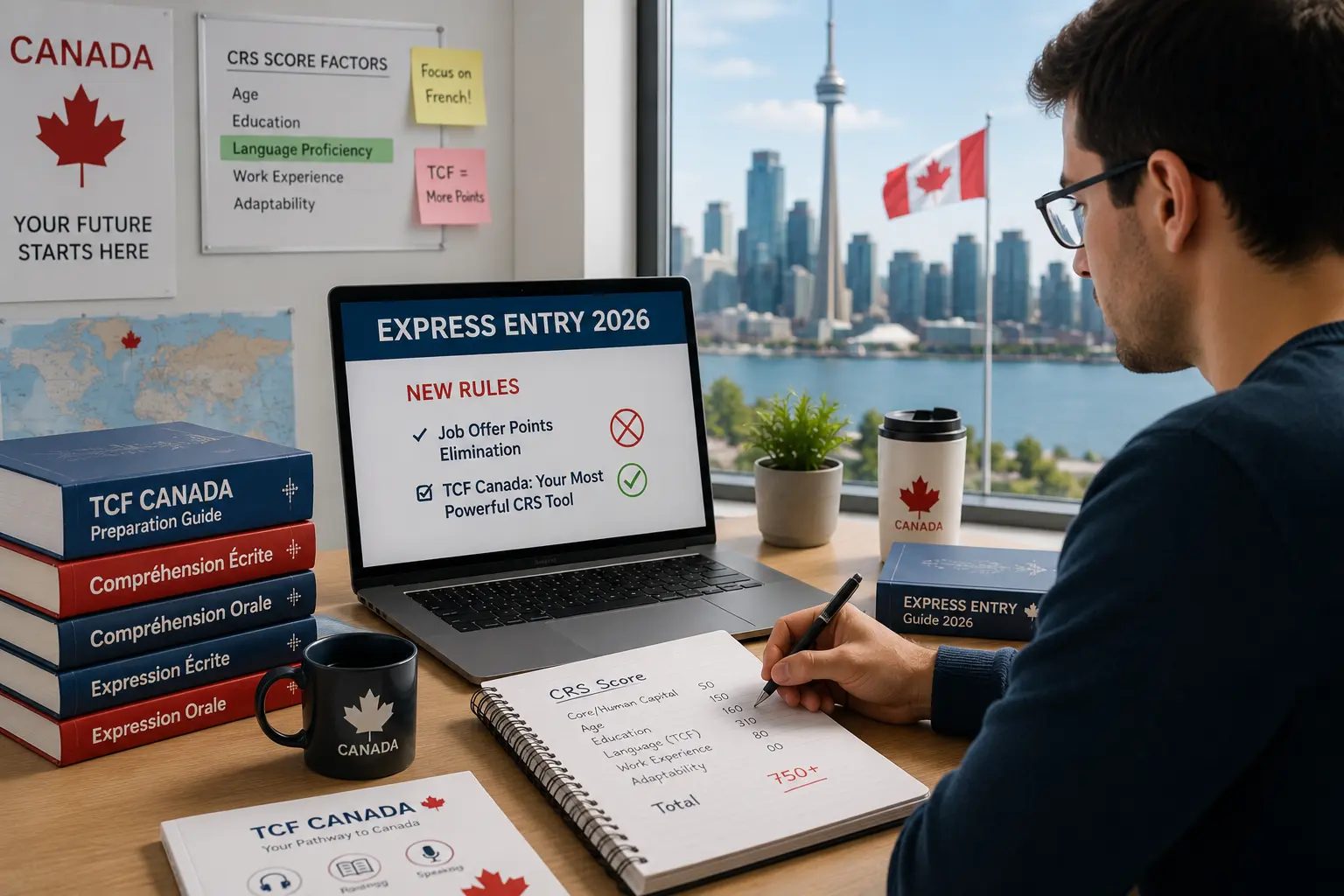
The 2025-2026 Express Entry reforms represent the most significant changes to Canada's primary skilled worker immigration system since the introduction of category-based draws in 2023. Among these changes, the modification of job offer points — previously one of the most powerful CRS boosters — has dramatically shifted the calculus of what matters most in a competitive Express Entry profile. For TCF Canada candidates, this shift creates an unprecedented opportunity: language points are now proportionally more important than at any time in Express Entry history. This guide explains what changed and why it matters for your TCF Canada strategy.
What Changed in Express Entry 2025-2026
Key Express Entry reforms affecting TCF Canada strategy:
- Job offer points modification: LMIA-supported job offer points (previously +50 or +200 CRS) have been restructured — some categories eliminated, others reduced, making the job offer CRS boost less accessible or lower in value
- Category-based draws expansion: More categories added (STEM, healthcare, education, French language, trades) — each creating specialized draws at lower CRS thresholds than general draws
- Francophone draw regularization: FLFP (Francophone and bilingual immigration) draws are now quasi-monthly, making French language proficiency a reliable acceleration mechanism
- Language score weighting maintained: Despite other reforms, language points remain the largest variable CRS component — and with job offer points reduced, they represent a higher proportion of achievable CRS than before
The Pre- and Post-Reform CRS Profile Comparison
| Factor | Pre-2025 CRS Value | Post-2025 CRS Value | Impact on TCF Strategy |
|---|---|---|---|
| LMIA job offer (NOC 0/A) | +200 CRS | Reduced or eliminated in most cases | Language now more critical — was previously masked by job offer points |
| Non-LMIA job offer | +50 CRS | Reduced | Same effect — language points fill the gap |
| French language NCLC 9 (all 4) | 124-136 CRS | Unchanged | Now the largest single improvable CRS factor for most profiles |
| Francophone category draw threshold | 440-470 average | 420-460 (improving trend) | Francophone draws more accessible — further raising TCF Canada ROI |
The "job offer gap" calculation — before and after reform:
Before 2025: Profile without job offer: 440 CRS. LMIA job offer: +200 CRS = 640 (ITA near-guaranteed). Language only needed to reach basic competitiveness.
After 2025: Profile without job offer: 440 CRS. No LMIA bonus. Language NCLC 7→9: +56 CRS = 496. Still competitive for francophone draws and potentially general draws. TCF Canada is now the primary CRS optimization lever.
How Category-Based Draws Change Your TCF Canada Targeting
| Category | Typical CRS Threshold | TCF Canada Requirement | Strategic Recommendation |
|---|---|---|---|
| Francophone (FLFP) | 420-470 | NCLC 7 minimum (all 4 skills) | NCLC 9 recommended for consistent selection above threshold |
| Healthcare workers | 430-460 | NCLC 7 general; NCLC 8 for some specialties | Healthcare + FLFP dual eligibility maximizes draw opportunities |
| STEM professionals | 480-510 | No French minimum — but FLFP combination lowers effective threshold | STEM + FLFP dual targeting is the optimal strategy for tech workers |
| Trades workers | 430-460 | NCLC 5 minimum for FSTP; NCLC 7 for FLFP combination | NCLC 7 allows simultaneous trades and francophone draw eligibility |
| Education (French-language) | 420-450 | NCLC 7-8 | Critical shortage in francophone schools — high selection probability |
The Dual Draw Strategy: Maximizing Your Draw Opportunities
How to qualify for multiple draw categories simultaneously:
- Francophone nurse: Eligible for both Healthcare draws AND Francophone draws — effectively doubling your draw opportunities
- IT professional with NCLC 7+: Eligible for STEM draws AND Francophone draws — two separate pools, each drawing monthly or quarterly
- French teacher: Education draws AND Francophone draws — teachers are the most sought-after francophone profile in 2026
- Bilingual construction professional: Trades draws AND Francophone draws — combine TCF Canada NCLC 7 with relevant NOC code for maximum optionality
"I'm a software architect from Bogotá who had been in the Express Entry pool with a score of 463 for 11 months. Before 2025, I was counting on getting a LMIA job offer to boost my score. When the job offer reforms made that less reliable, I pivoted to the French route. 14 months of French learning. TCF Canada NCLC 8 across the board. My new CRS: 507. But more importantly, I was now eligible for BOTH STEM and Francophone draws — my first FLFP draw selected me at 451. The French pivot saved my immigration." — Andrés, 33, Software Architect, Montreal QC
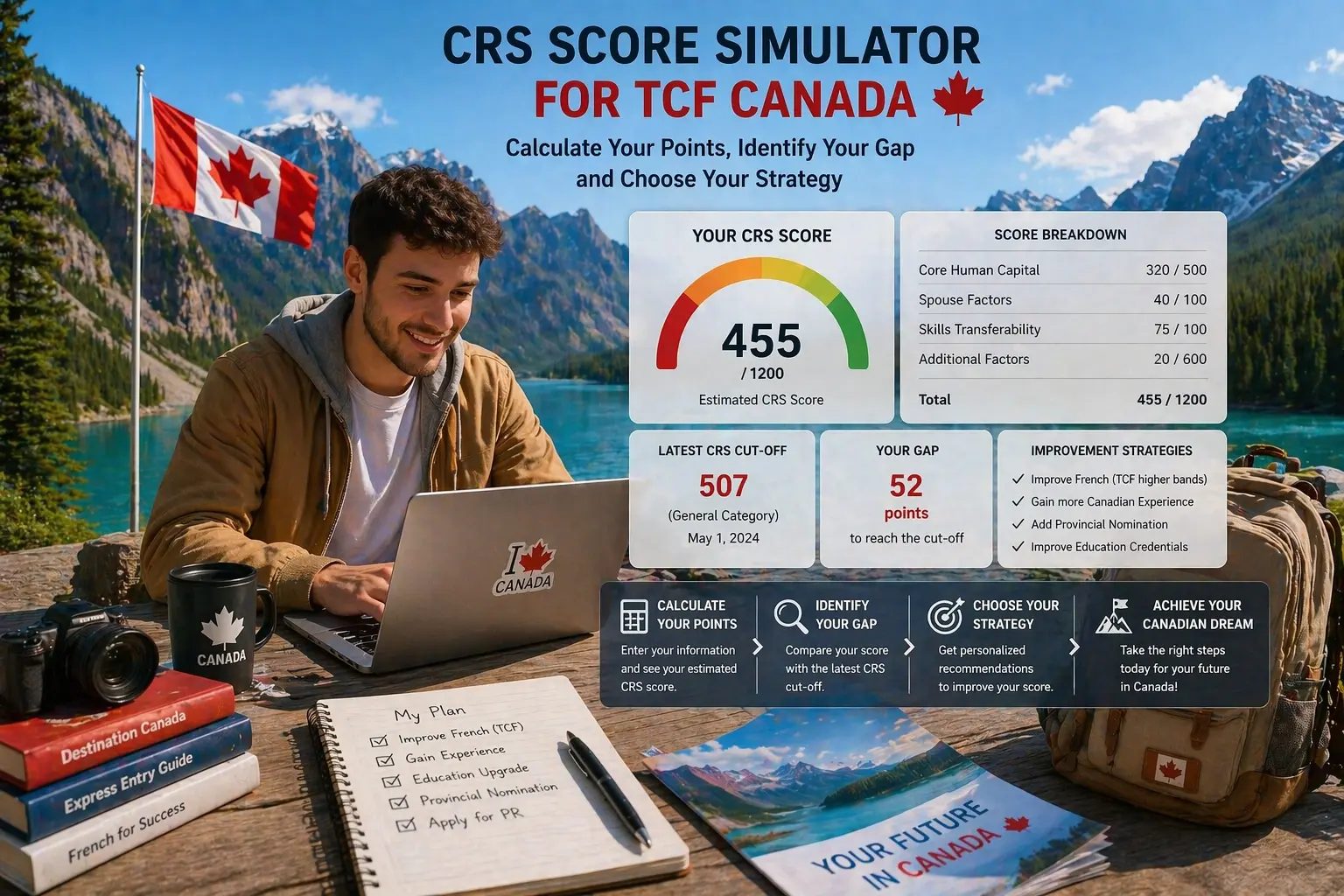
For the complete Express Entry reforms analysis covering all 2025-2026 changes, read Express Entry 2026: Job Offer Points Elimination Changes Everything. For the francophone draw data analysis to identify the best timing for your profile, see IRCC Category-Based Draws 2026. For the complete CRS calculation showing how TCF Canada fills the job offer gap, use CRS Score Simulator for TCF Canada. The French companion covering the 2025-2026 reforms is at Entrée Express 2025 : La Suppression des Points pour Offres d'Emploi Change Tout. For the new provincial pathways that complement Express Entry in the post-reform landscape, see TCF Canada and New Provincial Pathways 2026. For IRCC's official information on Express Entry, visit canada.ca — Express Entry. The French guide on the 2026 digital shift in TCF Canada exam format is at TCF Canada 2026 : Les Nouvelles Réformes. For the dual TCF Canada + IELTS strategy that maximizes language CRS in the post-reform environment, see TCF Canada + IELTS Bilingual 2026. For maintaining TCF Canada validity through the longer immigration timelines that may result from reform transitions, read TCF Canada Validity and Immigration Timeline. After your TCF Canada results are in, the 90-day action plan is at After Your TCF Canada Results: 90 Critical Days.



 TCF Canada Hub
0 Commentaires
aucun commentaire
Soyez le premier a partager votre avis !