-
Auteur :
 TCF Canada
- Mar 30, 2026
Francophone Life Outside Quebec in 2026: Everyday Realities, Available Services, and Myths to Debunk
- Blog
- /
- Article
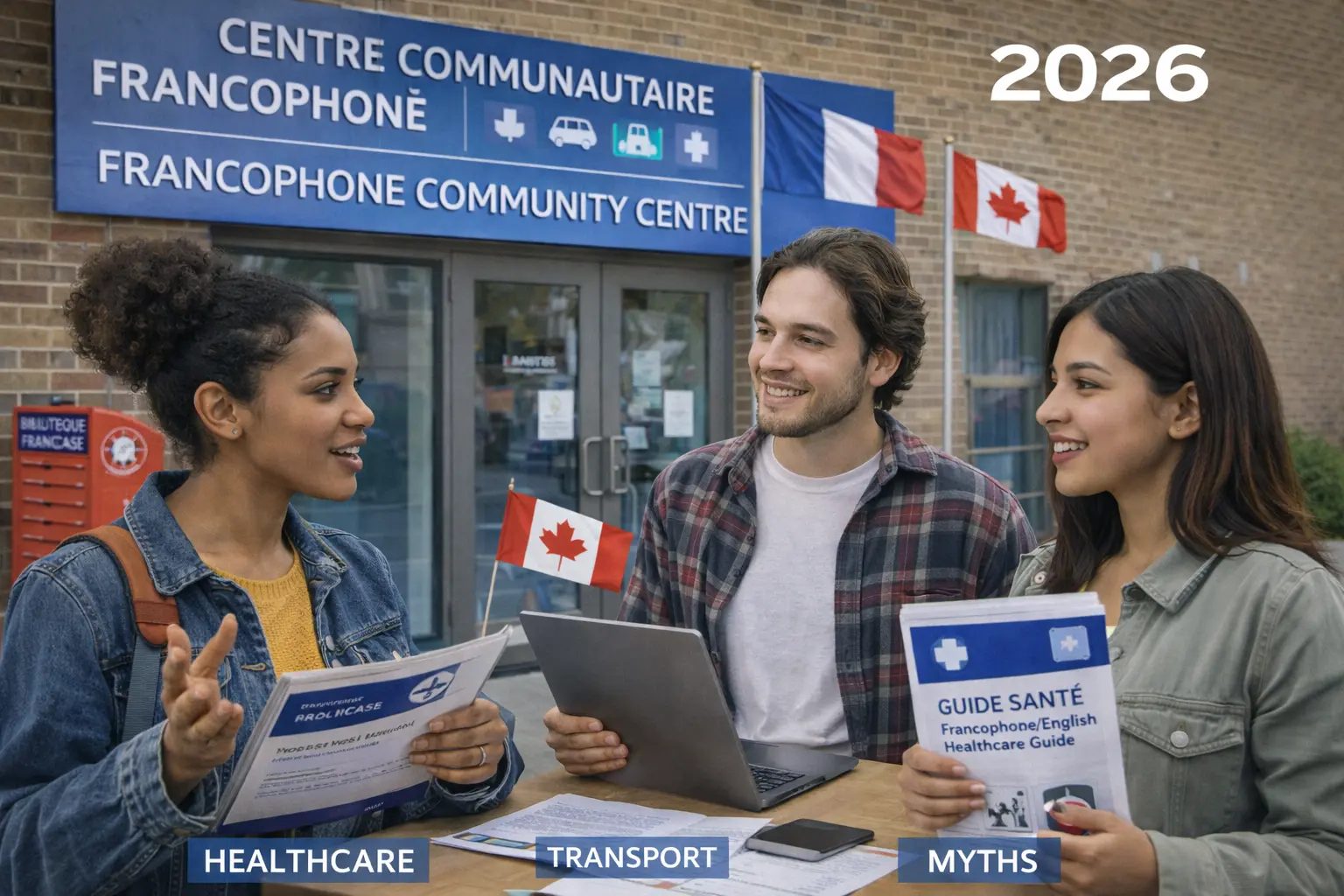
Francophone Life Outside Quebec in 2026: Everyday Realities, Available Services, and Myths to Debunk
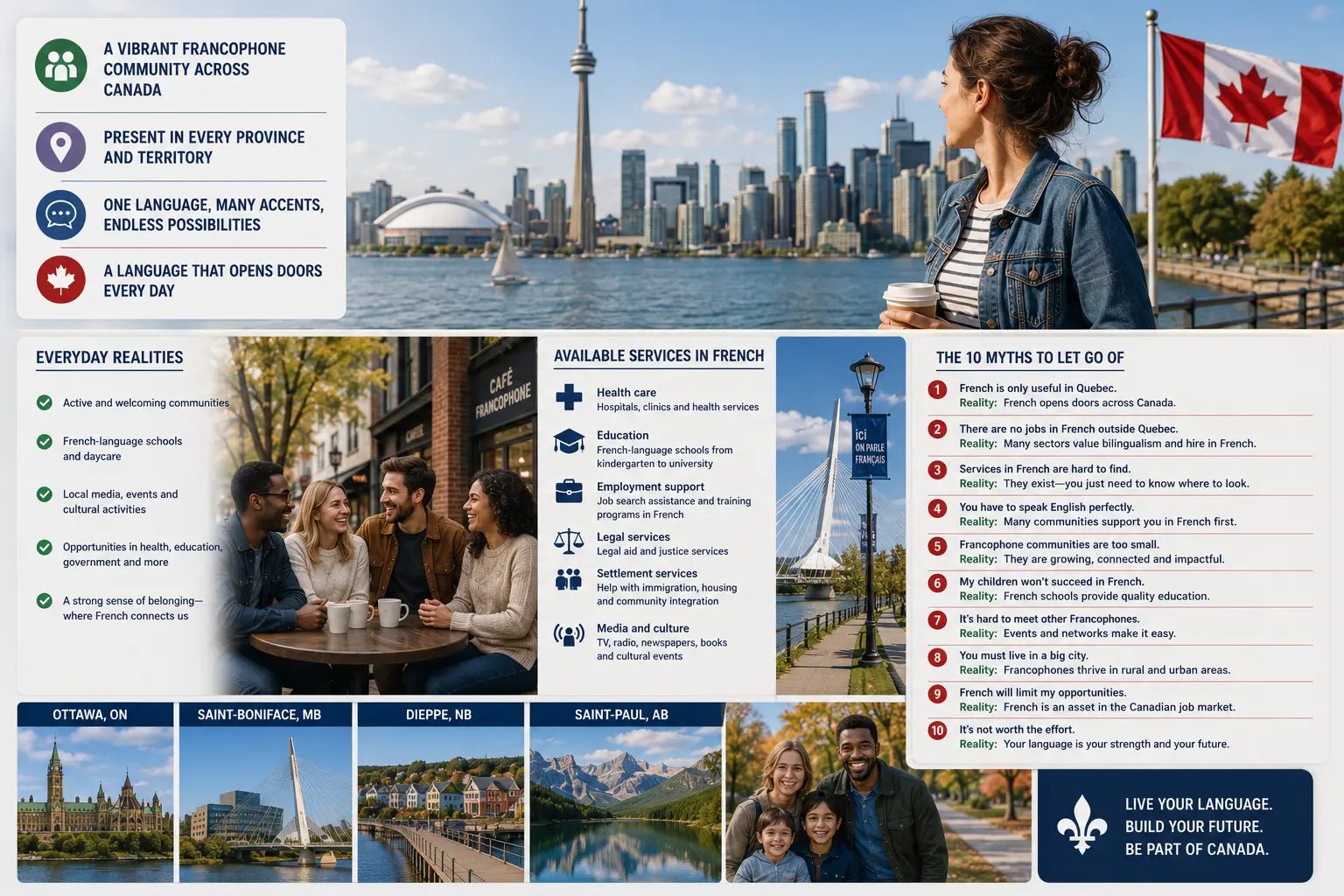
When Karim and his family (his wife Leila, and their children aged 6 and 9) arrived in Sudbury, Ontario in August 2026 after obtaining permanent residence through Ontario’s Francophone Nominee Program, their biggest worry was: “Will we really be able to live IN FRENCH day to day in a city of 165,000 people where only 26% are francophone?” Six months later, the verdict exceeds their expectations: the children are enrolled at École publique Renaissance (100% French), they have a francophone family doctor—Dr. Bélanger—at the Centre de santé communautaire du Grand Sudbury, they do their weekly groceries at Loblaws with bilingual signage and francophone cashiers available, they spend weekends at the Centre francophone du Grand Sudbury (theatre, festivals, children’s workshops), and they watch Radio-Canada and TFO every day. “The francophone reality in Sudbury is beyond what we thought was possible,” Karim says from their home in the Flour Mill neighbourhood. “We live 70–75% of our daily life in French—school, doctor, cultural activities, friends in the Franco community. The remaining 25–30% in English (occasional grocery interactions, some municipal services, my IT job) doesn’t reduce our francophone life—it creates our children’s natural bilingualism, a HUGE asset for their future.” This comprehensive guide debunks the myths about francophone life outside Quebec and reveals the 2026 reality: living in French is not only possible, it can be vibrant.
Mapping Francophone Canada Outside Quebec (2026)
The 6 Major Francophone Zones
| Zone | Main Cities | Francophone Population | % of Population | Francophone Vitality (1–10) |
|---|---|---|---|---|
| 1. Eastern Ontario | Ottawa, Cornwall, Hawkesbury | 300,000+ | Ottawa 15%, Cornwall 45% | 9/10 (close to Quebec, excellent services) |
| 2. Northern Ontario | Sudbury, Timmins, North Bay, Hearst | 120,000+ | Sudbury 26%, Hearst 85% | 8/10 (strong Franco heritage, institutions) |
| 3. Acadia (New Brunswick) | Moncton, Dieppe, Edmundston, Caraquet | 240,000+ | Province 32% (only officially bilingual province) | 10/10 (constitutional bilingualism, thriving Acadian culture) |
| 4. Franco-Manitoba | Winnipeg (St. Boniface), St-Pierre-Jolys | 45,000+ | Winnipeg 4%, St. Boniface 45% | 7/10 (dynamic Franco neighbourhood, many schools) |
| 5. Toronto GTA | Toronto, Mississauga, Markham | 150,000+ | 2.5% (but high absolute numbers) | 6/10 (services exist but are spread out) |
| 6. Western Canada | Edmonton, Calgary, Vancouver | 80,000+ | <3% | 5/10 (small but organized communities) |
Everyday Francophone Services: Reality vs. Myth
Myth #1: “You Must Speak English 100% of the Time”
2026 reality:
| Life Area | French Availability | Service Quality | Concrete Example |
|---|---|---|---|
| Children’s Education | ✅ 100% (francophone schools everywhere) | Excellent | Ontario: 400+ public + Catholic francophone schools |
| Healthcare | ✅ 70–90% (depending on the city) | Good to Excellent | Montfort Hospital (Ottawa), HSN Sudbury, NB health centres |
| Government Services | ✅ 100% (federal), 80% (provincial in designated areas) | Good | Service Canada, IRCC, driver’s licences, taxes = French available |
| Groceries / Retail | 🔶 50–70% (bilingual signage, some staff) | Variable | Major chains: French service possible, not guaranteed |
| Employment | 🔶 20–60% (depends on sector) | Variable | Public service, education, health = French. Tech, finance = mostly English |
| Social / Cultural Life | ✅ 80–100% (if you’re proactive) | Excellent | Francophone centres, festivals, theatres, associations |
Verdict: A daily life that is 60–75% French is possible depending on the city and your proactivity—far from the myth that “100% English is mandatory.”
Francophone Services by Category (Detailed)
A. Education (The Strongest Francophone Sector)
Francophone schools available:
- Ontario: 12 francophone school boards (Viamonde, CEPEO, CSDCSO, etc.) = 400+ elementary/secondary schools
- New Brunswick: full francophone school districts (Francophone North-East, Francophone South, Francophone North-West)
- Manitoba: Division scolaire franco-manitobaine = 24 schools
- Alberta: 43 francophone schools (Edmonton, Calgary, regions)
- British Columbia: Conseil scolaire francophone = 45 schools
Quality:
- 100% French instruction (not immersion—FRANCOPHONE schooling)
- Provincial curriculum adapted and delivered in French
- Franco-Ontarian / Acadian culture integrated (history, music, traditions)
- Graduation rates comparable to or higher than anglophone schools
- Children become bilingual naturally (French at school, English through recreation/media)
B. Healthcare
Major francophone hospitals and clinics:
| Facility | City | French Services |
|---|---|---|
| Montfort Hospital | Ottawa | 100% French, 400+ beds, ER, full specialty services |
| Health Sciences North (HSN) | Sudbury | Guaranteed bilingual services in designated areas, many francophone staff |
| Réseau Santé Acadie | New Brunswick | Full network of francophone hospitals/clinics (Moncton, Bathurst, Edmundston) |
| St. Boniface Health Centre | Winnipeg | Francophone community clinic, bilingual doctors/nurses |
Francophone doctors:
- Ontario: 2,500+ francophone doctors (HealthForceOntario directory)
- New Brunswick: almost all doctors bilingual (officially bilingual province)
- Manitoba: 200+ francophone doctors (College of Physicians MB)
C. Government Services
Federal (100% bilingual everywhere):
- Service Canada, IRCC, Canada Revenue Agency: French service guaranteed by phone and in person
- Passport Canada, federal jobs: French forms and communications available
Provincial (varies by province):
- Ontario – Designated Areas: 26 designated French-language service regions (Ottawa, Sudbury, Toronto, etc.) = French provincial services guaranteed
- New Brunswick: the only officially bilingual province = ALL government services in French and English, with constitutional equality
- Manitoba/Alberta/BC: French services available in major cities, quality varies
Francophone Cultural and Social Life
Francophone Community Centres (The Hub of Franco Life)
What francophone centres provide:
- Theatres (plays and francophone performances)
- French libraries (20,000–50,000 books/magazines)
- Adult classes (cooking, arts, sports in French)
- Social events (cafés, movie nights, community celebrations)
- Newcomer support (settlement and guidance)
Major examples:
- Centre francophone du Grand Sudbury: 50+ activities/month, Théâtre La Slague, library, daycare
- Centre francophone Toronto: community space, cultural events, francophone professional networking
- CCFM Winnipeg (Centre culturel franco-manitobain): 300-seat performance hall, art gallery, community radio
Francophone Media (TV, Radio, Press)
Television:
- Radio-Canada (ICI): TV + radio available across Canada (antenna, cable, free streaming on ICI TOU.TV)
- TFO (Ontario): free Franco-Ontarian educational/cultural channel
- TV5MONDE: international francophone channel (cable)
Radio:
- ICI Radio-Canada Première: local stations in ON, NB, MB, AB, BC (news, culture)
- Community radio: CINN-FM Hearst, CHOD-FM Cornwall, CKSB Manitoba
Print media:
- Le Droit (Ottawa), L’Express Toronto, La Liberté (Manitoba), Le Franco (Alberta)
- Weekly/biweekly community newspapers
Real Challenges of Francophone Life Outside Quebec (Honesty)
Challenge #1: Children’s Language Assimilation
Reality:
- Children attend francophone schools BUT are heavily exposed to English outside school (friends, media, sports)
- Risk: gradual preference for English if parents are passive
- Statistic: 40–50% of immigrant francophone children become English-dominant by the second generation if there is no active maintenance effort
Effective solutions:
- “French at Home” rule: 100% French family conversations (school English is fine; home life stays French)
- Francophone extracurriculars: Franco hockey/soccer leagues, francophone scouts, French summer camps
- French kids’ media: limit English YouTube/Netflix; prioritize French content (TFO, Mini TFO, francophone YouTube)
- Trips to francophone countries: 3–4 weeks each summer in the home country or France = full immersion that reinforces identity
Challenge #2: Social Isolation (Small Communities)
Reality:
- Outside major cities, francophone communities can be small (a few hundred families)
- Risk of isolation if you don’t proactively build a social network
Solutions:
- Get involved in the francophone centre (volunteer, participate)
- Join local francophone Facebook groups (e.g., “Francophones Sudbury”, “Franco-Manitobains”)
- Accept bilingual social life: having both anglophone and francophone friends is enrichment, not “ghettoization”
Challenge #3: Fully French Jobs Are Limited
Reality:
- Outside the public service/education/francophone healthcare, most jobs require daily English
- Tech, finance, and business are mostly anglophone environments
A positive perspective:
- Working in English ≠ losing French (family and cultural life can remain French)
- Professional bilingualism is a career advantage (promotions, higher salaries)
- Children see bilingual parents = model for balanced bilingualism
Recommended Cities for the Best Francophone Life
Top 5 Francophone Cities Outside Quebec (2026)
| City | % Franco | Services | Employment | Cost of Living | Overall Score |
|---|---|---|---|---|---|
| 1. Ottawa | 15% | ⭐⭐⭐⭐⭐ Excellent | ⭐⭐⭐⭐⭐ (bilingual public service) | ⭐⭐⭐ Expensive but manageable | 9.5/10 |
| 2. Moncton/Dieppe (NB) | 35–40% | ⭐⭐⭐⭐⭐ Officially bilingual province | ⭐⭐⭐⭐ (call centres, services) | ⭐⭐⭐⭐⭐ Very affordable | 9.3/10 |
| 3. Sudbury | 26% | ⭐⭐⭐⭐ Very good | ⭐⭐⭐ (mining, health, education) | ⭐⭐⭐⭐ Affordable | 8.5/10 |
| 4. Winnipeg (St. Boniface) | 12% (neighbourhood 45%) | ⭐⭐⭐⭐ Good (concentrated area) | ⭐⭐⭐ (diverse) | ⭐⭐⭐⭐ Affordable | 8.0/10 |
| 5. Edmundston (NB) | 90%+ | ⭐⭐⭐⭐⭐ Almost 100% French | ⭐⭐ Limited (small town) | ⭐⭐⭐⭐⭐ Very affordable | 7.8/10 |
Francophone Community Resources
Conclusion: Francophone Life Is Possible—Bilingualism Is Inevitable
Karim’s story proves that francophone life outside Quebec is NOT an impossible romantic myth—it’s everyday reality for 1+ million francophones in Canada outside Quebec. But this francophone reality has a defining feature: it is bilingual by nature, not monolingual like Quebec.
Your children will attend 100% French school, but play in English outside of school. You may see a francophone doctor, but shop in a bilingual environment. You can enjoy vibrant francophone festivals, but you might work in a predominantly anglophone workplace. That’s not a flaw—it’s the minority francophone reality that produces natural bilingualism, a major competitive asset in the 21st century.
If you accept this bilingual reality (instead of fantasizing about a 100% French life identical to Quebec), you’ll discover dynamic francophone communities outside Quebec that are welcoming and proud of their language and culture. Your TCF Canada helped you qualify for immigration—now, your involvement in the francophone community will shape the richness of your integration. Get involved. Live in French. Embrace bilingualism. 🇨🇦
* * *
Frequently Asked Questions
Yes. In strong francophone regions such as Eastern Ontario, Northern Ontario, and New Brunswick, families can live 60–75% of their daily life in French. Schools, many healthcare services, community centres, federal services, and francophone media are widely available. However, bilingualism is part of everyday reality.
They are fully francophone schools, not immersion programs. Instruction is 100% in French, following provincial curricula delivered in French. These schools serve rights-holder francophone families and integrate Franco-Ontarian, Acadian, or other regional francophone cultures.
The main challenge is maintaining French at home. Children are naturally exposed to English in recreation, media, and social environments. Without active family language policies and participation in francophone community life, English can gradually dominate.
Laissez un commentaire
Votreadresse email ne sera pas publie. Les champs obligatoires sont marque avec *

 TCF Canada Hub
0 Commentaires
aucun commentaire
Soyez le premier a partager votre avis !