-
Auteur :
 TCF Canada
- Jul 24, 2026
Country-Specific Guide
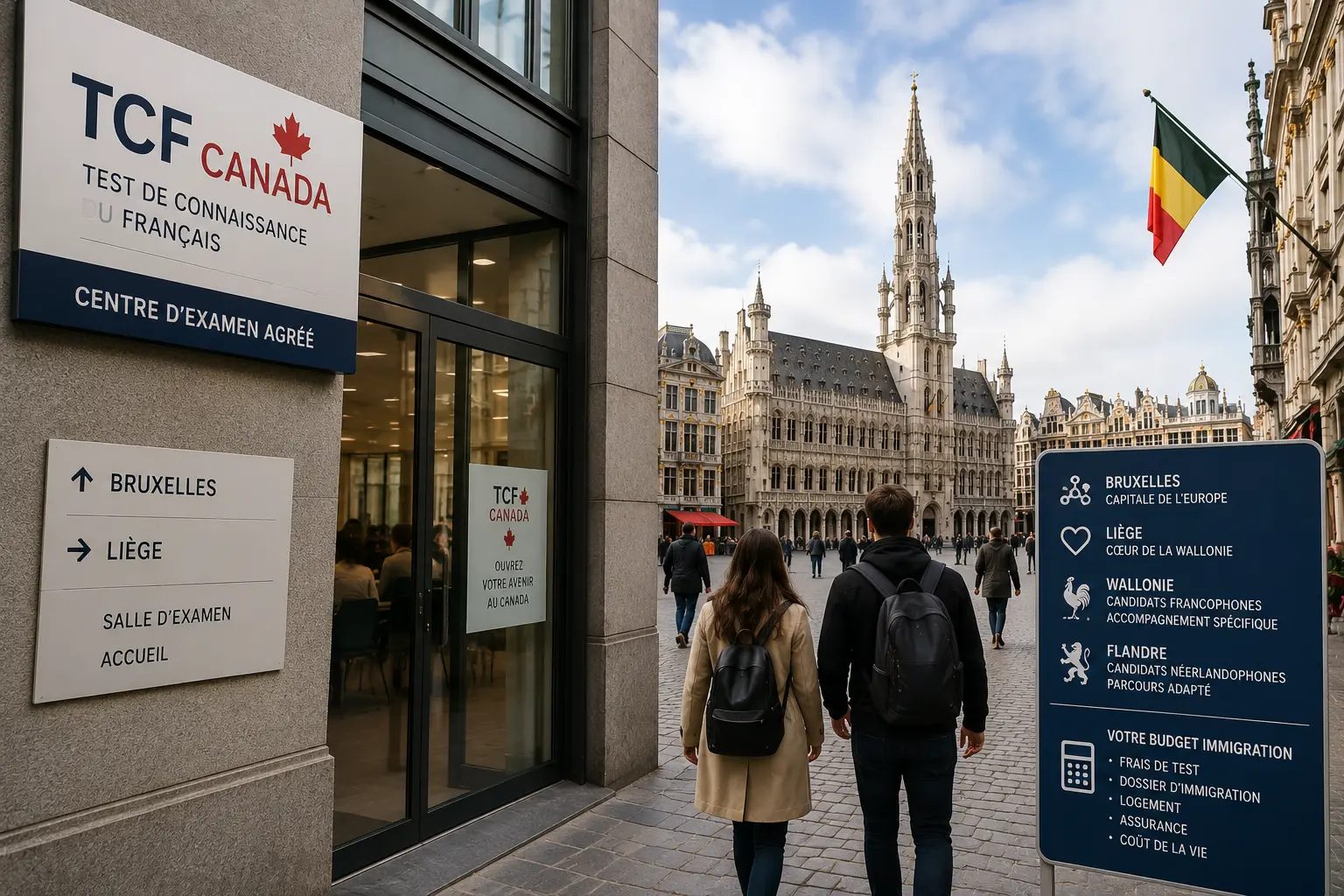
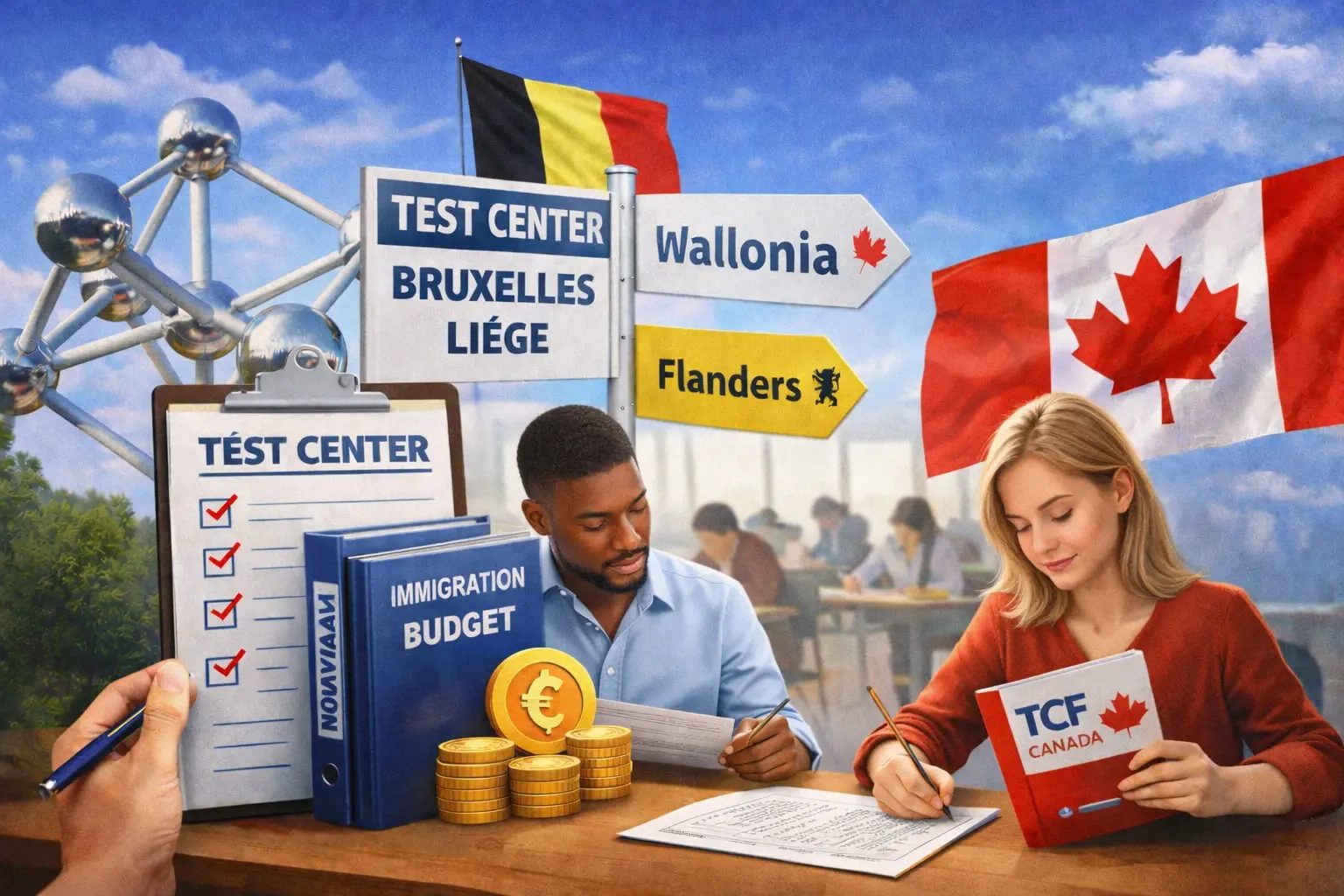
TCF Canada in Belgium 2026: Brussels and Liège Test Centers, Walloon and Flemish Candidate Specifics, and Your Complete Immigration Budget
Belgium stands among the most strategically positioned countries in the world for francophone immigration to Canada. Wallonia produces native French speakers who match Canadian formal language expectations almost perfectly — while Flemish Belgians increasingly study French as a second language and leverage it as an immigration pathway. With a high-income economy, exceptional educational credentials recognized seamlessly by WES Canada, and a cultural proximity to Quebec that most immigrants cannot claim, Belgian candidates are ideally positioned to score NCLC 9 and obtain their Canadian permanent residence faster than almost any other nationality. This guide covers everything you need to know for 2026.
TCF Canada Test Centers in Belgium: Complete 2026 Information
| City | Center | Address | Session Frequency | Notes |
|---|---|---|---|---|
| Brussels | Institut Français de Belgique | Rue Joseph II, 30, 1000 Brussels | 2-3 times/month | Main center, excellent facilities, book 6 weeks ahead |
| Brussels | Alliance Française de Bruxelles-Europe | Rue de la Loi, 26, 1040 Etterbeek | Monthly | EU quarter location — convenient for European institution professionals |
| Liège | Alliance Française de Liège | Rue de la Casquette, 15, 4000 Liège | Monthly | Best option for candidates in Wallonia east and German-speaking community |
| Ghent | Alliance Française de Gand | Coupure Links, 653, 9000 Ghent | Quarterly | Primarily serves Flemish candidates studying French |
| Antwerp | Alliance Française d'Anvers | Nationalestraat, 5, 2000 Antwerp | Quarterly | Limited availability — Brussels recommended for Flemish candidates |
Registration and costs in Belgium (2026 estimates):
- TCF Canada exam fee: approximately €350-420 for all 4 skills
- Register at france-education-international.fr online, then pay at the center
- Payment accepted by bank transfer or credit card at most Belgian centers
- Valid passport required on exam day — Belgian ID card not accepted
- Results delivered within 15 business days via the FEI candidate portal
The Walloon Candidate Profile: Near-Native Advantage with One Key Blind Spot
Walloon Belgians represent the most linguistically prepared francophone candidates for TCF Canada outside France itself. With Belgian formal education, professional experience in a rigorous regulatory environment, and natural exposure to both standard and regional French, most Walloon professionals arrive at B2-C1 level before any specific TCF Canada preparation.
Walloon candidates' structural advantages:
- Belgian French register: Generally more formal and precise than colloquial French from France — well-aligned with TCF Canada's formal register expectations
- Academic credentials: Belgian universities (UCLouvain, ULiège, ULB, UNamur) are consistently recognized by WES Canada at high equivalency levels — Master's degrees map directly to Canadian Master's (145 CRS points)
- Professional vocabulary depth: Belgian legal, medical and engineering French uses highly precise vocabulary that performs excellently in TCF Canada written tasks
- Cultural proximity to Quebec: Belgian cultural humor, political discourse style and social values are often cited by Belgian immigrants as "surprisingly similar" to Quebec — rapid integration advantage
The one blind spot that surprises every Belgian candidate:
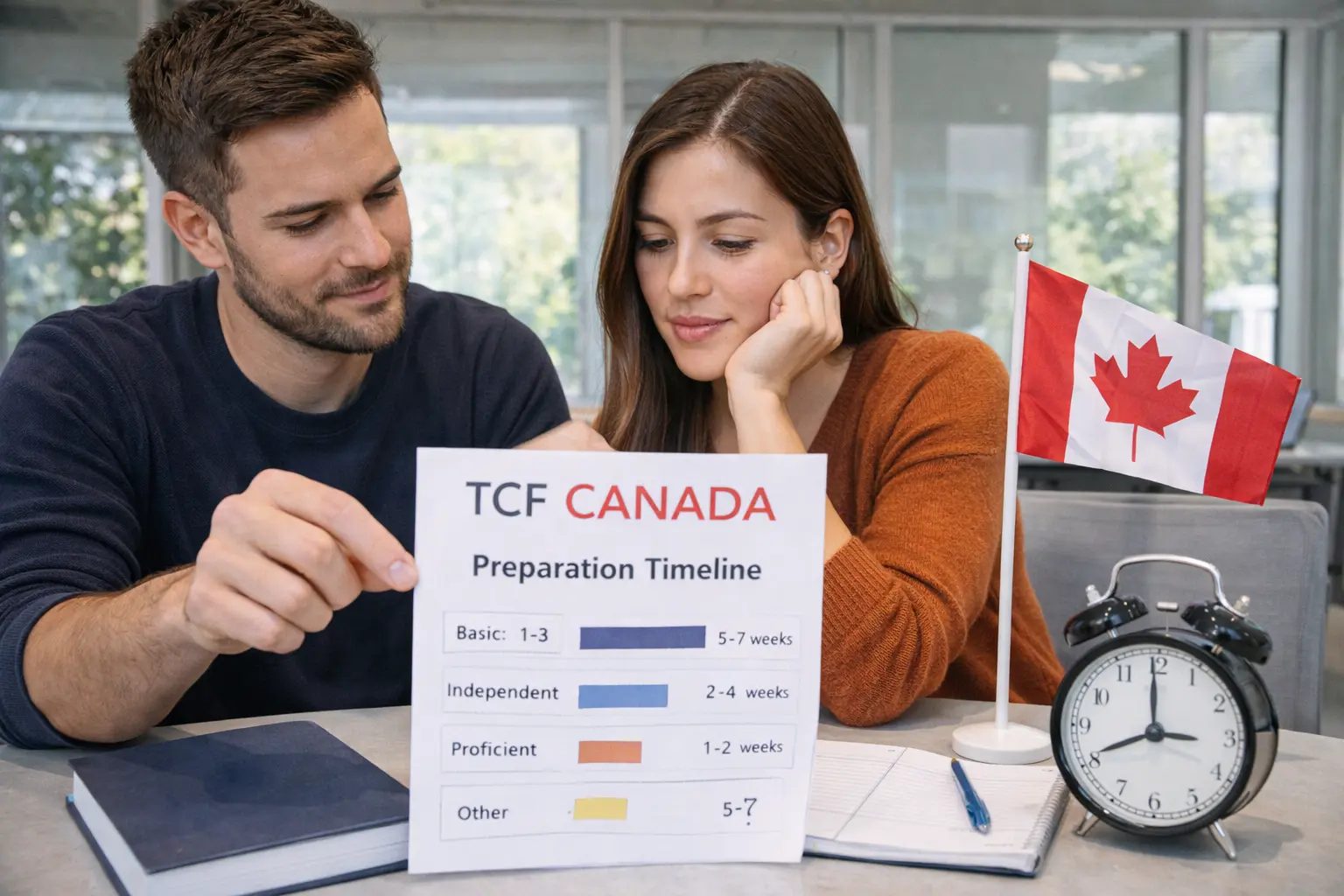
The Quebec accent in TCF Canada listening tasks. Belgian French speakers are as unprepared for Quebec phonology as any other European French speaker. Affrication ("t" and "d" before front vowels), nasalization differences, Quebec vowel shifts and local expressions like "c'est le boutte", "avoir de la misère" or "se pogner" require dedicated 4-6 week acclimatization before the exam.
The complete Quebec accent decoding strategy — including a 5-week listening programme — is available at Decoding the Quebec Accent for TCF Canada. The 90-day Canadian francophone immersion programme from Building Your Canadian Francophone Immersion Bubble Abroad provides the full media diet to eliminate this blind spot systematically. The French guide Déchiffrer l'Accent Québécois provides additional phonology exercises in French.
The Flemish Candidate's French Path to Canada
Flemish Belgians occupy a distinct position: French is typically their second language (learned through mandatory schooling), yet many reach B2-C1 level through professional or personal immersion. For a Flemish professional who invests in reaching TCF Canada NCLC 7-8, the immigration return on investment is exceptional.
Flemish candidate strategy for TCF Canada:
- Start point assessment: Most Flemish professionals who passed secondary school French reach A2-B1 — 12-18 months from NCLC 7, 20-28 months from NCLC 9
- Leverage professional immersion: Brussels-based Flemish professionals who work in French-speaking environments or EU institutions often have B2 oral skills that simply need TCF-specific formatting
- The dual-certification advantage: Flemish candidates with IELTS/TOEFL scores for English can stack TCF Canada (French first language) + English (second official language) for maximum CRS — see TCF Canada + IELTS Bilingual 2026
- Focus on writing: Flemish candidates often excel at listening and reading but underperform in formal French writing — 60% of preparation time should target written expression
Belgian Credentials and WES Canada: What to Expect
| Belgian Diploma | Canadian Equivalent (WES) | CRS Points | Common Issues |
|---|---|---|---|
| Master (5-year) — UCLouvain, ULB, ULiège | Canadian Master's degree | 145 points | Generally recognized smoothly |
| Bachelor (3-year) | Canadian Bachelor's (3-year) | 120 points | Some programs may require clarification |
| Ingénieur Civil / Ingénieur Commercial | Canadian Master's or Bachelor's depending on program | 120-145 points | Send full course transcripts in French |
| Doctorate (PhD) | Canadian PhD | 150 points | Requires thesis summary and supervisor letter |
Immigration Budget for Belgian Candidates: Complete 2026 Breakdown
Full estimated immigration cost from Belgium to Canada:
- TCF Canada exam: €350-420
- TCF Canada preparation (courses/materials): €0-600 (most Walloons need minimal preparation)
- WES credential evaluation (course-by-course): CAD $240 ≈ €165
- Express Entry processing fee: CAD $1,365/person (≈ €950)
- Right of permanent residence fee: CAD $515/person (≈ €360)
- Biometrics: CAD $85/person (≈ €60)
- Medical examination: €200-300 per person
- Settlement funds required (family of 4): CAD ~$25,000 (≈ €17,500)
- Total out-of-pocket (excluding settlement): approx. €2,000-2,500 per person
"As a Liège-based notary with 12 years of experience, I never imagined Canada. After reading about the francophone immigration pathway, I realized my profile was almost perfect — Belgian law degree, strong formal French, high CRS potential. My TCF Canada preparation took 5 weeks: mostly Quebec accent work using OHdio and Radio-Canada, plus two full mock tests. NCLC 9 in writing and reading, NCLC 8 in speaking and listening. I received my ITA 4 months after filing. My Belgian legal credentials required adaptation training but the Barreau du Québec provided a clear roadmap. I'm now practicing in Quebec City." — Nicolas, 41, Notary, Quebec City QC
For the complete Express Entry process including profile submission and draw monitoring strategies, read Understanding Express Entry and Language Points. For the category-based draws analysis that helps Belgian candidates identify the most favorable draw windows, visit IRCC Category-Based Draws 2026. The French resource TCF Canada en Belgique 2026 provides additional French-language resources specific to Belgian candidates. After receiving results, the strategic next steps are covered in After Your TCF Canada Results: The 90 Critical Days.

 TCF Canada Hub
0 Commentaires
aucun commentaire
Soyez le premier a partager votre avis !