-
Auteur :
 Antoine C.
- Oct 23, 2026
Your First Canadian Winter: A Survival Guide
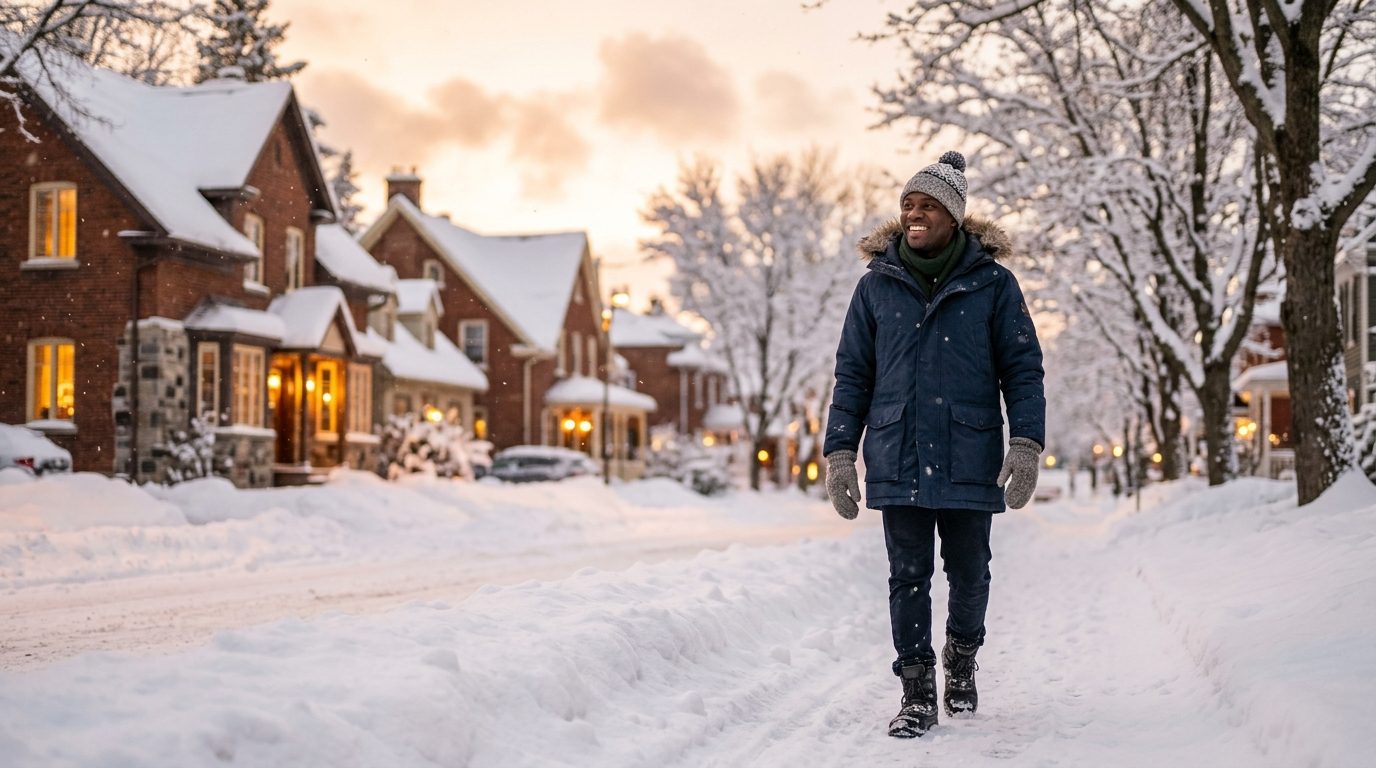
Many French-speaking newcomers arrive in Canada from Casablanca, Algiers, Dakar, Abidjan, Tunis or Port-au-Prince, where winter means a light jacket. Then November arrives in Montreal, Moncton, Sudbury or Winnipeg, and the reality sets in: temperatures of -20°C, wind chill below -30°C, days that end before 5 p.m., sidewalks covered in ice and a vocabulary you never studied for the TCF Canada: poudrerie, gadoue, déneigement, tuque.
The good news: millions of Canadians live comfortably through winter, and newcomers adapt faster than they expect with the right preparation. This guide covers clothing, budget, health, housing, driving and the social side of winter, so that your first season is an experience rather than an ordeal.
What Winter Really Looks Like Where You Settle
| City | Typical January range | Main challenge | Snow season (approx.) |
|---|---|---|---|
| Montreal | -5°C to -20°C, colder snaps | Freeze-thaw cycles, icy sidewalks | November to April |
| Quebec City | -8°C to -25°C | Heavy snowfall, wind | November to April |
| Moncton | -5°C to -20°C | Storms, freezing rain | November to April |
| Ottawa / Gatineau | -5°C to -25°C | Long cold spells | November to April |
| Sudbury / Timmins | -10°C to -30°C | Extreme cold, long winter | October to May |
| Winnipeg | -10°C to -35°C | Very cold, dry, windy | October to April |
The number that matters most is not the temperature but the wind chill (refroidissement éolien), which tells you how cold it feels on exposed skin. Check the daily forecast and warnings on Environment Canada's weather site or the WeatherCAN app, especially for extreme cold alerts.
The Layering System
Canadians do not wear one enormous coat. They dress in layers that trap warm air and can be adjusted when entering heated buildings, where it is often 21-22°C.
The three-layer rule:
- Base layer: Thermal underwear in wool or synthetic fabric that wicks moisture. Avoid cotton, which stays damp and cold
- Middle layer: Fleece or wool sweater for insulation
- Outer layer: Windproof, water-resistant winter coat that covers your hips, with a hood
- Extremities: Tuque (hat) covering the ears, mittens (warmer than gloves), scarf or neck warmer, insulated waterproof boots with good grip
Winter Budget: What to Buy and When
| Item | Price range (CAD) | Money-saving tip |
|---|---|---|
| Winter coat | $150-$500 | End-of-season sales (February-March), second-hand stores |
| Winter boots (rated for -30°C or colder) | $100-$250 | Prioritise grip and waterproofing over brand |
| Thermal layers | $40-$120 | Discount and sporting goods stores |
| Hat, mittens, scarf | $30-$80 | Community clothing banks for newcomers |
| Children's snowsuit | $60-$200 per child | Swap groups and school exchanges |
Do not buy your winter wardrobe at home. Coats sold in most warm-climate countries are not designed for -25°C. Arrive with one warm layer for the flight and buy the rest in Canada, where settlement organisations often run free or low-cost clothing programs for newcomers.
Health and Safety in the Cold
Know the warning signs:
- Frostnip and frostbite: White or greyish skin, numbness on cheeks, nose, ears, fingers. Warm gradually, never rub with snow
- Hypothermia: Intense shivering, confusion, drowsiness. Get indoors and seek medical help
- Falls on ice: The most common winter injury. Walk with short steps, use boots with grip or removable cleats
- Carbon monoxide: Never run a car in a closed garage or use outdoor heaters indoors; install a detector
For emergency preparedness (power outages during ice storms, emergency kits), the federal Get Prepared website gives practical checklists.
The Mental Side: Short Days and Winter Blues
In December, the sun can set around 4:15 p.m. in many Canadian cities. Many newcomers experience low energy, lower mood and homesickness during their first winter. This is common and manageable. Doctors often recommend vitamin D in winter; ask a health professional about the right dose for you. Get outside during daylight hours, keep a regular routine and stay socially active. If low mood becomes persistent, talk to a doctor or your settlement organisation, which can refer you to French-language support services.
Your Home in Winter
Housing points to check before winter:
- Heating costs: If heating is not included (non chauffé), electric heating can raise your monthly bill significantly in January and February. Ask for the previous year's average bill
- Windows and drafts: Plastic window insulation kits are cheap and effective
- Humidity: Indoor air becomes very dry; a humidifier helps skin and sleep
- Snow removal: Who clears the entrance, the stairs and the parking space? Check your lease
- Parking: Many cities have overnight parking bans during snow removal operations, with towing and fines
For rent and housing choices, see our guide to renting your first apartment and the cost of living in Francophone provinces.
Driving and Transport in Winter
If you drive, winter changes the rules. In Quebec, winter tires are mandatory on passenger vehicles from December 1 to March 15. Other provinces strongly recommend them, and insurers may offer discounts. Keep an emergency kit in the car (blanket, shovel, ice scraper, booster cables, snacks), clear all snow from the car before driving, and double your braking distance.
Public transit runs all winter, but delays are common during storms. Plan extra time, especially for job interviews and exams. If you are taking the TCF Canada in Canada during winter, arrive at the test centre early: a storm is not an accepted excuse for missing your session. Our test day guide covers logistics in detail.
Learn the Winter Vocabulary
Winter is a daily conversation topic in Canada, and a frequent theme in Canadian French media. These words will help both your integration and your comprehension.
Essential Canadian winter vocabulary:
- Tuque: Winter hat
- Mitaines: Mittens
- Poudrerie: Blowing snow that reduces visibility
- Gadoue / slush: Wet, dirty melting snow
- Verglas / pluie verglaçante: Black ice / freezing rain
- Déneigement: Snow removal
- Banc de neige: Snowbank
- Refroidissement éolien: Wind chill
- Pneus d'hiver: Winter tires
For more Quebec expressions, see decoding the Quebec accent.
Embrace Winter: The Best Survival Strategy
Canadians who enjoy winter are the ones who go outside. Free outdoor skating rinks, snowshoeing trails, cross-country skiing, tobogganing and winter festivals like the Carnaval de Québec or Winterlude in Ottawa-Gatineau are excellent ways to meet people and speak French.
"My first winter in Quebec City, I stayed inside for weeks. The second year, a neighbour took me snowshoeing and to the Carnaval. Winter did not change, but my experience of it completely changed. Now it is the season when I feel most Québécois." - Illustrative newcomer experience
Your Winter Preparation Checklist
Before the first snowfall:
- Clothing: Coat, boots, thermal layers, tuque, mittens for every family member
- Home: Heating costs understood, window insulation installed, humidifier and CO detector
- Transport: Winter tires installed (mandatory in Quebec from December 1), car emergency kit ready
- Health: Talk to a health professional about vitamin D; plan daylight activities
- Social: One winter activity per week to stay active and meet people
Your first winter is a rite of passage. Prepare well, stay curious, and by March you will be telling the next wave of newcomers that -15°C is "pas pire" and that the real secret is good boots. For more on everyday integration, read our guide to life in Canada and successful integration.




0 Commentaires
aucun commentaire
Soyez le premier a partager votre avis !