-
Auteur :
 Antoine C.
- Jan 07, 2026
Targeted Improvement: Transform Your Weaknesses Into Strengths
- Blog
- /
- Article
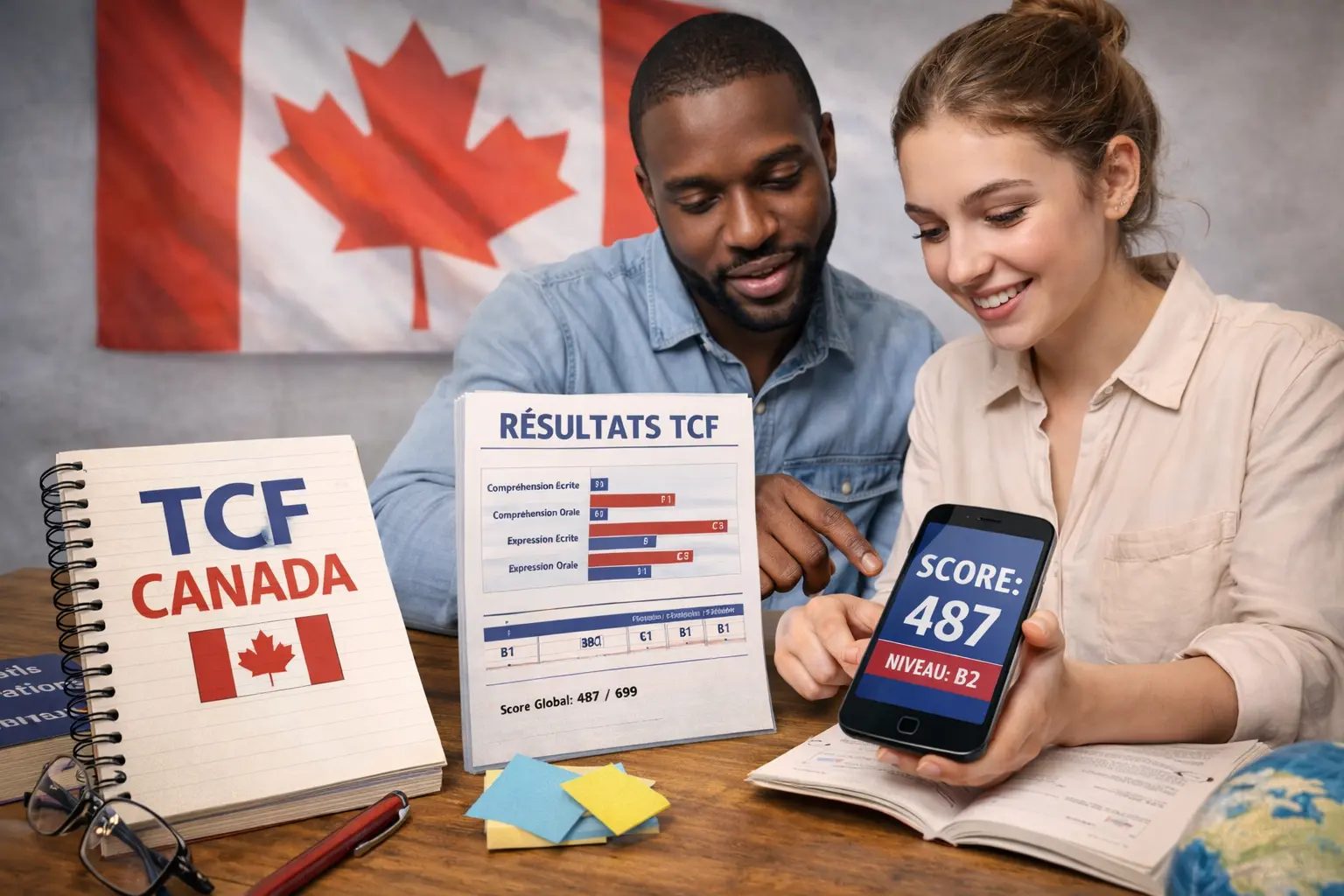
The fundamental difference between TCF Canada candidates who stagnate indefinitely and those who progress rapidly to achieve their immigration objectives lies not in natural talent or total study hours, but rather in their systematic ability to methodically transform identified weaknesses into competitive strengths through precision-targeted intervention.
This revolutionary surgical approach to skill improvement—based on granular gap analysis, application of specialized remediation strategies, and continuous performance optimization—can help you gain multiple NCLC levels in just 2-4 months rather than the 12-18 months typically required through unfocused general practice. Discover how to precisely diagnose your specific weak points with surgical accuracy and systematically convert them into demonstrable competitive advantages that accelerate your Canadian immigration timeline.
What You'll Master in This Precision Improvement Guide
- Implement surgical diagnostic methodology breaking down each competency into 15+ measurable micro-skills for precision gap identification
- Apply advanced diagnostic tools including specialized mini-test batteries that pinpoint exact blockage points within 2 hours
- Deploy ultra-targeted remediation strategies specific to each weakness type across all four competencies
- Master progress acceleration techniques including controlled immersion, mirror partner collaboration, and micro-session training
- Navigate plateaus and regressions with proven breakthrough methodologies and psychological resilience frameworks
- Optimize psychological performance through stress management protocols and sustained motivation systems
- Execute emergency protocols for rapid 6-week intensive improvement when timeline pressure demands acceleration
- Measure and validate improvements using comprehensive KPI dashboards and intermediate validation testing
Surgical Diagnostic Methodology: Precision Gap Analysis
Before any meaningful improvement intervention can begin, absolutely precise diagnostic assessment is essential. Generic statements like "I need to improve my grammar" or "my listening comprehension is weak" provide zero actionable direction and inevitably lead to inefficient, scattered preparation efforts that waste precious time and resources.
Claire, a Lille-based computer scientist who successfully relocated to Montreal in 2025, powerfully testifies to the transformation precision diagnosis enabled: "I initially believed my fundamental problem was 'grammar in general'—a vague, overwhelming concept that paralyzed my improvement efforts. Through systematic micro-diagnostic analysis, I discovered the shocking reality: I had near-perfect mastery of approximately 80% of French grammatical rules, but three extremely precise structural points caused me to systematically lose points across multiple questions: past participle agreement with avoir verbs, irregular subjunctive conjugations, and preposition selection with movement verbs. Once I laser-focused my limited preparation time exclusively on these three micro-weaknesses, my writing score jumped from NCLC 6 to NCLC 8 in just 5 weeks."
The Revolutionary Micro-Diagnostic Technique
This groundbreaking analytical method, systematically developed and refined by specialized TCF Canada coaches through analysis of hundreds of candidate performance patterns, fundamentally consists of deconstructing each of the four major competencies into 12-18 granularly measurable, independently testable sub-skills that can be individually diagnosed, targeted, and remediated.
Example: Listening Comprehension - Complete Micro-Diagnostic Assessment Grid
Candidate Profile: "Karim M." - Initial LC Score: 420/699 (NCLC 7)
Micro-Skill Performance Breakdown:
- Global comprehension (main ideas/themes): 85% accuracy → STRENGTH (maintain with light practice)
- Detailed comprehension (specific facts/nuances): 60% accuracy → WEAKNESS (priority improvement target)
- Number/date/time recognition and transcription: 45% accuracy → CRITICAL WEAKNESS (emergency remediation required)
- Logical relationship identification (cause/effect, contrast): 70% accuracy → MODERATE (secondary improvement opportunity)
- Regional accent comprehension (Quebec, African, Belgian): 55% accuracy → WEAKNESS (systematic exposure needed)
- Rapid speech flow processing (native conversation speed): 62% accuracy → WEAKNESS (speed adaptation training)
- Implicit meaning extraction (inference, tone, attitude): 58% accuracy → WEAKNESS (analytical skill development)
- Multi-speaker conversation tracking (3+ participants): 52% accuracy → WEAKNESS (concentration stamina building)
- Background noise interference management: 48% accuracy → CRITICAL WEAKNESS (focus technique acquisition)
- Auditory concentration stamina (8+ minute documents): 40% accuracy → CRITICAL WEAKNESS (cognitive endurance training)
- Technical/specialized vocabulary comprehension: 65% accuracy → MODERATE (domain-specific expansion)
- Idiomatic expression recognition: 58% accuracy → WEAKNESS (cultural immersion recommended)
Strategic Diagnostic Conclusion:
Karim's profile reveals strong foundational comprehension (85%) undermined by three critical micro-weaknesses: number recognition (45%), background noise management (48%), and auditory stamina (40%). Strategic remediation focusing 70% of preparation effort on these three specific areas projected to yield +2 NCLC levels (NCLC 7 → NCLC 9) within 8-10 weeks versus 6+ months through unfocused general practice.
Advanced Diagnostic Tools and Assessment Batteries
Mathieu, a former TCF Canada candidate who subsequently became a specialized preparation coach, generously shares his comprehensive diagnostic toolkit: "Over three years of intensive candidate analysis, I meticulously created a complete battery of 48 specialized mini-tests (12 per competency), each precisely targeting a distinct, independently measurable micro-skill. In approximately 2-2.5 hours of focused diagnostic testing, I can identify with surgical accuracy the 2-4 critical blockage points preventing a candidate from progressing to their target NCLC level, eliminating months of trial-and-error exploration."
| Major Competency | Number of Specialized Sub-Tests | Total Diagnostic Time | Critical Weakness Threshold | Remediation Priority Level |
|---|---|---|---|---|
| Listening Comprehension | 12 micro-skill assessments | 35 minutes | < 70% accuracy | HIGH (impacts 29 questions) |
| Reading Comprehension | 10 micro-skill assessments | 30 minutes | < 75% accuracy | HIGH (impacts 39 questions) |
| Speaking Expression | 8 micro-skill assessments | 25 minutes | < 65% accuracy | CRITICAL (subjective evaluation) |
| Written Expression | 10 micro-skill assessments | 40 minutes | < 70% accuracy | CRITICAL (4 evaluation criteria) |
💡 2026 Diagnostic Evolution - AI-Powered Precision Analysis:
Advanced diagnostic platforms emerging in 2026 now leverage artificial intelligence and natural language processing to provide even more granular micro-skill analysis:
- Automated error pattern recognition: AI systems analyze 50+ writing samples or listening responses to identify systematic error signatures invisible to human analysis
- Predictive performance modeling: Machine learning algorithms calculate precise NCLC level projections and optimal improvement pathways based on current micro-skill profile
- Personalized remediation sequencing: Intelligent systems determine optimal order for addressing multiple weaknesses based on interdependency analysis and maximum ROI calculation
- Real-time progress tracking: Continuous micro-skill monitoring across all practice activities provides dynamic strategy adjustment recommendations
- Comparative benchmarking: Anonymous aggregated data from thousands of candidates enables positioning relative to successful immigration profiles
Ultra-Targeted Improvement Strategies by Micro-Skill Weakness
Once precise diagnostic assessment has identified your 2-4 critical micro-weaknesses, the systematic application of specialized, evidence-based remediation strategies targeting exactly those specific deficits becomes the foundation of accelerated improvement.
Listening Comprehension: Addressing Specific Performance Handicaps
Listening comprehension challenges frequently manifest as highly specific, surgically correctable blockages that generic, unfocused "listen to French more" training approaches completely fail to resolve effectively. Here are proven, field-tested remediation strategies systematically organized by precise weakness type:
Micro-Weakness #1: Number, Date, and Numerical Data Incomprehension
Sarah, a Marseille-based accountant who successfully relocated to Vancouver in 2025, exemplifies this common yet devastating handicap: "I demonstrated excellent comprehension of conversational content, narrative structure, and thematic development—easily 80-85% accuracy on qualitative questions. However, the instant a speaker mentioned a price, date, percentage, time, phone number, or any numerical information, my brain experienced complete cognitive overload and I immediately lost the conversational thread. This single micro-weakness systematically cost me 4-6 questions per practice test, preventing progression from NCLC 7 to NCLC 8-9 despite excellent performance elsewhere."
Proven 3-Week Number Recognition Remediation Protocol
Week 1 - Foundation: Basic Number Recognition Automation (Daily 20-minute sessions)
- Days 1-2: Simple numbers 0-100 dictation listening with immediate transcription verification (150+ numbers daily)
- Days 3-4: Extended numbers 100-999,999 with special focus on problematic patterns (soixante-dix, quatre-vingts, etc.) (100+ numbers daily)
- Days 5-7: Decimal numbers, fractions, and mathematical operations spoken aloud with transcription (75+ numbers daily)
- Success Metric: Achieve 90%+ accurate transcription of random numbers 0-999,999 within one second of hearing
Week 2 - Context Integration: Numbers in Real-World Applications (Daily 25-minute sessions)
- Days 8-10: Complete dates (days, months, years) including historical dates and future projections (50+ dates daily)
- Days 11-12: Times (12-hour and 24-hour formats), durations, schedules, and time expressions (40+ times daily)
- Days 13-14: Prices in euros and Canadian/US dollars including complex calculations (discounts, tax, totals) (60+ prices daily)
- Success Metric: Accurate capture of numerical information embedded in 30-second conversational contexts without disrupting comprehension flow
Week 3 - Advanced Application: Numbers in Complex Authentic Content (Daily 30-minute sessions)
- Days 15-17: Economic news broadcasts featuring statistics, growth rates, financial data, market indices (authentic Radio-Canada, RFI content)
- Days 18-19: Weather forecasts with temperatures, precipitation percentages, wind speeds, atmospheric pressure
- Days 20-21: Sports results, scores, rankings, records, player statistics, game times
- Success Metric: 85%+ accurate extraction of all numerical data from 3-5 minute authentic audio containing 15+ numbers while maintaining 80%+ global comprehension
Sarah's Documented Results After 3-Week Protocol Implementation:
- Pre-Protocol Performance: 40% accuracy on number-related questions; 6.2 seconds average processing delay; frequent comprehension breakdown
- Post-Protocol Performance: 92% accuracy on number-related questions; 1.1 seconds average processing delay; minimal comprehension disruption
- Overall Listening Score Impact: 420/699 (NCLC 7) → 518/699 (NCLC 9) = +98 raw points in isolated competency
- Total Time Investment: 21 days × 20-30 minutes = 8.75 hours total (extraordinary ROI for +2 NCLC levels)
- Express Entry Impact: Listening comprehension CRS points: 16 → 28 = +12 CRS points from single micro-weakness remediation
- Key Success Factor: Surgical focus on precise deficit rather than generalist listening practice; systematic progression from isolation to context to authentic complexity
Micro-Weakness #2: Regional Accent Comprehension Deficit
Kevin, a Paris-based software developer who successfully immigrated to Calgary in 2025, details his initially devastating accent sensitivity: "Parisian standard French accent presented absolutely zero comprehension difficulty—I consistently achieved 90-95% accuracy. However, the moment TCF practice materials featured Southern French (Marseille, Toulouse), Belgian, African francophone, or especially Quebec accents, my comprehension plummeted catastrophically to 45-55% accuracy. Since TCF Canada specifically and intentionally tests accent diversity to assess real-world Canadian linguistic environment readiness, this single micro-weakness was completely blocking my NCLC progression!"
Progressive 6-Week Accent Acclimatization and Adaptation Program
Weeks 1-2: Level 1 - Subtle Accent Exposure (Light Regional Variations)
- Content Sources: National French TV journalists from various regions (France 2, France 3 regional editions, TV5Monde)
- Daily Volume: 30 minutes active listening + 30 minutes passive background exposure
- Focus: Phonological pattern recognition; vowel pronunciation variations; intonation rhythms
- Success Metric: 75%+ comprehension of clearly articulated regional French with professional speech standards
Weeks 3-4: Level 2 - Pronounced Accent Immersion (Marked Regional Characteristics)
- Content Sources: Regional radio stations, local podcasts, documentary interviews (Sud Radio, France Bleu networks, regional YouTube channels)
- Daily Volume: 45 minutes active listening + 45 minutes passive exposure
- Focus: Informal speech patterns; rapid colloquial expression; authentic conversational flow; cultural references
- Success Metric: 70%+ comprehension of authentic regional conversations including slang and idiomatic expressions
Weeks 5-6: Level 3 - Quebec Accent Mastery (TCF Canada Primary Target)
- Content Sources: Quebec media (Télé-Québec, Radio-Canada/ICI Première Quebec stations, Tout le monde en parle, District 31, La Tour podcasts)
- Daily Volume: 60 minutes active Quebec content + 60 minutes mixed accent practice
- Focus: Quebec-specific phonology (affricate consonants, vowel shifts); Quebec vocabulary (dépanneur, cégep, accommodation raisonnable); joual features
- Success Metric: 80%+ comprehension of authentic Quebec conversations at natural native speed including cultural context
Ongoing Maintenance: Level 4 - Multilingual French Environments (Advanced Challenge)
- Content Sources: African francophone media (RFI Afrique, 2M Maroc, RTI Côte d'Ivoire); Belgian media (RTBF); Swiss media (RTS)
- Purpose: Maximum diversity exposure; ability to rapidly adapt to any French accent encountered in Canadian multicultural environment
- Success Metric: 75%+ comprehension across all major francophone accent families; rapid adaptation (< 2 minutes) to unfamiliar accent patterns
"The progressive accent acclimatization program completely transformed my TCF Canada preparation trajectory. Initially, Quebec accents seemed like an incomprehensible foreign language despite my strong Parisian French foundation. After systematically implementing the 6-week protocol—moving methodically from subtle French regional variations through pronounced Southern/African accents to intensive Quebec immersion—I achieved near-native Quebec comprehension. On test day, what previously would have triggered panic and comprehension breakdown instead felt natural and manageable. My listening score jumped from NCLC 6 to NCLC 9, delivering a game-changing +20 CRS points that made the difference between indefinite Express Entry waiting and receiving my invitation within 3 months."
Micro-Weakness #3: Cognitive Overload and Auditory Concentration Fatigue
Fatima, an Algerian physician who successfully relocated to Montreal in 2025, powerfully describes her initially mystifying cognitive blockage: "When analyzing my practice test performance patterns, I discovered a shocking reality: on short listening passages (under 2 minutes), I consistently achieved 85-90% comprehension accuracy. However, on longer TCF documents (6-8 minutes), my performance catastrophically degraded to 50-55% despite the content not being objectively more difficult. The issue wasn't linguistic capability but rather cognitive stamina—my brain experienced progressive saturation and attention breakdown, causing me to mentally 'disconnect' during critical information segments."
Cognitive Endurance and Auditory Focus Development Protocol
Technique: Progressive Stamina Building with Strategic Anchor Points
Phase 1 - Baseline Establishment (Week 1):
- Identify current maximum effective concentration duration through timed listening tests (typically 2-4 minutes for affected candidates)
- Establish comfortable baseline: practice with documents 30 seconds shorter than maximum duration
- Implement basic active listening techniques: note-taking, mental summarization, predictive engagement
Phase 2 - Incremental Extension (Weeks 2-4):
- Progressive duration increase: Add 30-45 seconds to listening document length weekly
- Anchor point technique: Mental "checkpoint" creation every 90-120 seconds requiring brief summarization to maintain engagement
- Concentration reset micro-pauses: 2-3 second mental breaks between logical document sections to prevent cumulative fatigue
- Dual-task training: Simultaneous listening + light secondary task (light note-taking, keyword extraction) to build processing capacity
Phase 3 - TCF-Specific Conditioning (Weeks 5-6):
- Practice with authentic 6-8 minute TCF-length documents maintaining 80%+ comprehension throughout
- Implement pre-listening mental preparation routine: focus setting, distraction elimination, energy optimization
- Post-listening immediate review: accuracy self-assessment, fatigue point identification, strategy adjustment
- Build resilience through varied content difficulty, accent diversity, topic complexity to ensure adaptability
Reading Comprehension: Optimize Strategic Reading Performance
Micro-Weakness #1: Reading Speed Deficit and Critical Time Management Failure
Antoine, a Bordeaux-based corporate lawyer who successfully relocated to Toronto in 2025, candidly confronts his initially devastating time management crisis: "My professional background trained me to read every document with identical meticulous attention and comprehensive analysis, as though reviewing a binding legal contract requiring absolute precision. Applied to TCF Canada reading comprehension, this approach proved catastrophic: I systematically invested 3-4 minutes per question, achieving excellent 90%+ accuracy on questions I completed but only finishing 18-22 questions out of 39 within the 60-minute time limit. My actual score (approximately 55% total accuracy due to incomplete section) dramatically underrepresented my genuine French reading capability."
Differential Strategic Reading Method - 4-Phase Question Processing
Phase 1: Global Text Survey (Target: 20-30 seconds)
- Rapid identification: Text type (article, report, letter, advertisement, instructions)
- Thematic grasp: General topic and primary subject matter
- Structural analysis: Paragraph count, section organization, visual elements (titles, subtitles, bullet points)
- Length assessment: Approximate word count for time allocation planning
- Complexity preview: Vocabulary difficulty, sentence structure complexity, technical content density
Phase 2: Question Analysis and Information Targeting (Target: 30-45 seconds)
- Question type classification: Explicit information location vs. implicit inference vs. global comprehension vs. vocabulary meaning
- Key information identification: Precise data points, facts, or concepts the question requires
- Text location prediction: Likely paragraph or section containing answer based on question focus
- Answer strategy selection: Scanning for specific detail vs. careful analytical reading vs. elimination method
Phase 3: Targeted Strategic Reading (Variable Duration Based on Question Type)
- Explicit detail questions (30-45 seconds): Rapid scanning for specific keyword, number, name, or date; verify exact match with question
- Implicit inference questions (60-90 seconds): Careful analytical reading of relevant section; logical deduction; verification against text evidence
- Global comprehension questions (45-75 seconds): Skimming entire text for main idea; synthesis of key points; holistic understanding
- Vocabulary/expression questions (20-40 seconds): Context analysis around target word; elimination of implausible options; meaning deduction
Phase 4: Answer Verification and Coherence Check (Target: 10-15 seconds)
- Answer-question alignment: Does selected response actually address what question asks?
- Text evidence support: Can answer be justified/proven from text content?
- Logic verification: Does answer make contextual and logical sense?
- Trap elimination: Have I avoided distractor options designed to mislead?
Antoine's Performance Transformation Through Strategic Reading Implementation:
- Pre-Method Performance: Average 3.1 minutes per question; 22/39 questions completed (56% completion); 90% accuracy on completed = 50% total score → NCLC 6
- Post-Method Performance: Average 1.4 minutes per question; 39/39 questions completed (100% completion); 83% accuracy on all questions = 83% total score → NCLC 9
- Time Management Impact: Completed entire section with 5-7 minutes remaining for strategic review and answer verification
- Score Improvement: 340/699 → 512/699 = +172 raw points = +3 NCLC levels (NCLC 6 → NCLC 9)
- CRS Point Impact: Reading comprehension: 8 → 28 points = +20 CRS points
- Total Training Investment: 3 weeks focused practice on differential reading technique (15 hours total)
- Key Insight: "Slow, comprehensive reading of everything is NOT higher quality—strategic, purpose-driven reading optimized for TCF question types delivers superior results in less time"
Speaking Expression: Overcome Psychological and Technical Blockages
Micro-Weakness #1: Stopwatch-Induced Panic and Time Pressure Paralysis
Yassine, a Tunisian mechanical engineer who successfully relocated to Ottawa in 2025, vividly recounts his initially crippling temporal anxiety: "The absolute worst moment of my TCF preparation was hearing that starting 'beep' signaling the 60-second response window beginning. Instantly, my brain experienced complete cognitive shutdown despite having perfectly adequate French oral proficiency and comprehensive understanding of the question. Those 60 seconds felt psychologically like 5-10 seconds—I stammered, repeated myself, forgot vocabulary I knew perfectly well, and delivered incoherent fragments despite genuine mastery of the subject matter. My timed practice scores were consistently 40-50% lower than my untimed speaking ability."
5-Step Temporal Stress Desensitization and Chrono-Mastery Protocol
Step 1 - Confidence Foundation: Untimed Quality Baseline (Week 1)
- Activity: Daily practice recordings (10-15 minutes total) responding to TCF-style prompts WITHOUT any time limit
- Focus: Content quality, vocabulary richness, grammatical accuracy, structural organization—establishing capability without pressure
- Success Metric: Consistent production of well-structured, coherent 90-120 second responses demonstrating target NCLC level when time pressure removed
- Psychological Goal: Build confidence foundation: "I CAN speak French excellently when I don't feel rushed"
Step 2 - Generous Time Introduction: 120-Second Window (Week 2)
- Activity: Practice recordings with comfortable 2-minute (120-second) time limit—double the actual TCF requirement
- Focus: Maintaining content quality while developing basic time awareness; natural pacing without rush anxiety
- Success Metric: Completing structured responses within 90-110 seconds, leaving comfortable buffer; maintaining 85%+ of untimed quality
- Progressive Challenge: Gradually reduce self-allowed time from 120→110→105→100 seconds as comfort increases
Step 3 - Realistic Preparation: 90-Second Practice Window (Weeks 3-4)
- Activity: Practice recordings with 90-second limit—50% above TCF requirement, still providing safety margin
- Focus: Tightening structure, increasing speech tempo naturally, eliminating unnecessary elaboration, strategic content selection
- Success Metric: Consistently delivering complete, coherent responses in 75-85 seconds; maintaining 80%+ of untimed quality; reducing anxiety response
- Technique Development: Practice internal time estimation; develop sense of 15-second, 30-second, 60-second durations without clock
Step 4 - Authentic Condition: 60-Second Real Pressure (Weeks 5-6)
- Activity: Practice recordings with strict 60-second limit matching actual TCF Canada test conditions
- Focus: Precision content selection, ruthless prioritization, confident delivery, stress management under genuine pressure
- Success Metric: Completing substantive, well-organized responses in 50-58 seconds consistently; maintaining 75-80%+ of untimed quality; managing anxiety effectively
- Advanced Practice: Deliberate stress introduction (background noise, mock evaluation, audience presence) to build resilience beyond test requirements
Step 5 - Competition Simulation: Full TCF Speaking Section (Week 7+)
- Activity: Complete 3-task speaking section simulations under authentic conditions including preparation time limits
- Focus: Performance consistency across all three tasks, energy management, strategic task approach, confidence maintenance throughout section
- Success Metric: Reproducible target-level performance (e.g., consistent NCLC 8 across multiple complete simulations)
- Final Optimization: 60 seconds should feel COMFORTABLE, even slightly generous—achieving psychological reversal where time pressure becomes performance enhancer rather than inhibitor
"The 5-step desensitization protocol completely revolutionized my psychological relationship with timed speaking. Initially, that countdown beep triggered instant panic and cognitive paralysis. Through systematic progression from unlimited time → generous 120 seconds → realistic 90 seconds → authentic 60 seconds, I gradually built both technical proficiency and psychological resilience. The breakthrough moment arrived in week 6 when, during a 60-second practice response, I actually thought 'I have plenty of time' and finished my well-structured answer in 52 seconds with content to spare. On actual test day, time pressure felt manageable rather than paralyzing, and I delivered my best speaking performance ever despite the high-stakes environment. My speaking score improved from NCLC 6 to NCLC 9."
Written Expression: Master TCF-Specific Codes and Evaluation Criteria
Micro-Weakness #1: Text Type Inadequacy and Format Non-Compliance
Sophie, a Parisian communications professional who successfully relocated to Montreal in 2025, candidly recounts her initially devastating format error: "For a TCF writing task requesting a formal cover letter (lettre de candidature), I produced what I genuinely believed was a literary masterpiece—sophisticated vocabulary, elegant metaphors, complex syntactic structures, beautiful stylistic devices. From a pure writing quality perspective, my text was objectively excellent and would have earned top marks in a creative writing evaluation. However, it was absolutely, catastrophically unsuited to the explicitly requested formal business letter format with its specific structural requirements, conventional formulas, and professional register expectations. Result: 8/20 (NCLC 5-6) despite demonstrable NCLC 8-9 writing capability."
| TCF Text Type | Strict Structural Requirements | Mandatory Register | Critical Format Elements | Common Errors |
|---|---|---|---|---|
| Formal Letter (Lettre formelle) | • Sender info (top right) • Recipient info (left) • Date and location • Object line • Formal opening • 2-3 body paragraphs • Formal closing formula • Signature | Formal/Professional (vouvoiement mandatory) | • "Madame, Monsieur," • "Je vous prie d'agréer..." • Distance markers • Polite conditional | Missing elements; informal tone; creative liberty; tutoiement usage |
| Informal Letter (Lettre amicale) | • Simplified heading • Personal greeting • Conversational flow • Personal closing • Warm signature | Informal/Familiar (tutoiement appropriate) | • "Cher/Chère..." • "Bisous/Amitié" • Personal references • Natural spontaneity | Excessive formality; business tone; impersonal distance; overly structured |
| Article/Essay (Article de presse) | • Engaging title • Lead paragraph (who/what/when/where/why) • 2-3 development paragraphs • Strong conclusion • Balanced structure | Standard journalistic (neutral objectivity or clear opinion) | • Catchy headline • Paragraph balance • Topic sentences • Coherent flow | No title; poor structure; excessive personal opinion in news; lack of conclusion |
| Report (Compte-rendu) | • Clear title • Introduction (context) • Chronological or thematic sections • Factual presentation • Objective conclusion | Professional objective (factual neutrality) | • Precise facts • Logical organization • Temporal markers • Detached tone | Personal opinion; narrative style; emotional language; poor organization |
Progress Acceleration Techniques: Advanced Optimization Methods
Controlled Immersion Method: Precision-Targeted Exposure
Rather than generic, unfocused immersion ("listen to French as much as possible"), this revolutionary approach strategically targets your precisely diagnosed weaknesses through curated, purposeful content selection.
Bastien, a Toulouse-based software developer who successfully relocated to Vancouver in 2025, explains his systematic implementation: "Instead of passively consuming random French podcasts, YouTube videos, or radio content hoping for general improvement, I meticulously created a precision-curated playlist of exactly 47 audio resources that specifically, surgically addressed my three diagnosed critical micro-weaknesses: number/date recognition, Quebec accent comprehension, and rapid native-speed speech processing. Every single minute of my 90-minute daily listening practice targeted one of these three areas with zero time wasted on content addressing competencies I had already mastered. Result: 2 NCLC level gain in 7 weeks versus 5-6 months estimated through unfocused general immersion."
Mirror Partner Technique: Reciprocal Targeted Correction
Amina and Rachid, a Franco-Moroccan couple who successfully immigrated to Quebec City in 2025, developed this highly effective collaborative method: "We each had complementary weakness profiles—Amina systematically struggled with gender/number agreement errors while excelling at verb tense selection; I had the exactly opposite pattern with perfect agreement mastery but chronic tense confusion. Rather than both using generic automated correction tools, we became each other's specialized error-detection partners. Amina rigorously spotted every single one of my tense errors; I meticulously identified all her agreement mistakes. This personalized, human-intelligent correction proved dramatically more effective than any automated corrector or generic tutor feedback because we deeply understood each other's specific error patterns and could provide precisely targeted remediation."
Ideal Mirror Partner Selection Criteria
- Similar overall proficiency level but distinctly different micro-weakness profiles (complementary deficits rather than identical challenges)
- Reliable availability commitment for minimum 3 focused collaboration sessions weekly over 8-12 week period
- Demonstrated ability to provide constructive, specific feedback rather than vague criticism or excessive praise
- Mutual accountability and genuine investment in each other's immigration success (shared goals create powerful motivation)
- Compatible communication styles and personalities enabling honest, direct correction without defensiveness or conflict
- Commitment to systematic documentation of error patterns, progress metrics, and remediation strategies
Micro-Session Training: Ultra-Short, Ultra-Focused Practice Architecture
This revolutionary training technique fundamentally breaks down preparation into ultra-short (8-20 minute) but laser-focused sessions, each targeting a single, precisely defined micro-objective rather than attempting comprehensive skill development in extended, unfocused blocks.
Marc, a Nantes-based accountant who successfully relocated to Calgary in 2025, powerfully testifies to the transformation: "My previous approach involved blocking 2-3 hour weekend sessions for 'general French practice'—inevitably resulting in diffused, inefficient effort with mental fatigue, declining concentration, and poor retention. I revolutionized my preparation by implementing 6 daily micro-sessions of 10-18 minutes each, every single session targeting one ultra-specific micro-weakness with surgical precision and complete mental freshness. Total daily time investment remained similar (90-100 minutes) but effectiveness multiplied dramatically—I progressed more in 6 weeks of micro-session training than in 5 months of traditional extended practice blocks."
| Daily Time Slot | Session Duration | Precise Micro-Objective | Example Activity | Success Metric |
|---|---|---|---|---|
| 7:00-7:12am (Morning routine) | 12 minutes | Number recognition in listening comprehension | Rapid dictation: prices, dates, statistics from economic news clips | 40+ numbers transcribed with 90%+ accuracy |
| 12:30-12:45pm (Lunch break) | 15 minutes | Passé composé vs. imparfait selection mastery in writing | Targeted grammar exercises; error pattern analysis; rule internalization | 30 exercise sentences completed with 95%+ accuracy |
| 6:00-6:15pm (Post-work) | 15 minutes | Logical connector usage in speaking expression | Timed recordings incorporating 8-10 connectors per response (donc, ainsi, néanmoins, par conséquent) | Natural connector integration in 3 structured responses |
| 9:00-9:10pm (Evening) | 10 minutes | Speed reading optimization for reading comprehension | Timed reading: 3 short texts with comprehension questions under 90 seconds each | Complete 3 texts + questions with 80%+ accuracy |
Advanced Management of Plateaus and Performance Regressions
Identify and Systematically Break Through Skill Plateaus
After an initial period of encouraging improvement (typically 3-5 weeks), many TCF Canada candidates encounter frustrating performance plateaus where scores stagnate despite continued effort, creating discouragement and questioning of methodology.
Lisa, a Marseille-based pharmacist who successfully relocated to Montreal in 2025, explains her plateau experience: "I experienced rapid, encouraging progression during my first month of preparation—my listening comprehension jumped from NCLC 5 to NCLC 7, writing improved from NCLC 6 to NCLC 7, and I felt genuine momentum. Then, suddenly and inexplicably, I hit an absolute ceiling at NCLC 7 across all competencies. Despite maintaining identical daily practice volume and consistent effort over the subsequent 4 weeks, nothing moved whatsoever. My scores fluctuated within a narrow range but showed zero net progression. The psychological frustration was intense—I questioned whether NCLC 8-9 was simply beyond my capability. In reality, I had simply exhausted the effectiveness of my current methodology and needed a complete strategic reset rather than more volume of the same ineffective approach."
Plateau Warning Signals Requiring Immediate Strategic Intervention
Critical Plateau Indicators:
- Score stagnation over 3+ consecutive weeks: Practice test results showing no meaningful improvement despite continued training volume
- Persistent "déjà-vu" sensation in practice exercises: Materials and question types feeling repetitive without yielding new insights or skill development
- Motivation decline despite maintained discipline: Increasing difficulty sustaining enthusiasm and engagement even when maintaining practice schedule
- Zigzag performance without net upward trajectory: Scores fluctuating randomly (e.g., NCLC 7 → 6 → 7 → 8 → 7 → 7) rather than showing consistent progression trend
- Subjective sense of "hitting a wall": Strong internal feeling that current approach has reached maximum effectiveness threshold
- Diminishing returns on practice time investment: Each additional hour of practice yielding progressively smaller performance gains
Plateau-Breaking Strategies: The "Radical Pivot" Technique
The fundamental principle consists of completely, radically changing your preparation approach for a focused 2-week experimental period rather than intensifying effort within your existing ineffective framework.
Example: Breaking Speaking Expression Plateau at NCLC 7
Pre-Plateau Approach (No Longer Effective):
- Solo practice with daily self-recordings (20 minutes)
- Automated feedback from transcription tools
- Repetitive practice on same question types
- Isolated skill development without real interaction
- Result: Initial improvement NCLC 5 → NCLC 7, then complete stagnation for 4 weeks
Radical Pivot Intervention (2-Week Experimental Period):
- Complete elimination of solo recording practice
- New Method: Daily 15-20 minute phone conversations with native French speakers (language exchange partners, Quebec-based contacts, French customer service lines)
- Emphasis on spontaneous, unrehearsed interaction requiring real-time adaptation
- Exposure to authentic conversational patterns, interruptions, unexpected topics
- Human feedback on naturalness, comprehensibility, and communication effectiveness
- Result: Spontaneity breakthrough, confidence boost, fluency unlock → progression to NCLC 8-9 within 3 weeks post-pivot
Manage Temporary Performance Regressions Without Panic
Temporary score regressions, though psychologically devastating when they occur, are actually normal, expected components of skill development and often precede significant breakthrough improvements.
Vincent, a Lille-based secondary school teacher who successfully relocated to Quebec City in 2025, provides reassuring perspective: "After 8 consistent weeks of steady listening comprehension improvement (NCLC 5 → NCLC 6 → NCLC 7 → approaching NCLC 8), I experienced a shocking, catastrophic 40-point raw score drop in a single practice test. Absolute panic! Had I somehow forgotten everything? Was I regressing fundamentally? In reality, as my tutor wisely explained, my brain was undergoing cognitive reorganization—consolidating multiple incremental improvements, automating previously conscious processing, and restructuring my auditory comprehension architecture. One week later, I experienced a dramatic 60-point jump bringing me solidly into NCLC 9 territory. The temporary regression actually signaled imminent breakthrough rather than failure."
Psychological and Mental Optimization for Peak Performance
Performance Stress Management and Test Anxiety Reduction
The psychological dimension of TCF Canada performance proves absolutely critical yet frequently neglected in preparation strategies focused exclusively on linguistic skill development.
Dr. Martine Rousseau, a clinical psychologist specialized in examination stress and performance anxiety, provides compelling research-based perspective: "Through systematic analysis of hundreds of TCF Canada candidates, my research demonstrates that approximately 30% of test failures result primarily from psychological factors—stress, anxiety, panic, mental fatigue, confidence deficit—rather than genuine linguistic competency insufficiency. A genuinely NCLC 8-capable candidate experiencing high stress can easily perform at NCLC 5-6 level on test day, while a more modest NCLC 6-7 candidate with excellent stress management and psychological preparation can perform at their ceiling or even slightly above. Psychological optimization is not optional—it's essential."
TCF Canada-Adapted Anti-Stress Protocol: 5-Technique System
Technique 1 - Positive Visualization and Mental Rehearsal (Daily 10-minute practice)
- Detailed mental imaging of successful test performance: confident entry, calm navigation through each section, effective time management, strong responses
- Visualization of receiving excellent results, immigration application success, Canadian arrival
- Multi-sensory engagement: visual (seeing test center), auditory (hearing instructions), kinesthetic (feeling confidence)
- Repetition creates neural pathways supporting actual performance execution
Technique 2 - Square Breathing for Immediate Calm (4-4-4-4 rhythm)
- Inhale slowly through nose for 4 seconds
- Hold breath for 4 seconds
- Exhale slowly through mouth for 4 seconds
- Hold empty for 4 seconds
- Repeat 3-5 cycles before each practice session and at test day beginning
- Rapidly activates parasympathetic nervous system reducing physiological stress response
Technique 3 - Confidence Anchoring (Psychological Association)
- Identify a specific physical gesture or word/phrase associated with your peak performance moments
- Example: touching thumb and index finger together while saying internally "Je suis capable"
- Practice anchoring during successful practice sessions to create strong psychological association
- Deploy anchor strategically during test to access confidence state on demand
Technique 4 - Cognitive Reframing (Mindset Transformation)
- Ineffective frame: "I'm taking a high-stakes test that determines my entire immigration future and I might fail"
- Effective reframe: "I'm demonstrating French skills I've systematically developed; this is simply a measurement opportunity"
- Shift from threat perception to challenge/opportunity perspective
- Regular practice of reframing reduces anxiety and enhances performance
Technique 5 - Progressive Muscle Relaxation (Physical Tension Release)
- Systematic tensing and releasing of muscle groups from feet to head
- 10-minute practice before sleep to improve rest quality during preparation period
- Brief version (2-3 minutes) deployable at test center before entry
- Reduces physical manifestations of stress (muscle tension, rapid heartbeat)
Sustain Long-Term Motivation Throughout Extended Preparation
Kevin, a Paris-based electrician who successfully relocated to Calgary in 2025, shares his systematic motivation maintenance approach: "I created a comprehensive 'progression wall' in my study space—a large visual display showing my weekly practice test scores plotted graphically across 16 weeks of preparation. Seeing the clear upward curve visually represented motivated me powerfully even during challenging days when individual practice sessions felt difficult or discouraging. The visual evidence of cumulative progress reminded me that temporary setbacks occurred within an overall successful trajectory. This external motivation system proved essential when internal motivation wavered."
Sustainable Long-Term Motivation Strategies
- Micro-objective celebration: Acknowledge and reward each small milestone rather than waiting for major achievements (e.g., celebrate moving from 380→400 reading score, not just NCLC 6→7)
- Community integration: Join TCF Canada preparation groups (online forums, social media, local study groups) for mutual support, accountability, shared experience
- Systematic reward system: Pre-determined gratifications for reaching specific milestones (favorite meal after first NCLC 8, small purchase after consistent 2-week practice streak)
- Regular vision reconnection: Weekly 5-10 minute reflection on Canadian life project, immigration goals, reasons for pursuing this challenging path
- Progress documentation: Detailed journal or spreadsheet tracking not just scores but also skills mastered, confidence growth, preparation time invested
- Mentor or accountability partner: Regular check-ins with someone invested in your success providing external accountability and encouragement
Emergency Protocols for Rapid Accelerated Improvement
Express 6-Week Improvement Plan for Time-Constrained Candidates
When timeline pressure demands rapid improvement, like for Émilie who faced an urgent retake requirement: "I received notification that my current TCF scores would expire in 8 weeks, and I absolutely needed to improve my writing from NCLC 6 to minimum NCLC 8 to reach my immigration points threshold before the deadline. Initial reaction: mission impossible! However, with the right ultra-focused methodology and ruthless prioritization, I achieved precisely that goal—NCLC 6 → NCLC 8 in writing within 6 intensive weeks."
| Week Period | Primary Strategic Focus | Daily Time Investment | Precise Measurable Objective | Success Validation |
|---|---|---|---|---|
| Weeks 1-2 Foundation Phase | Surgical diagnosis and critical gap remediation | 90 minutes (1.5 hours) | Identify and systematically fill 3-5 critical fundamental gaps preventing NCLC 7+ performance | Diagnostic post-test showing gap closure; consistent NCLC 6-7 baseline established |
| Weeks 3-4 Intensification Phase | Targeted skill automation through high-volume practice | 150 minutes (2.5 hours) | Automate 4-6 key micro-skills through repetition until unconscious competence achieved | Consistent NCLC 7-8 performance in practice; 75%+ accuracy on target skill exercises |
| Week 5 Optimization Phase | Performance polishing and strategic timing refinement | 120 minutes (2 hours) | Eliminate remaining systematic errors; optimize time management; perfect test strategy execution | Consistent NCLC 8 scores in complete section simulations; reproducible performance |
| Week 6 Consolidation Phase | Maintenance without overtraining; psychological preparation | 60 minutes (1 hour) | Maintain achieved gains; prevent regression; build test-day confidence; optimize mental state | Final validation test confirming NCLC 8; calm, confident psychological state; test readiness |
"Maximum Leverage" Technique: Strategic Resource Concentration
This advanced strategic approach systematically identifies the single improvement point that will generate the greatest overall CRS point impact on your immigration profile, then ruthlessly concentrates all available resources on that precise leverage point.
Thomas, a Bordeaux-based pharmacist who successfully relocated to Montreal in 2025, powerfully illustrates the principle: "Initial strategic analysis revealed I had relatively balanced NCLC 7 performance across all four competencies (64 total CRS points). Traditional wisdom suggested aiming for uniform +1 level improvement across all skills (target: NCLC 8 everywhere = 80 points, +16 point gain). However, my time constraint (8 weeks only) made this unrealistic. Instead, I applied maximum leverage analysis: identified writing as my weakest competency (actually NCLC 6, dragging down my average) AND the skill most responsive to intensive focused practice. I strategically aimed for +3 levels exclusively in writing (NCLC 6 → NCLC 9) while accepting potential slight maintenance or even minor regression in already-strong competencies. Result: Writing 8/20 → 15/20 (NCLC 6 → NCLC 9) delivering +20 CRS points (0→28 writing points, -4 from slight listening regression) versus projected +16 from balanced approach requiring triple the time investment. Maximum leverage strategy delivered superior results in fraction of the time."
Measure and Systematically Validate Your Improvements
Comprehensive Progress Measurement Dashboard
Sylvain, a Lyon-based data analyst who successfully relocated to Toronto in 2025, created an extraordinarily detailed personal progression tracking system: "Applying professional data analysis methodology to my TCF preparation, I systematically tracked 12 distinct KPIs (Key Performance Indicators) updated daily throughout my 14-week preparation period. My friends found my obsessive measurement excessive, but I optimized my skill progression trajectory exactly like I would optimize a complex software development project—through rigorous data collection, pattern analysis, and evidence-based strategy adjustment. Result: I achieved my NCLC 8-9 targets in 14 weeks versus the 24-28 weeks estimated through less systematic approaches."
Optimized 12-Metric Progression Dashboard
Quantitative Performance Metrics (Objective Measurement):
- Absolute scores by competency: Weekly evolution tracking (e.g., LC: 420→435→448→465→481)
- NCLC level conversions: Progress toward target levels with threshold proximity analysis
- Average response time by question type: Efficiency optimization tracking
- Error rate by difficulty category: Easy/medium/hard question accuracy trends
- Completion rate under timing: Percentage of sections finished within time limits
- CRS point projection: Current immigration score and gap to target
Qualitative Self-Assessment Metrics (Subjective Experience):
- Subjective confidence level: Daily 1-10 self-rating of preparation confidence
- Stress management effectiveness: Anxiety level tracking and coping strategy success
- Strategy automation degree: Conscious effort required for technique execution
- Motivation and engagement: Enthusiasm level and practice session quality
Statistical Analysis Metrics (Pattern Recognition):
- Performance consistency (standard deviation): Score variance across last 5-10 practice tests
- Improvement velocity: Rate of progress (points gained per week of practice)
Intermediate Validation Testing for Strategic Adjustment
Rather than waiting passively for the official test to discover whether preparation strategies proved effective, systematic intermediate validation through complete practice tests enables proactive, real-time strategy adjustment and course correction.
Marie-Claude, a Rennes-based French language teacher who successfully relocated to Montreal in 2025, recommends her evidence-based validation protocol: "Every 15 days throughout my 12-week preparation period, I administered a complete, authentic-condition practice test—full timing, no interruptions, realistic environment simulation. If I observed no meaningful improvement over 2 consecutive validation tests (i.e., 4-week period), I implemented mandatory methodology change rather than continuing ineffective approaches. This discipline prevented wasted months pursuing strategies that weren't delivering results and enabled rapid pivot to more effective alternatives."
Your Personalized Targeted Improvement Action Plan
Targeted, precision-focused improvement fundamentally transforms TCF Canada preparation effectiveness and efficiency. By systematically identifying your 2-4 critical micro-weaknesses through surgical diagnostic analysis and applying corresponding specialized remediation strategies with disciplined consistency, you can realistically progress more in 6-8 focused weeks than in 6-8 months of generalist, unfocused training consuming equivalent or greater total time.
7-Step Targeted Improvement Implementation Protocol
- Micro-Granular Diagnostic Assessment: Systematically evaluate all four major competencies across 12-18 micro-skills each; identify precise strengths and weaknesses with accuracy percentages
- Critical Weakness Prioritization: Select 2-4 highest-impact micro-weaknesses based on: (a) severity of deficit, (b) impact on overall score, (c) remediation feasibility, (d) CRS point optimization potential
- Specialized Strategy Selection: Match each identified weakness to proven, evidence-based remediation strategy from this guide or other specialized resources; customize to your specific profile
- 3-Phase Planning Architecture: Structure improvement timeline into Foundation (25% - diagnosis and gap repair), Development (50% - intensive skill building), Optimization (25% - performance polishing) phases
- Progress Measurement System Implementation: Establish comprehensive tracking dashboard monitoring both quantitative metrics (scores, timing, accuracy) and qualitative indicators (confidence, stress, motivation)
- Disciplined Execution with Flexibility: Implement plan with consistency while maintaining strategic flexibility—weekly performance review and monthly methodology adjustment based on data
- Validation and Iteration: Regular intermediate testing (every 2 weeks) to validate strategy effectiveness; aggressive pivot when plateau signals appear; celebrate milestones systematically
Claire's Success Summary - The Power of Targeted Improvement
"Targeted, surgical improvement methodology saved me approximately 8-10 months of preparation time and transformed my entire TCF Canada trajectory. Instead of working on all competencies and all micro-skills with equal, diffused effort—the common but ineffective approach—I ruthlessly, surgically treated my real, diagnosed weaknesses with precision-targeted remediation while maintaining strengths with minimal effort. The dramatic result: I achieved uniform NCLC 9 excellence across all four competencies in just 12 focused weeks instead of struggling toward average NCLC 7 after 12 months of scattered, unfocused generalist practice. I'm now successfully established in Toronto living my Canadian dream, and I fundamentally attribute my immigration success to discovering that TCF Canada preparation effectiveness depends not on total time dedicated but on the surgical precision with which you target and eliminate your specific weaknesses."
2-4
Critical Weaknesses
Maximum Focus
Optimal ROI
Maximum Focus
Optimal ROI
6-8 weeks
Targeted Improvement
vs 6 months
Unfocused Practice
vs 6 months
Unfocused Practice
48 points
Maximum CRS Gain
NCLC 7 → NCLC 9
All Competencies
NCLC 7 → NCLC 9
All Competencies
70%
Time Efficiency Gain
Surgical Focus
vs General Practice
Surgical Focus
vs General Practice
Conclusion: Transform Weaknesses Into Immigration Success
Your TCF Canada success fundamentally depends not on the absolute number of hours you dedicate to preparation, but rather on the surgical precision with which you identify, target, and systematically eliminate your specific micro-weaknesses while efficiently maintaining your demonstrated strengths.
The strategic framework presented in this comprehensive guide—micro-diagnostic assessment, ultra-targeted remediation strategies, progress acceleration techniques, plateau management, psychological optimization, and systematic measurement—provides you with the complete methodology to transform diagnosed weaknesses into competitive strengths that accelerate your Canadian immigration timeline.
Your Canadian dream is achievable. Transform your weaknesses into strengths through precision-targeted improvement, and immigration reality awaits.
* * *
Laissez un commentaire
Votreadresse email ne sera pas publie. Les champs obligatoires sont marque avec *



0 Commentaires
aucun commentaire
Soyez le premier a partager votre avis !