-
Auteur :
 Antoine C.
- Sep 21, 2026
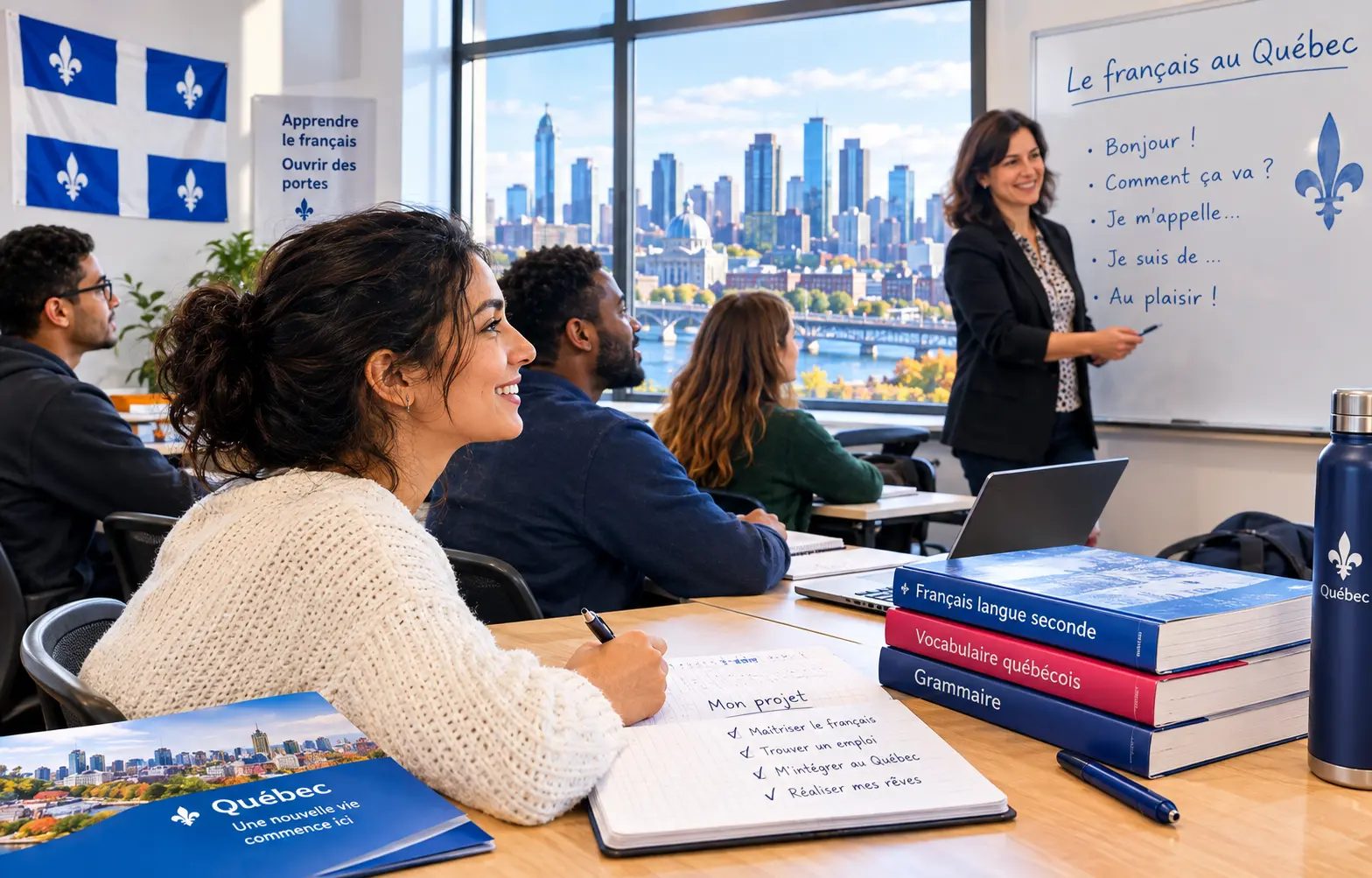
You passed your TCF Canada exam and obtained your permanent residence. You're in Quebec, your French is functional, and you're ready to build your life. But there's a gap you didn't anticipate: your formal French — the language of TCF Canada — and the French of daily life in Quebec — informal, fast, full of regional expressions — are two different registers. Quebec's free francisation system is designed to close exactly this gap. Available to all permanent residents and eligible immigrants, it is one of the most generous language integration programs in the world. This guide explains what it offers, how to access it, and how to maximize its impact on your professional and social integration.
What the Francisation System Offers: The Complete Picture
Quebec MIFI francisation programs in 2026:
- Full-time intensive courses (30h/week): 5-day-per-week programs at CEGEP, adult education centres, or MIFI partner institutions. 8 levels from A1 to C1. Weekly allowance of up to CAD $185 for eligible participants not currently employed.
- Part-time courses (9-15h/week): Evening and weekend schedules for working immigrants. Same 8-level progression. No allowance, but free of charge.
- Workplace francisation: Employers with 50+ employees can apply for MIFI funding to run French courses on-site. Your employer does the paperwork — you benefit from in-company French training during work hours.
- Online francisation (francisation.com): Government-run e-learning platform accessible from day one of your residency. Includes interactive exercises, video content, Quebec cultural context, oral practice with voice recognition.
- Childcare support: Subsidized childcare for parents attending full-time daytime courses — removing a significant practical barrier for families.
Where TCF Canada Ends and Francisation Begins
The relationship between TCF Canada and francisation is not one of overlap but of sequential complementarity. Understanding this is critical for planning your linguistic development arc.
| Dimension | TCF Canada (pre-immigration) | Francisation MIFI (post-arrival) |
|---|---|---|
| Primary Goal | Demonstrate formal French for IRCC | Functional French integration into Quebec society |
| Language Variety | International standard French | Quebec French — regional, authentic, professional AND informal |
| Register Focus | Formal academic register exclusively | Both formal (professional) and informal (social) |
| Cultural Content | General Canadian references | Specific Quebec cultural, institutional and social context |
| Oral Interaction | Recorded monologue (no conversation) | Real classroom interaction with teacher and peers |
| Accent Exposure | Quebec standard broadcast French | Multiple Quebec accents including regional variations |
| Cost | €280-450 exam + preparation costs | Free (with possible weekly allowance) |
Placement: Where You Enter Based on Your TCF Canada Score
TCF Canada NCLC → Francisation level entry point:
- NCLC 5 (TCF Canada): Typically enters Francisation Level 4 → start with everyday communication skills
- NCLC 7 (TCF Canada): Typically enters Francisation Level 5-6 → build professional French and Quebec cultural literacy
- NCLC 8 (TCF Canada): Typically enters Francisation Level 7 → focus on professional-level Quebec French and formal oral production
- NCLC 9 (TCF Canada): Typically enters Francisation Level 7-8 → advanced refinement, professional networking French, cultural fluency
Note: Entry level is determined by a MIFI placement test taken after arrival — your TCF Canada score is one input but the placement test has priority. Bring your TCF Canada attestation to the placement session as supporting documentation.
The Workplace Francisation Program: A Hidden Gem for Employed Immigrants
The least-publicized francisation program is arguably the most convenient for immigrants who find employment quickly after arriving. The workplace francisation program allows MIFI to fund and organize French language training directly in your workplace.
How workplace francisation works:
- Your employer (50+ employees) applies to MIFI for workplace francisation funding
- MIFI provides a certified instructor and course materials — your employer provides the space and time
- Courses run during work hours (typically 3-5h/week over 20-30 weeks) — you attend as part of your working day
- The curriculum is customized to your workplace language needs — a nurse in a francophone hospital learns very different French than an engineer in a Montreal tech company
- You continue earning your full salary during the training
- How to activate this: Ask your HR department or direct manager. Many Quebec employers are unaware this program exists — your request may be the catalyst for implementing it.
francisation.com: Your Digital Portal from Day One
What francisation.com offers in 2026:
- Structured curriculum: Modules organized by daily life theme — housing, healthcare, education, work, administration, culture
- Interactive exercises: Listening, reading, writing and speaking exercises with immediate feedback
- Voice recognition oral practice: Speak your answers and receive automated feedback on pronunciation and comprehension
- Quebec cultural content: Documentaries, authentic dialogues, cultural references that explain the "why" behind Quebec expressions and customs
- Progress tracking: Personal dashboard showing completion by module and skill — shareable with a francisation teacher if you are also attending in-person courses
- Mobile-optimized: Full functionality on smartphone — study during commute, lunch breaks, or waiting rooms
- Access: Free for all eligible immigrants. Register with your permanent resident card number at francisation.com
Maximizing Francisation Alongside Your Professional Integration
The optimal francisation strategy for professional immigrants:
- Month 1 in Quebec: Register immediately with MIFI for placement test + choose format (full-time if unemployed, part-time if employed)
- Parallel: francisation.com daily — 20 minutes of digital reinforcement alongside in-person or part-time classroom learning
- Month 2-6: Francisation Level 7-8 (if starting at NCLC 7-8) — professional French, formal oral communication, Quebec cultural competency
- Throughout: immersion outside class — Radio-Canada, Quebec colleagues, community organizations, sports clubs — every interaction in French is a lesson
- Target outcome: After completing Level 8, apply for professional licensing (if regulated profession) with documented C1 Quebec French proficiency
"Pharmacist from Casablanca. I had TCF Canada NCLC 9 — my written French was excellent. But my first week in Quebec, I couldn't follow a casual conversation between my pharmacy colleagues. They spoke fast, they code-switched Québécois idioms, they referenced things I'd never heard. I enrolled in the Level 8 francisation program at the CEGEP — three evenings per week. After 6 months, I was not only understanding everything but contributing to the banter. My Quebec colleagues now forget I wasn't born here. Francisation did what the TCF Canada could not: it made me genuinely bilingual, not just formally certified." — Nadia, 35, Pharmacist, Quebec City QC
Francisation for Your Children: The Education System Connection
Quebec's francisation services extend to your family. Children of immigrant families have access to dedicated French language support through the Quebec school system.
French support for immigrant children in Quebec schools:
- Classes d'accueil: Dedicated welcoming classes for newly arrived children (K-12) who are not yet fluent in French — intensive French instruction before transitioning to regular French-language classes
- Soutien linguistique: In-school French language support for children partially integrated into regular classes — additional instruction hours during school day
- Law 101 (Charte de la langue française): All children in Quebec must attend French-language schools (with constitutional Section 23 exceptions) — ensuring your children develop full French fluency through the Quebec system
- No fee: All these supports are included in the publicly funded Quebec school system — no additional cost to families
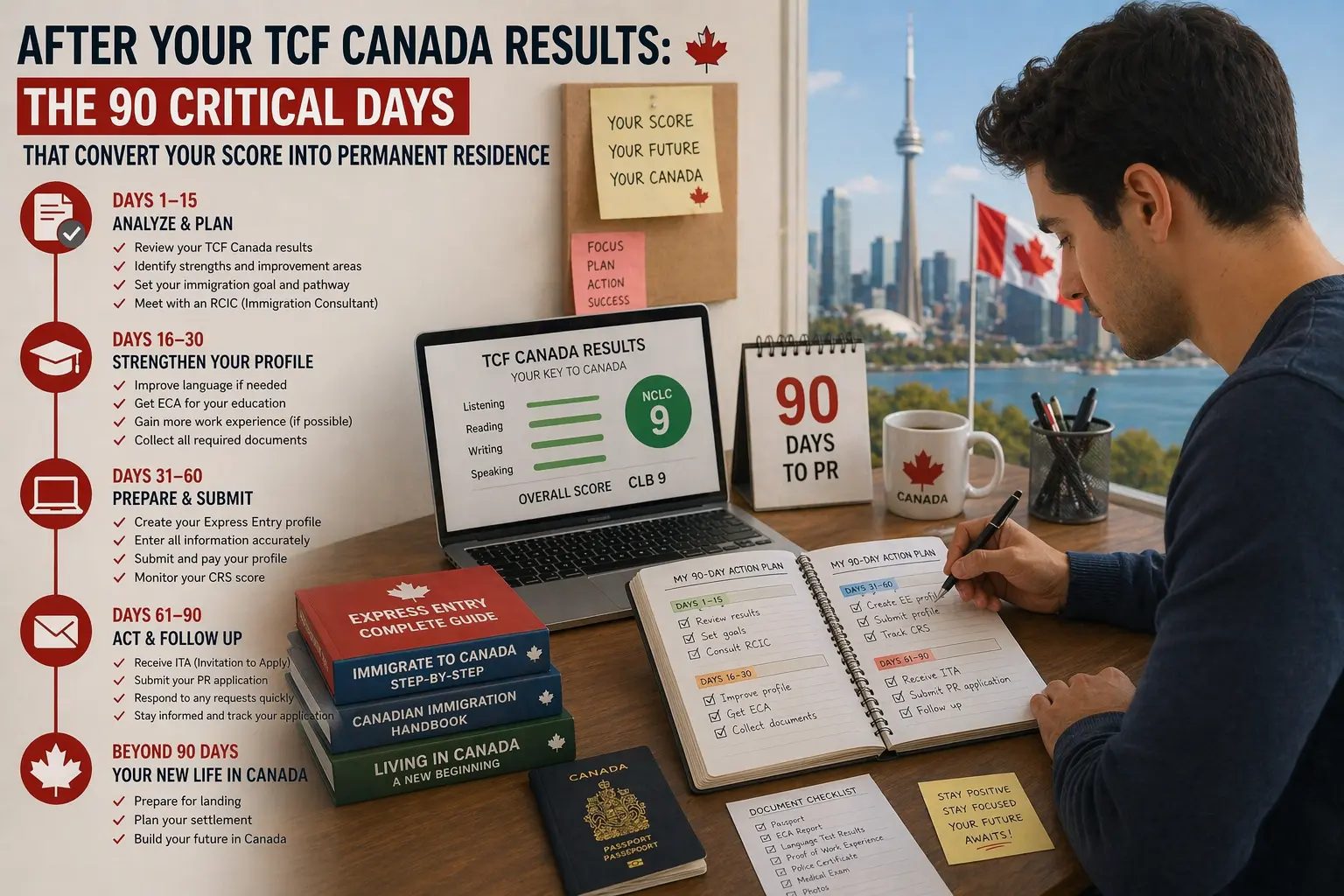
For the French-language guide to Quebec's francisation system covering all program details, read TCF Canada et Francisation au Québec : Guide Complet. For maintaining French proficiency after the structured courses end, see Maintaining and Improving French After Immigration 2026. The children's bilingualism guide in francophone Canada is at our dedicated bilingual children article. For the Quebec cultural integration context that francisation teaches, read Francophone Life Outside Quebec 2026. The MIFI official francisation page is at quebec.ca — Cours de francisation. For building your professional French vocabulary through these courses, the vocabulary guide is at TCF Canada Domain Vocabulary. The TCF Canada preparation guide that sets you up for francisation success is at How to Prepare for TCF Canada 2026. The French companion preparation guide is at Réussir le TCF Canada : Guide Complet. For the 90-day post-results plan that includes francisation enrollment as a first step, see After Your TCF Canada Results: 90 Critical Days. For the digital resources that complement francisation between sessions, see Canadian French Digital Resources 2026.

0 Commentaires
aucun commentaire
Soyez le premier a partager votre avis !