-
Auteur :
 Antoine C.
- Sep 17, 2026
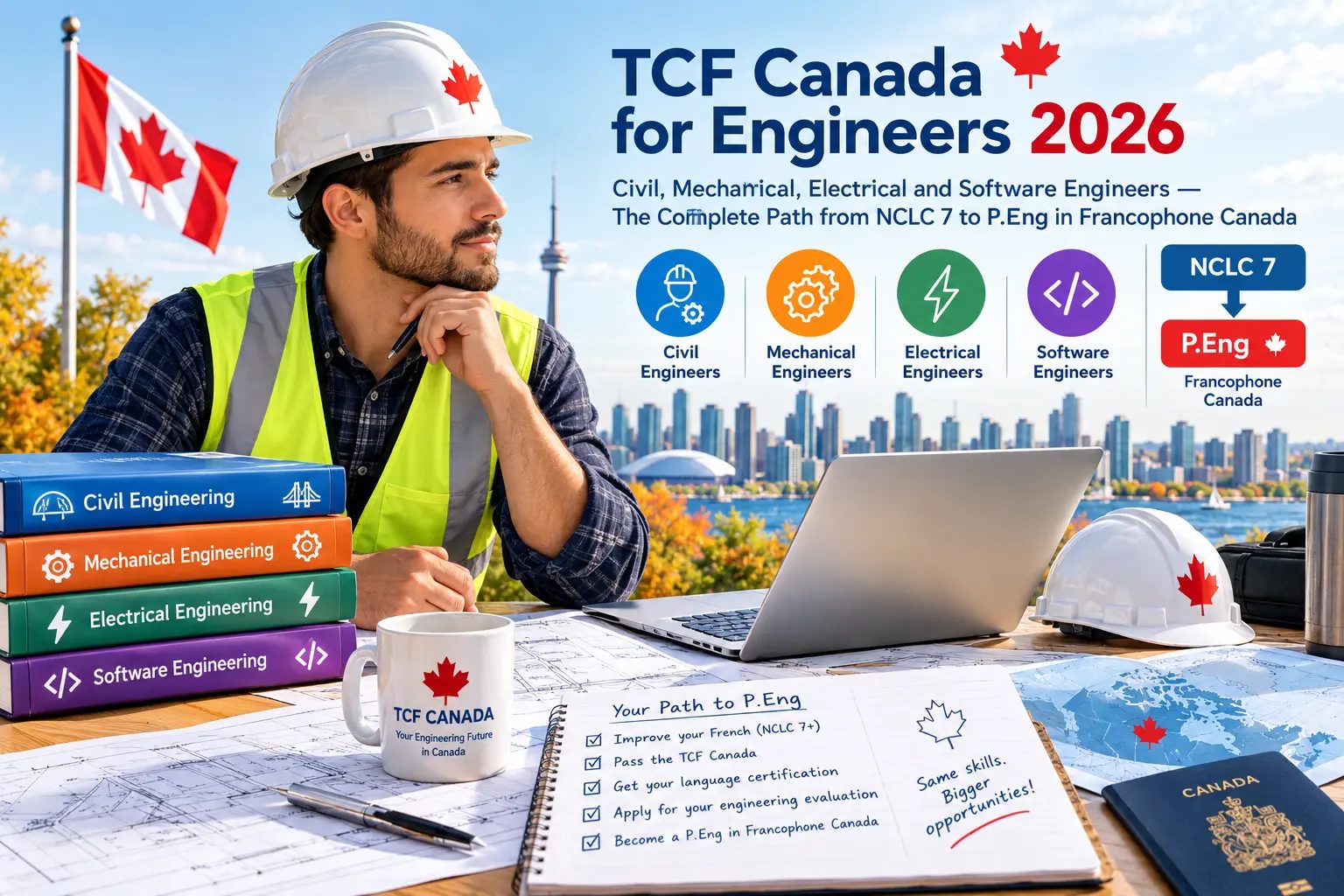
Canada needs engineers. In 2026, across every engineering discipline — civil, structural, mechanical, electrical, software, chemical and environmental — the gap between the engineers Canada trains and the engineers Canada needs is widening with each passing year. Infrastructure projects worth hundreds of billions are competing for the same scarce talent pool. For internationally trained engineers who speak or can learn French, this shortage creates a uniquely favorable immigration environment — particularly in Quebec, New Brunswick, Manitoba and the federal public service. This guide gives you the complete roadmap from TCF Canada preparation to engineering licensure (P.Eng or ing.) in francophone Canada.
Why French-Speaking Engineers Have a Strategic Advantage in 2026
The francophone engineer's compounding advantages in the Canadian market:
- Quebec's CAD $50B+ infrastructure pipeline: The construction of the Réseau express métropolitain (REM), hospital expansions, bridge rehabilitations and housing projects create massive demand for bilingual civil, structural and mechanical engineers
- Federal government bilingualism requirements: National Resources Canada, Transport Canada, Public Services and Procurement Canada all require bilingual engineers for many senior positions — French proficiency = government job premium
- New Brunswick infrastructure: The province is rebuilding its highway network and expanding port facilities — active francophone engineer recruitment with PNP fast-track
- OIQ and APEGNB recruitment: The Ordre des ingénieurs du Québec (OIQ) and Association of Professional Engineers and Geoscientists of New Brunswick (APEGNB) actively support internationally trained engineer recruitment programs
- Software engineering in Montreal: The Montreal tech ecosystem (Mila, Ubisoft, CAE, Bombardier, National Bank) offers software and systems engineering positions in French — salary competitive with Toronto at significantly lower cost of living
TCF Canada NCLC Requirements for Engineers
| Requirement | Min. NCLC | Recommended | Who Sets It |
|---|---|---|---|
| Express Entry FSWP (immigration) | NCLC 7 | NCLC 9 | IRCC |
| Francophone draws (FLFP eligibility) | NCLC 7 (all 4) | NCLC 8-9 | IRCC |
| OIQ (Quebec P.Eng equivalent — ing.) | NCLC 7 (proof required) | NCLC 8 | Ordre des ingénieurs du Québec |
| APEGNB (New Brunswick P.Eng) | NCLC 6-7 | NCLC 7 | APEGNB |
| Engineers Canada (national body) | Assessed by provincial body | NCLC 7+ | Provincial engineering associations |
| Federal government bilingual positions | NCLC 8 (B level in BBB classification) | NCLC 9-10 | Treasury Board / respective department |
The Path from TCF Canada to P.Eng (or ing.) in Francophone Canada
Complete timeline: Internationally trained engineer to licensed practice in Quebec or New Brunswick:
- Month 1-3: TCF Canada preparation (targeting NCLC 8-9) + WES evaluation launch simultaneously
- Month 3: TCF Canada exam
- Month 4: TCF Canada results + Express Entry profile submission (or PNP application)
- Month 4-7: ITA received + IRCC permanent residence application submitted
- Month 10-18: Permanent residence granted — arrival in Canada
- Month 1-3 in Canada: Submit application to OIQ (Quebec) or APEGNB (NB) with WES report, TCF Canada score, engineering degree and experience documentation
- Month 4-18 in Canada: OIQ/APEGNB assessment — may require: technical examination, supervised practice period (stage), additional coursework in Canadian engineering standards
- Month 12-30 in Canada: P.Eng (or ing.) designation granted — full independent engineering practice authorized
Engineering Discipline Guide: Where the Demand Is Highest
| Discipline | NOC Code | Demand Level | Best Provincial Target | Salary Range (CAD/year) |
|---|---|---|---|---|
| Civil/Structural Engineering | 21300 | ⭐⭐⭐⭐⭐ Critical shortage | Quebec, New Brunswick, Manitoba | $75,000–130,000 |
| Software/Computer Engineering | 21311 | ⭐⭐⭐⭐⭐ Very high demand | Quebec (Montreal AI hub) | $90,000–160,000 |
| Electrical/Electronic Engineering | 21310 | ⭐⭐⭐⭐ High demand | Quebec, Ontario | $75,000–125,000 |
| Mechanical Engineering | 21301 | ⭐⭐⭐⭐ High demand | Quebec (aerospace, automotive) | $70,000–120,000 |
| Environmental Engineering | 21399 | ⭐⭐⭐⭐ Growing rapidly | All provinces (green transition) | $70,000–115,000 |
| Chemical Engineering | 21302 | ⭐⭐⭐ Moderate-high | Quebec (pharma, materials) | $75,000–120,000 |
| Petroleum Engineering | 21304 | ⭐⭐ Location-specific | Alberta (English dominant) | $90,000–160,000 |
Engineering-Specific French Vocabulary for TCF Canada Tasks
Technical-adjacent vocabulary that appears in TCF Canada contexts (engineering themes):
- Développement durable — sustainable development (environmental engineering contexts)
- Empreinte carbone — carbon footprint (climate topics in TCF reading and speaking)
- Infrastructure — same word, but context: "les infrastructures routières" (road infrastructure), "les réseaux ferrés" (rail networks)
- Génie civil / génie mécanique / génie électrique — civil / mechanical / electrical engineering (important for professional identity in French)
- Ordre professionnel — professional order (OIQ, APEGNB — frequently referenced in regulated profession TCF contexts)
- Appel d'offres — request for proposals / tender (common in infrastructure and public procurement TCF topics)
- Cahier des charges — technical specifications / scope of work (professional engineering context)
"Civil engineer from Casablanca with 8 years of infrastructure experience. I targeted Quebec specifically because of the REM project — I wanted to work on urban rail. TCF Canada NCLC 9 took me 10 weeks of preparation with a daily OHdio routine and weekly writing correction by a Quebec engineer I found on iTalki. The OIQ accepted my Moroccan engineer d'État as equivalent to a Quebec Master's. After 14 months of supervised practice, I obtained my ing. designation. I now lead a structural team on a major Montreal metro station expansion. The French language was not a compromise — it was the reason I got the opportunity." — Hassan, 36, Structural Engineer (ing.), Montreal QC
The OIQ Application Process for International Engineers
Key OIQ recognition steps for internationally trained engineers:
- Documents required: University transcripts (translated to French if not already), degree certificate, professional experience letter(s), TCF Canada score report, Canadian passport/PR card
- Assessment outcome options: Full equivalence (rare but possible for French engineering school graduates) / Partial equivalence requiring supplemental exams / Non-equivalence requiring full Quebec engineering degree
- Supplemental exams (if required): Technical exams in specific engineering domains — written in French. Your TCF Canada NCLC 8+ demonstrates the language competency for these exams.
- Junior status to full ing.: After assessment, you work as "ingénieur junior" for a supervised period (typically 36 months) under a licensed ing. before receiving full designation
- OIQ support programs: The OIQ's PRIQ (Programme de reconnaissance des ingénieur(e)s qualifiés) specifically helps international engineers navigate the process — contact oiq.qc.ca
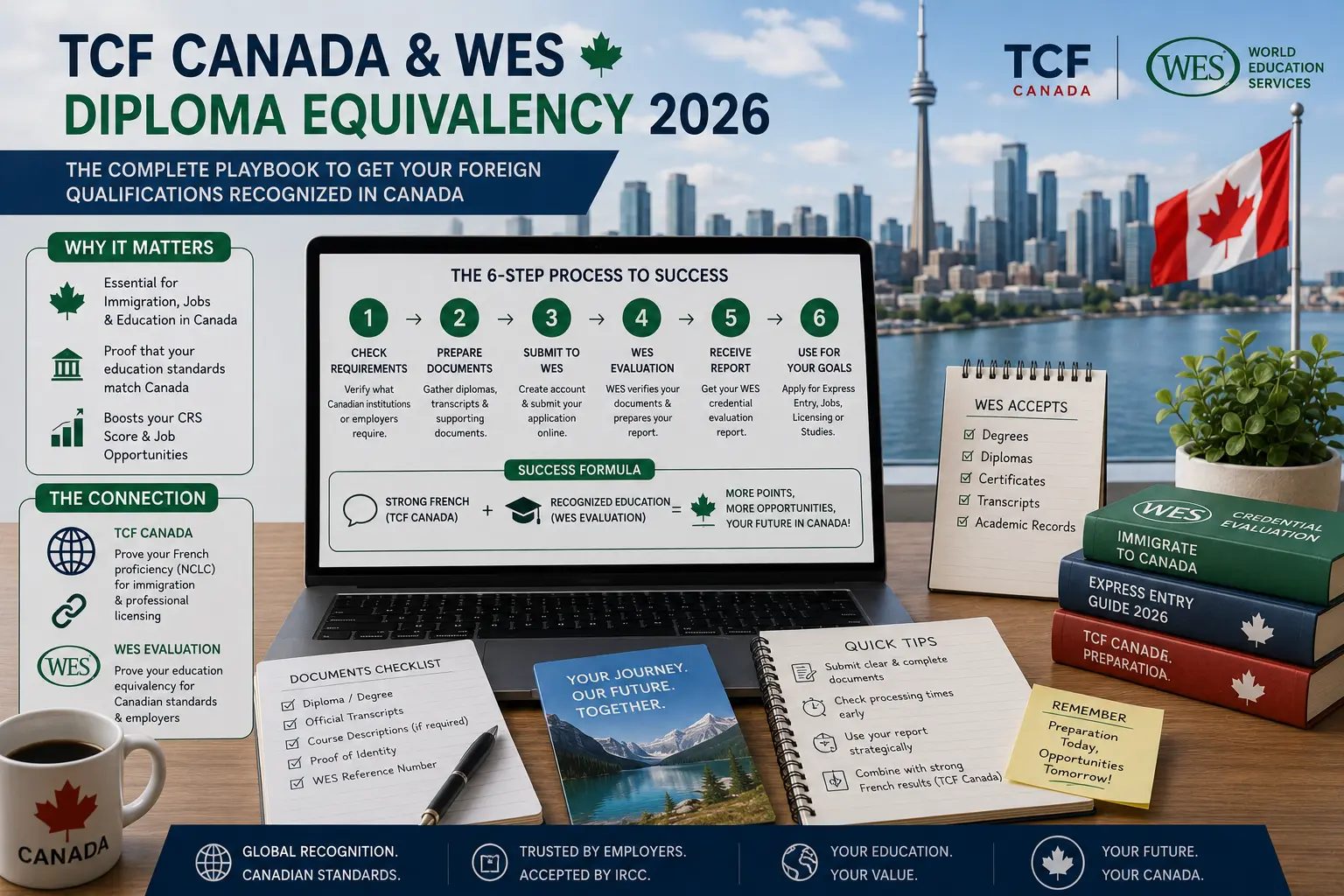
For the complete credential equivalency guide covering all engineering provincial bodies, read TCF Canada and Credential Equivalency 2026. For the priority employment sector analysis showing engineering immigration speeds, see TCF Canada and Priority Employment Sectors 2026. The IT professionals guide covering software engineering specifically is at our companion article on IT professionals. The CRS simulation for engineer profiles is at CRS Score Simulator for TCF Canada. For the francophone Atlantic provinces that actively recruit engineers, see TCF Canada and New Provincial Pathways 2026. The OIQ official website is at oiq.qc.ca/international. The French companion guide for engineering immigration from North Africa is at TCF Canada et Équivalence de Diplômes 2026. For category-based draws relevant to engineering profiles, see IRCC Category-Based Draws 2026. For the professional integration in francophone Canada guide, read Intégration Professionnelle Canada Francophone 2026. After TCF Canada results, the 90-day engineering-specific action plan is at After Your TCF Canada Results: 90 Critical Days.




0 Commentaires
aucun commentaire
Soyez le premier a partager votre avis !