-
Auteur :
 Antoine C.
- Jun 26, 2026
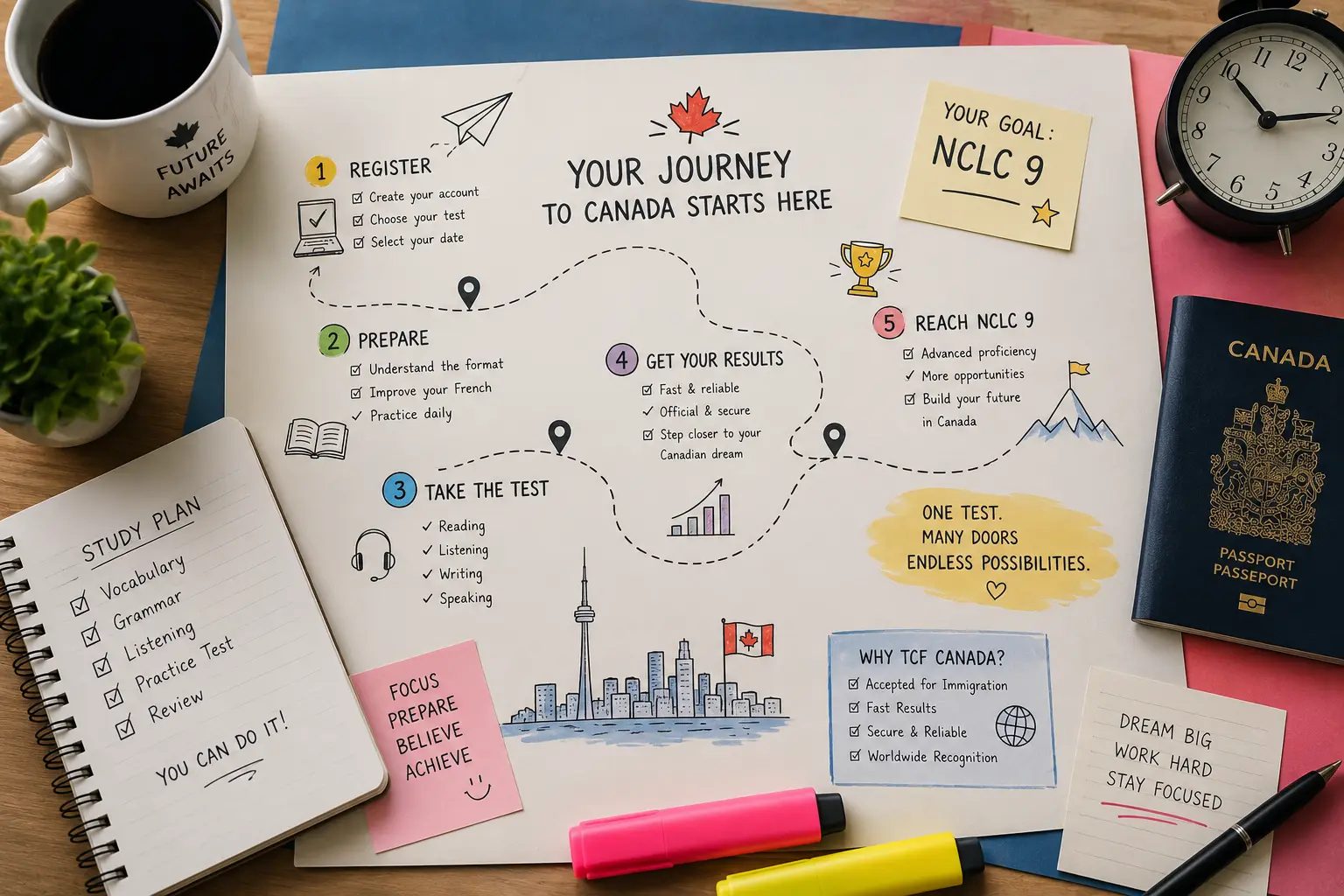
This guide is designed as the single most comprehensive TCF Canada resource available in English in 2026. Whether you are discovering the test for the first time or looking to improve after a first attempt, this article gives you the complete framework: what the test is, how it works, how to prepare for each of the four skills, how it connects to Canadian immigration, and what to do after you receive your results. Every claim here is backed by the experience of thousands of successful candidates.
What Is the TCF Canada: The Definitive Answer
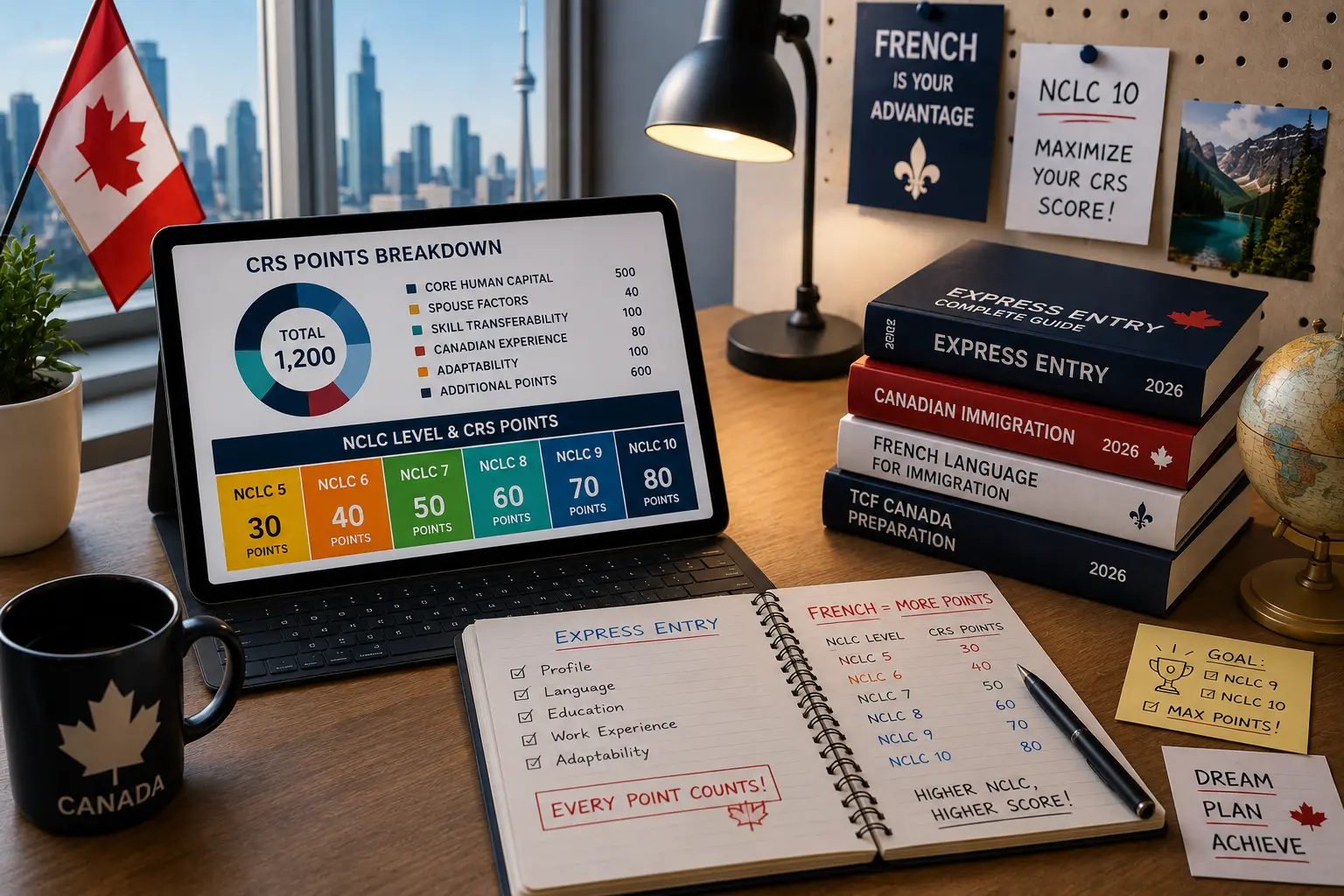
The Test de Connaissance du Français pour le Canada (TCF Canada) is a standardized French language proficiency test produced by France Éducation International (FEI) and officially recognized by Immigration, Refugees and Citizenship Canada (IRCC). It is the primary French language test accepted by IRCC for Express Entry applications (alongside the TEF Canada). Your score is expressed in NCLC levels (1-12 scale) and directly translates into CRS points in the Comprehensive Ranking System.
TCF Canada — Key Facts:
- 4 components: Compréhension orale (35 min, 29 MCQ), Compréhension écrite (60 min, 29 MCQ), Expression orale (12 min, 3 recorded tasks), Expression écrite (60 min, 3 writing tasks)
- Total duration: 2 hours 47 minutes
- Format: Computer-based in most centers globally (2026)
- Score scale: NCLC 1-12 (CLB equivalent) — immigration requires minimum NCLC 7 for most skilled worker programs
- Validity: 2 years from exam date
- Results delivery: 15-20 business days via candidate portal
- Cost: €280-450 depending on country (all 4 skills)
The 4 Skills: Complete Preparation Guide
Skill 1 — Compréhension Orale (Listening Comprehension)
What it tests: Comprehension of authentic Canadian French audio documents — radio news, interviews, announcements, conversations. All documents use Quebec-standard French pronunciation.
The preparation imperative: Quebec accent acclimatization is non-negotiable for all candidates outside Quebec. Daily Radio-Canada + OHdio listening for 4-6 weeks before the exam eliminates the phonological surprise that costs most candidates 1-2 NCLC levels.
Strategy: Read all question options before the audio plays. Note keywords during listening. Never leave a question blank (no negative marking).
Skill 2 — Compréhension Écrite (Reading Comprehension)
What it tests: Comprehension of authentic Canadian French written texts — news articles, official documents, notices, advertisements, opinion columns, literary extracts. 29 multiple-choice questions in 60 minutes.
The preparation imperative: Questions-first reading strategy + text-type recognition. Always read the 3-4 questions before reading the document. This alone saves 20-25% of reading time.
Strategy: If stuck on a question after 90 seconds, eliminate 2 options and move on. Return if time allows.
Skill 3 — Expression Orale (Speaking Expression)
What it tests: 3 recorded oral tasks: Task 1 (description — 1 min), Task 2 (practical interaction — 1-2 min), Task 3 (opinion defense — 2 min). No examiner is present — you speak into a microphone.
The preparation imperative: The microphone format requires specific practice. Candidates who have never recorded themselves systematically underperform. Record 3-4 oral tasks per day in the final 4 weeks of preparation.
Strategy: Use the PADE framework for Task 3 (Position → Arguments → Development → Evaluation). Prepare your opening formula by memory. Use meaningful pauses — not hesitation fillers (euh, bon...).
Skill 4 — Expression Écrite (Written Expression)
What it tests: 3 writing tasks in 60 minutes: Task 1 (formal email, 60-80 words), Task 2 (informative text, 120-150 words), Task 3 (argumentative text, 200-250 words).
The preparation imperative: Time discipline is critical. Allocate 12/18/25 minutes + 5 minutes review. Candidates who spend too long on Task 1 routinely fail to complete Task 3.
Strategy: Each task has a distinct register — email (semi-formal), account (formal-neutral), argument (formal-academic). Register mismatches lose marks regardless of content quality.
The 12-Week Path from B2 to NCLC 9
| Phase | Weeks | Daily Time | Core Activities | Milestone |
|---|---|---|---|---|
| Diagnosis | 1 | 90 min | Full mock test + error analysis + personal gap map | Baseline NCLC + 3 priority weak spots identified |
| Foundation | 2-3 | 90 min | Grammar 20 structures + TCF Canada vocabulary 600 words + Quebec accent launch | Grammar errors halved, 50+ Quebec terms activated |
| Skill Building | 4-7 | 90 min | Dedicated skill rotation (listening Week 4-5, reading Week 6, writing Week 7) | NCLC 8 in listening + reading confirmed in partial mocks |
| Production | 8-10 | 90 min | Writing tasks daily + oral recordings + speaking phonology | All 3 writing tasks completed within time limits; oral Task 3 fluent |
| Integration | 11 | 90 min | Full mock tests (×3) + weak skill reinforcement | NCLC 9 achieved in at least 2 skills in mock tests |
| Peak Performance | 12 | 45-60 min | Light review only, logistics preparation, 48h pre-exam rest | Mental readiness confirmed, all logistics ready |
After Your TCF Canada: The 90-Day Immigration Action Plan
Your 90-day post-TCF Canada roadmap:
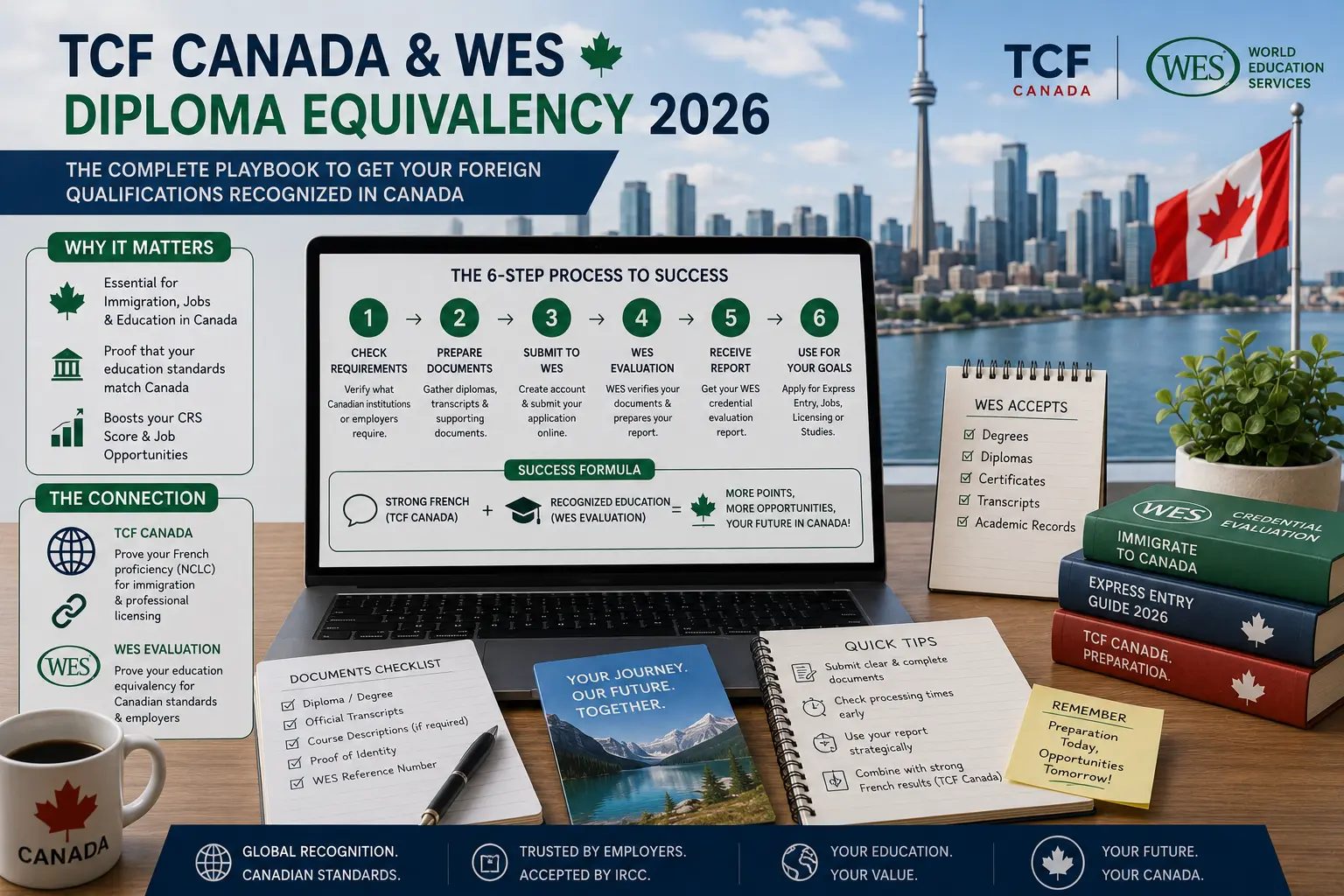
- Day 1-20 (results pending): Finalize WES if not already submitted. Verify all other document requirements. Connect with a RCIC (Regulated Canadian Immigration Consultant) if using professional support.
- Day 20 (results received): If NCLC target achieved → submit Express Entry profile immediately. If below target in one skill → diagnose root cause, plan 6-week targeted retake preparation.
- Day 20-60 (profile active): Monitor draws weekly at IRCC website. Maintain profile completeness — update any changes in work or education status. Build Canadian network via LinkedIn.
- Day 60-90 (ITA received): Complete permanent residence application within 60 days of ITA. All documents ready in advance — medical exam, police certificates, biometrics.
Inspiring Testimonials: NCLC 9 Achievers from 8 Countries
"Engineer from Casablanca. 10 weeks of preparation — Quebec OHdio every morning, 2 recording sessions every evening. NCLC 9 everywhere. Ottawa awaited. — Youssef, 31"
"IT professional from Bangalore. 14 months learning French from scratch — daily Alliance Française, TV5MONDE evenings. NCLC 8 all skills. Montreal tech scene opened its doors. — Priya, 29"
"Nurse from Dakar. TCF Canada NCLC 8, NNAS, NCLEX-RN in French — all within 18 months. Moncton's nursing shortage made my landing immediate. — Fatou, 35"
"Software developer from Bogotá. Spanish made French vocabulary almost intuitive. 14 months to NCLC 9. Montreal's tech sector: extraordinary. — Sebastián, 32"
For the complete 2026 preparation methodology guide, read How to Prepare for TCF Canada in 2026: Complete Methodology. The ultimate guide covering all aspects of the TCF Canada is at Complete TCF Canada Ultimate Guide 2026. For the strategic 3-month plan, see Strategic TCF Canada Planning: The 3-Month Method. For the speaking techniques guide, see Mastering TCF Canada Speaking: 15 Proven Techniques. The listening comprehension complete guide is at TCF Canada Listening: The 29-Question Method. The writing complete guide is at TCF Canada Writing: 7 Master Structures for NCLC 9. The reading comprehension guide is at TCF Canada Reading: Strategic Reading for Perfect Questions. For the post-TCF action plan, see After Your TCF Canada Results: 90 Critical Days. The inspiring testimonials collection is at Inspiring Testimonials: How They Succeeded at TCF Canada. The comprehensive French-language guide is at Guide Complet du TCF Canada 2026. The French preparation methodolgy at Réussir le TCF Canada : Guide Complet.


0 Commentaires
aucun commentaire
Soyez le premier a partager votre avis !